
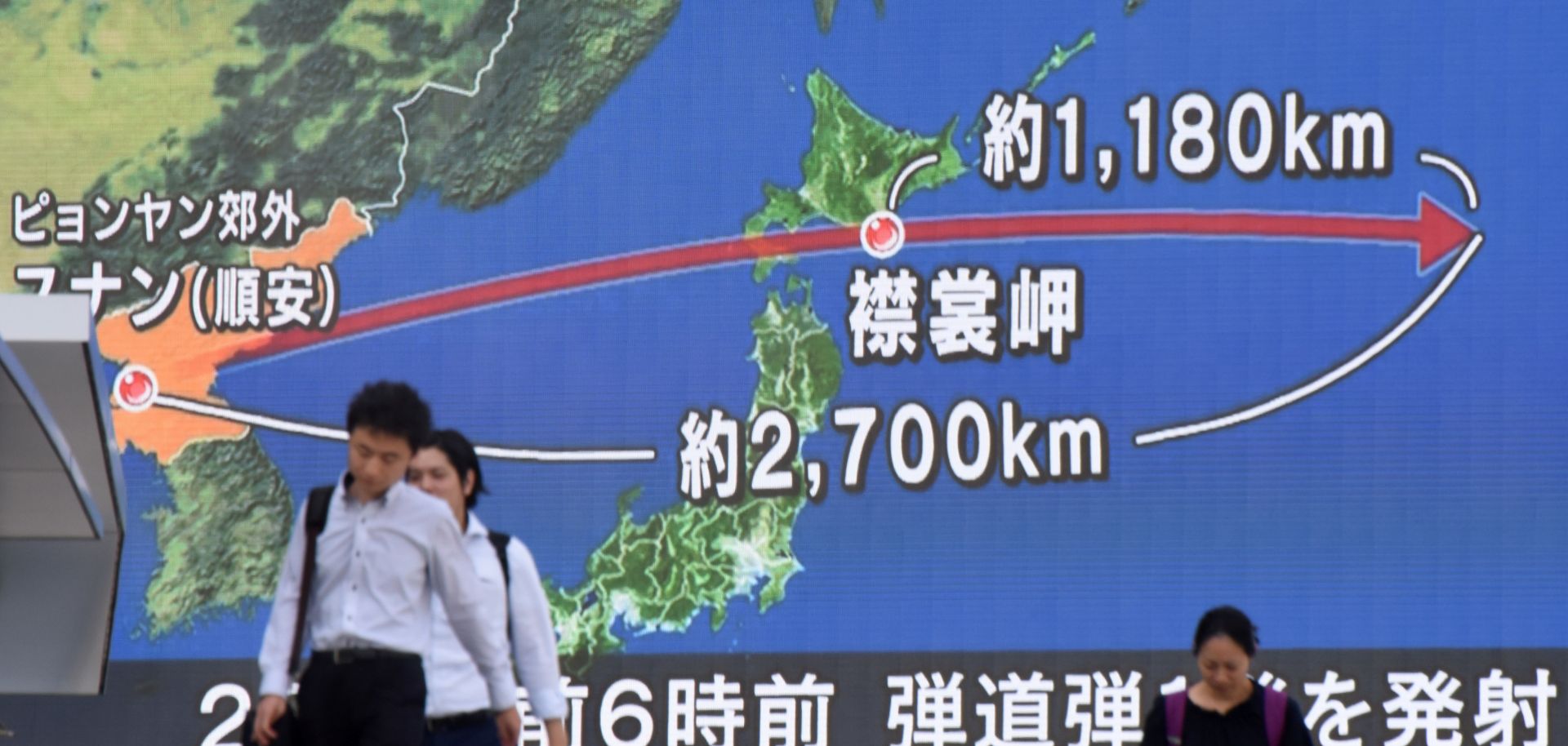
Now that Pyongyang and Seoul are working together to arrange bilateral talks between North Korean leader Kim Jong Un and U.S. President Donald Trump, Japan is worried that it will lose its say over the Korean Peninsula's future.
"A dagger thrust at the heart of Japan." That's how Maj. Gen. Klemens Wilhelm Jakob Meckel, a Prussian adviser to Tokyo, characterized Korea to the Japanese government in the 1880s. The peninsula lying just west across the Sea of Japan posed a threat to Tokyo's burgeoning regional strategy, having long been locked in China's orbit and now at risk of falling into Western hands. More important, it offered Japan an opportunity for strategic depth to keep enemies at bay. Over the next 65 years, Tokyo turned Korea into a conduit through which it projected power onto the mainland with unprecedented success, until the fall of the Japanese empire in 1945 . Much has changed in the years since, but one thing hasn't: Korea, though now divided, is a threat that Japan fears will fall under the spell of a rival — or become a power in its own right.
