
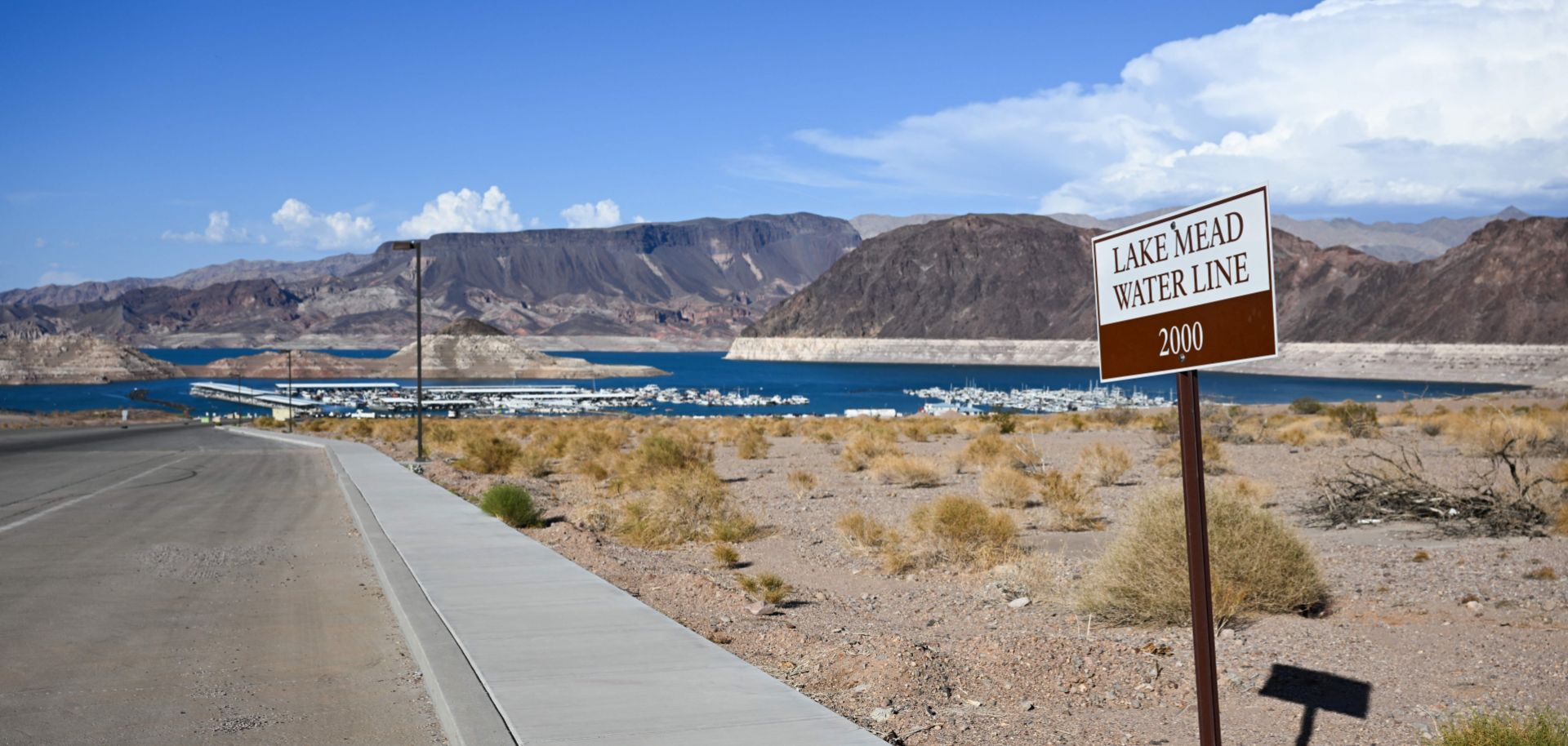
A sign at Lake Mead along the Colorado River in Boulder City, Nevada, shows the lake's water line in 2000 in contrast to the low water levels seen at the time this photo was taken on June 28, 2022.
Political obstacles and increased winter precipitation will slow U.S. federal and state officials' response to the decline of the Colorado River until at least after the November 2024 election. Cities in the U.S. Southwest will thus initially be forced to take the lead on water restrictions, which will further undermine the desert region's attractiveness in the face of climate change and rising living costs, and negatively impact its labor market for defense and technology industries. On April 11, the U.S. Department of the Interior released three options to address the critical water shortages in the Colorado River. The first, which the Department of Interior itself suggested is unfeasible, is to allow the river to continue to decline without water cuts or adjustments in the levels of reservoirs.
