
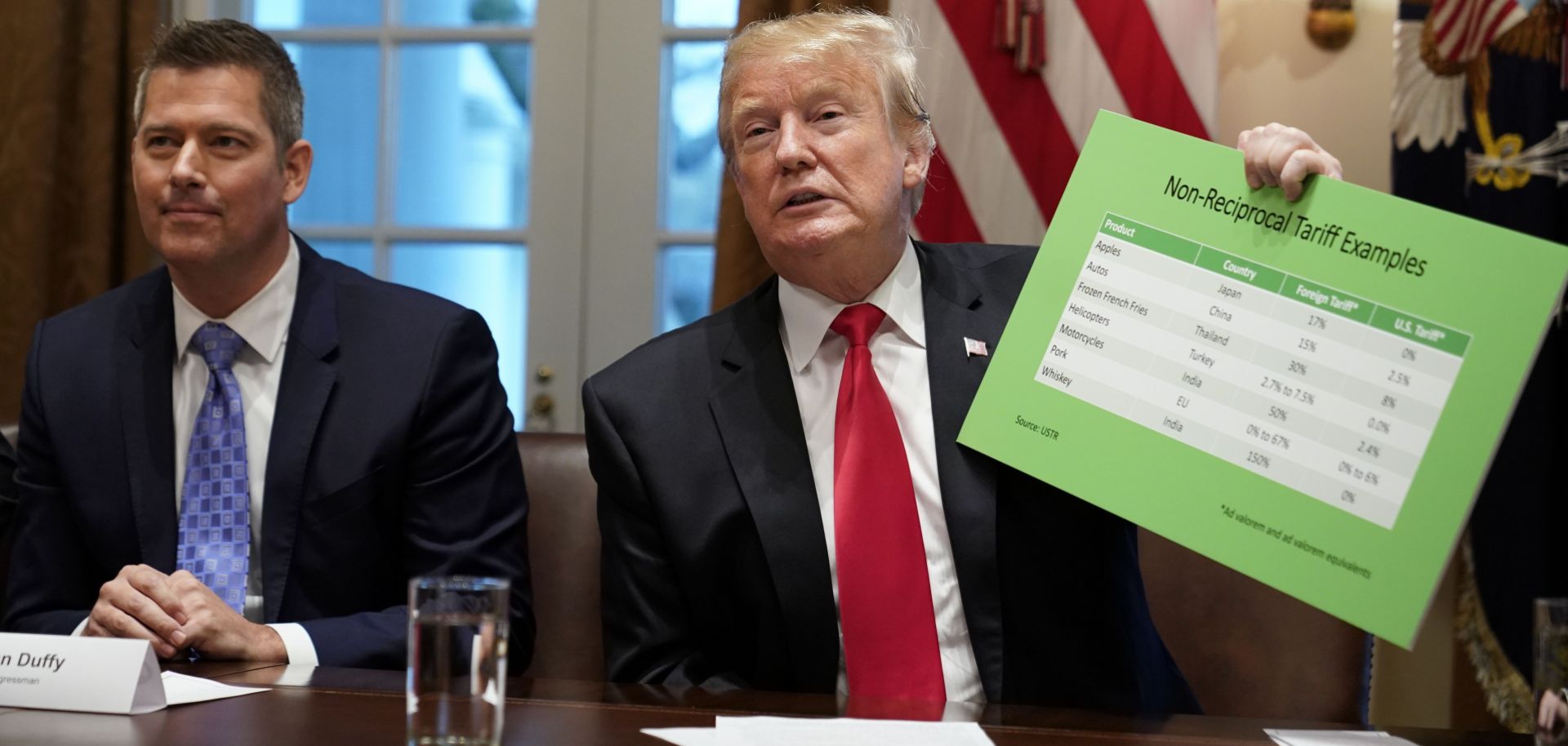
U.S. President Donald Trump holds a tariff table as he speaks in the Cabinet Room of the White House on Jan. 24, 2019. Reducing tariffs might play well to the gallery, but it's not the be-all and end-all of a trade battle.
Can turning back the clock to the 1930s achieve a 21st-century trade win? That might be the question on everyone's lips as the White House aims to significantly increase presidential authority over U.S. tariffs by asking Congress during next week's State of the Union address to pass the Reciprocal Trade Act. The name of the bill itself echoes perhaps the single most consequential trade act in U.S. history, the Reciprocal Trade Agreements Act, which President Franklin D. Roosevelt signed in 1934 to help the United States recover from the Great Depression. Congress is certainly in no mood to give the current occupant of the White House, Donald Trump, more power to impose tariffs on other countries, but Trump's strategy and aims in using the existing act highlight the White House's focus: balance trade through bilateral negotiations and tariffs.
