
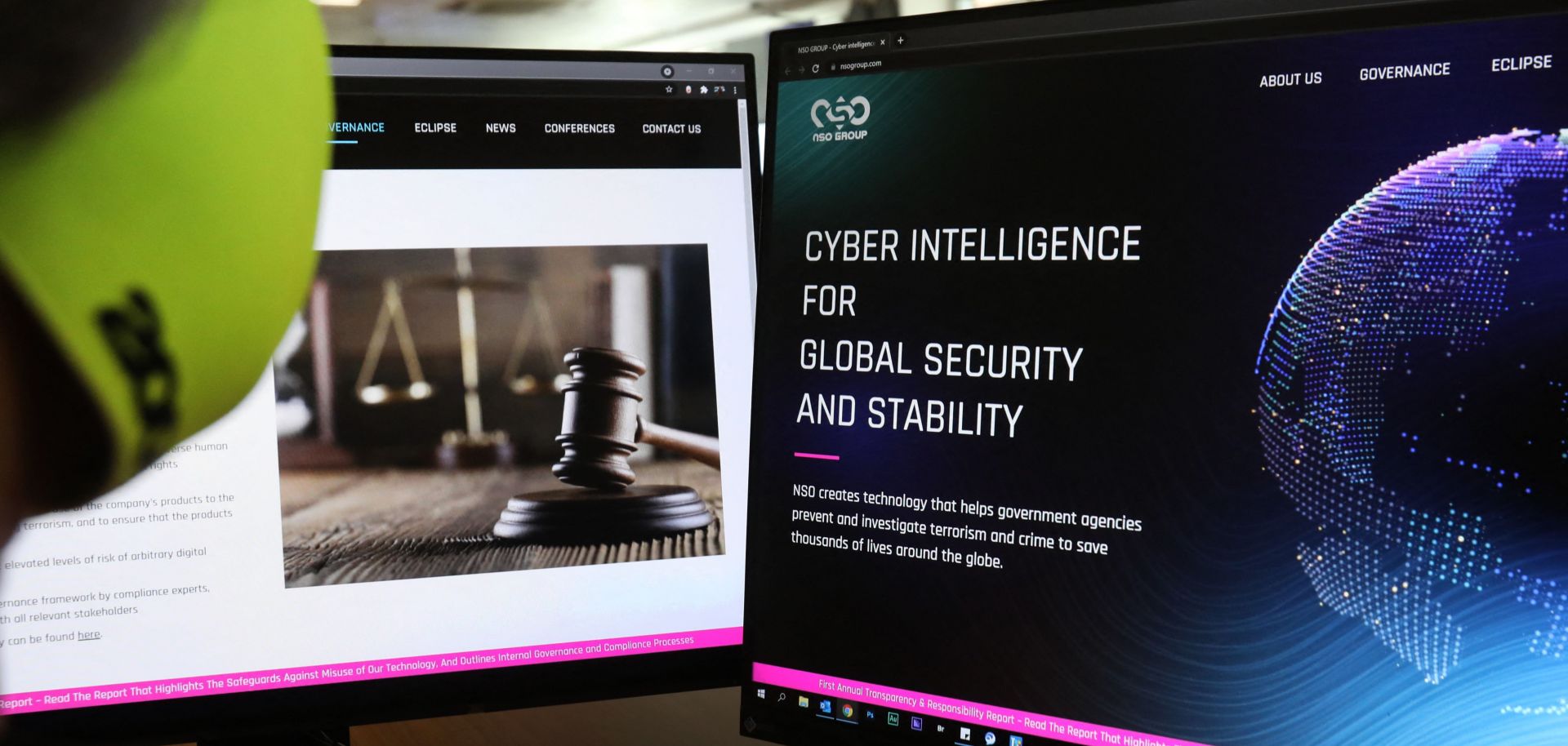
A woman checks the Pegasus spyware website at an office in Nicosia, Cyprus, on July 21, 2021.
New U.S. export controls on hacking and cyber-surveillance software will limit the proliferation of such tools being developed in the West, though at the risk of at least temporarily undermining cybersecurity research. On Oct. 20, the U.S. Commerce Department’s Bureau of Industry and Security issued a new interim final rule that will tighten export restrictions on cyber tools used for surveillance, espionage and other malicious activities . The new export controls will take effect in 90 days, and there is a 45-day comment period. Under the new rule, exports of hacking tools to government end-users in a select number of countries — including Bahrain, Israel, Saudi Arabia, Taiwan and the United Arab Emirates — will need a special license granted by the U.S. Commerce Department. Exports to non-government users in those countries for research and other cyber defensive purposes will not need a license.
