
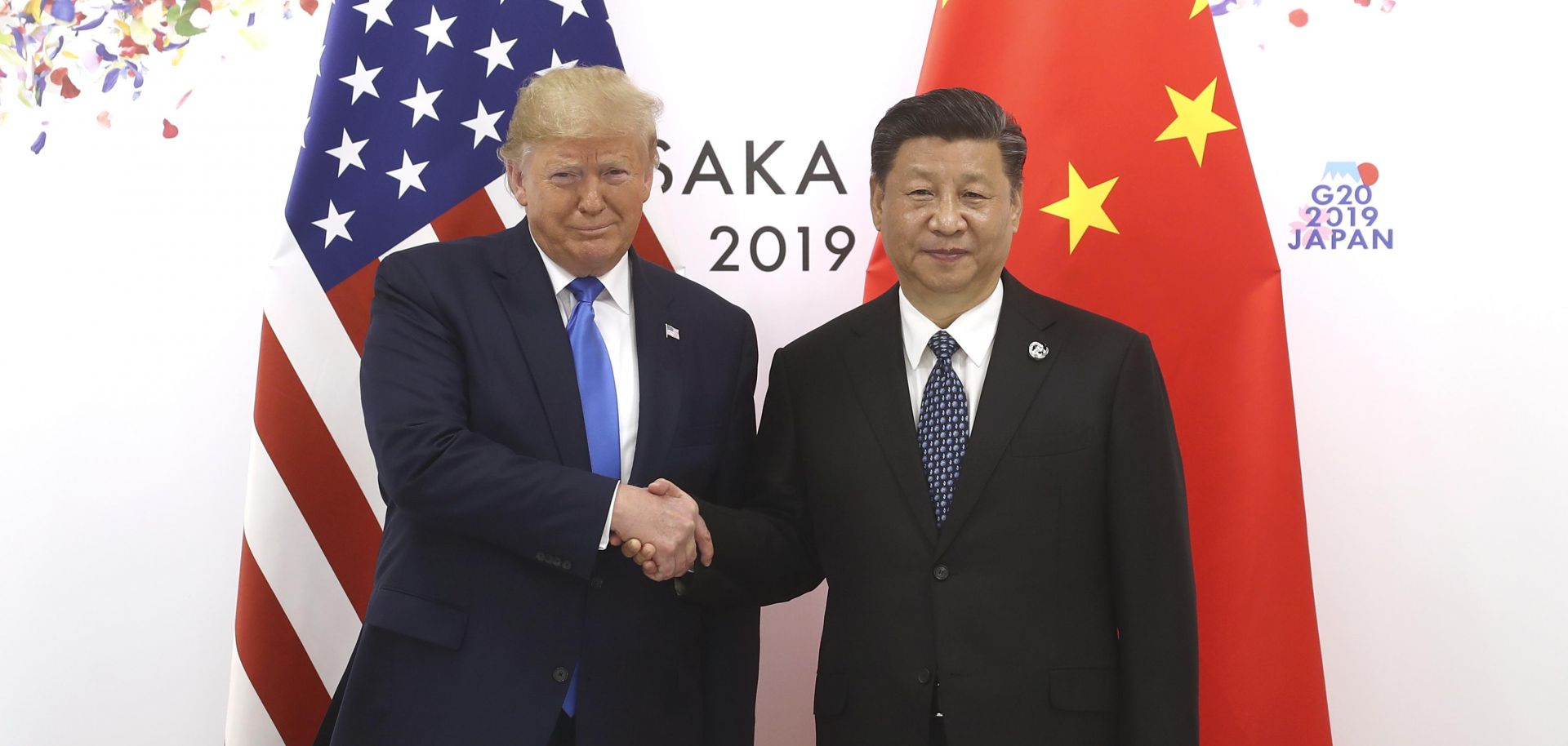
Chinese President Xi Jinping shakes hands with U.S. President Donald Trump before a bilateral meeting during the G-20 Summit on June 29, 2019, in Osaka, Japan. Trump tweeted on Aug. 1 that the United States plans to impose an additional 10 percent tariff starting Sept. 1 on $300 billion in Chinese exports.
What Happened U.S. President Donald Trump tweeted on Aug. 1 that the United States plans to impose a 10 percent tariff starting Sept. 1 on the remaining $300 billion in Chinese exports. He argued that China has fallen short of its pledges to increase agricultural purchases and curb fentanyl sales to the United States. Trump tried to frame the tariff move in positive terms, calling it a "small" tariff (compared with his earlier threat to impose a 25 percent tariff), and said that he looks forward to a "positive dialogue with China" after "constructive" U.S.-China trade negotiations in Shanghai earlier in the week. Why It Matters China's negotiating stance fundamentally shifted after U.S.-China trade talks broke down in late April over what Beijing viewed as onerous U.S. demands on enforcement and after the United States announced severe export restrictions against Huawei in mid-May.
