
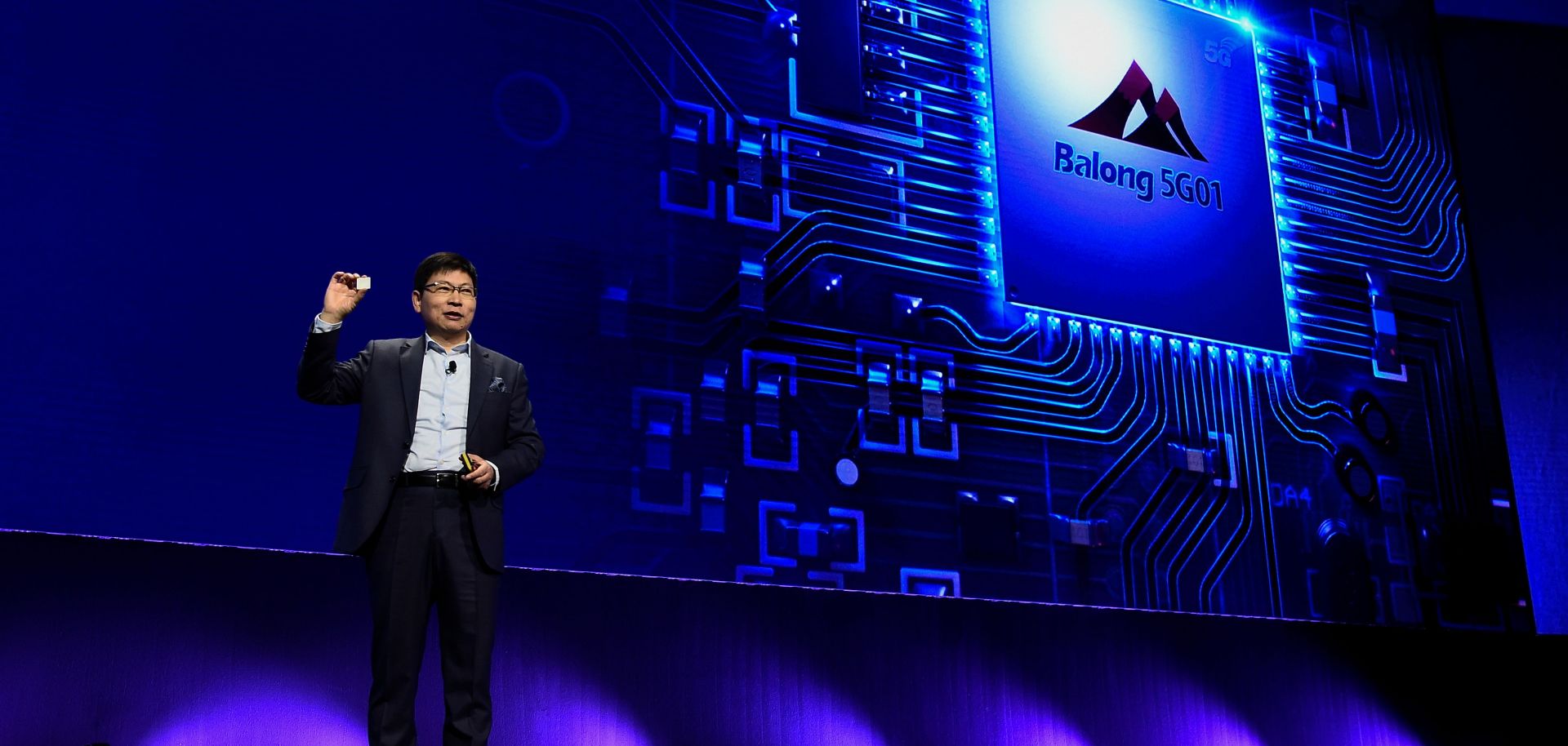
Huawei CEO Richard Yu gives a press conference to present the new Huawei Balong 5G01, a 3GPP 5G commercial chipset on February 25, 2018 in Barcelona, on the eve of the inauguration of the Mobile World Congress (MWC). The Mobile World Congress, the world's biggest mobile fair, is held in Barcelona from February 26 to March 1.
The race has well and truly begun. China, the United States, South Korea and a handful of telecommunications companies are rolling up their sleeves to develop, test and deploy the technology that will drive the world’s economy in the decade to come: 5G mobile communications networks. With 5G representing a great leap forward over its relatively pedestrian predecessors, countries and companies with ambitions in the field are well aware of the need to stay ahead of the pack for what is certain to be a strategic resource . And few countries have been as bullish on pursuing 5G as China – an ambition that has stoked more than a few fears in Washington . The 5G Difference Roughly every decade over the past 30 years, a new global mobile communications network has emerged to replace a previous generation.
