
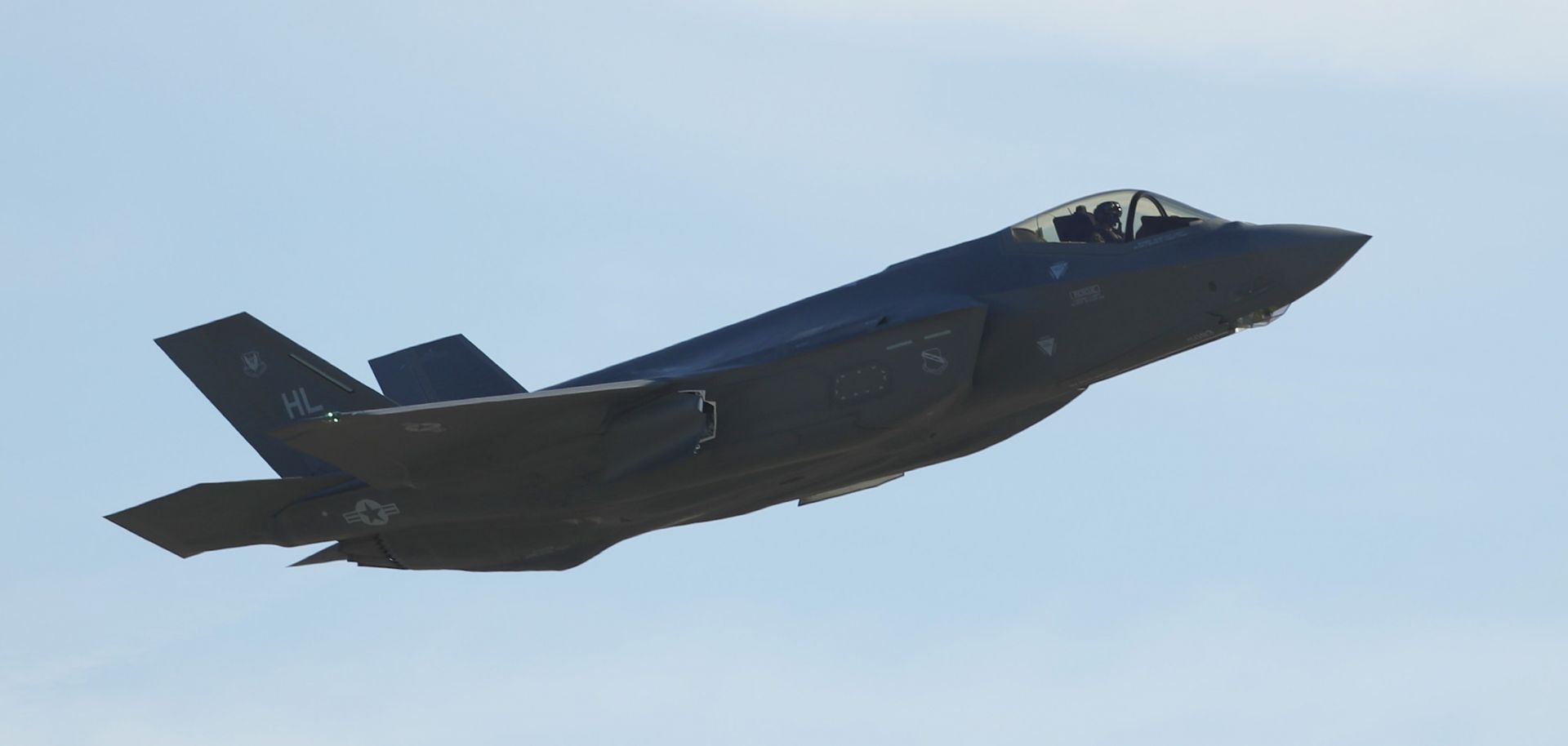
An F-35 fighter jet participates in a training mission at a U.S. military base in Ogden, Utah, on March 15, 2017.
A new U.S.-UAE arms deal will deepen Washington's defense ties with Abu Dhabi, complicating Russian and Chinese attempts to make further inroads in the wealthy Arab Gulf country. On Nov. 10, the administration of U.S. President Donald Trump formally notified Congress that it intends to sell $23 billion worth of arms to the United Arab Emirates. The deal includes 50 F-35 jets and 18 MQ-9 Reaper drones, as well as air-to-air and air-to-ground munitions. Though the United Arab Emirates’ regional policies will face greater scrutiny under U.S. President-elect Joe Biden, the arms deal is still unlikely to collapse entirely once he takes office in January. Compared with Trump, Biden has been more critical of Arab Gulf states’ human rights records and regional behavior, which could affect future arms sales to the region.
