
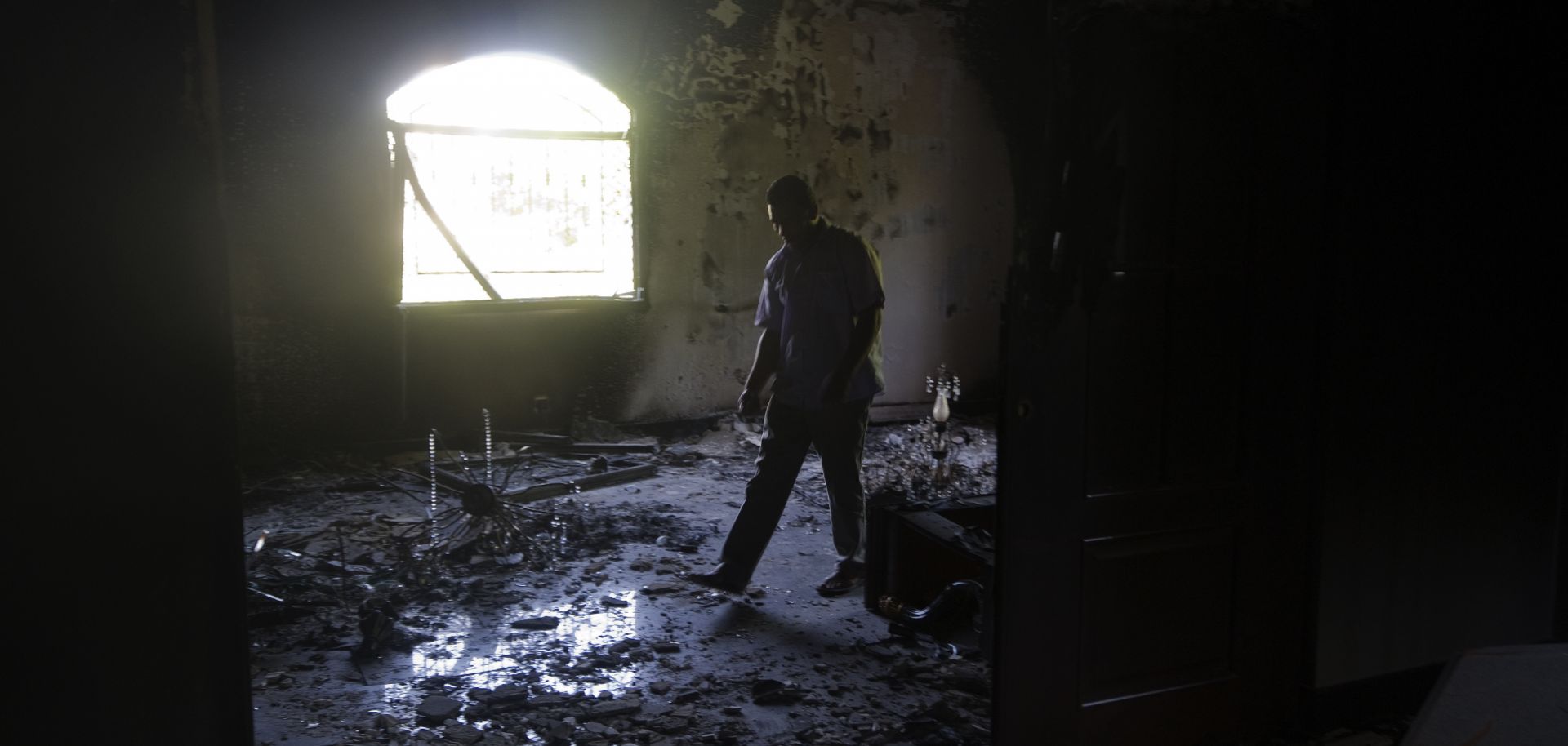
A Libyan man walks through the debris of the damaged US ambassador's residence in the US consulate compound in Benghazi on September 13, 2012, following an attack on the building late on September 11 in which the US ambassador to Libya and three other US nationals were killed. Libya said it has made arrests and opened a probe into the attack, amid speculation that Al-Qaeda rather than a frenzied mob was to blame.
In light of the deadly Sept. 11 attack on the U.S. Consulate in Benghazi , myriad questions have emerged about the security failures that led to the deaths of U.S. Ambassador Christopher Stevens, three other U.S. citizens in Benghazi and eight Libyan security guards. Indeed, multiple factors, some stemming from the consulate's hasty establishment after the Libyan civil war erupted in 2011, made the diplomatic compound uniquely vulnerable to an attack. The security risks were increased by the highly charged environment and recent resurgence of jihadist activity in Benghazi, as well as the questionable decision for the ambassador to be in such a location on the anniversary of the 9/11 attacks. Militant Environment The first factor to examine when analyzing the chain of events that led to the Benghazi attack is the environment in which the facility was located.
