
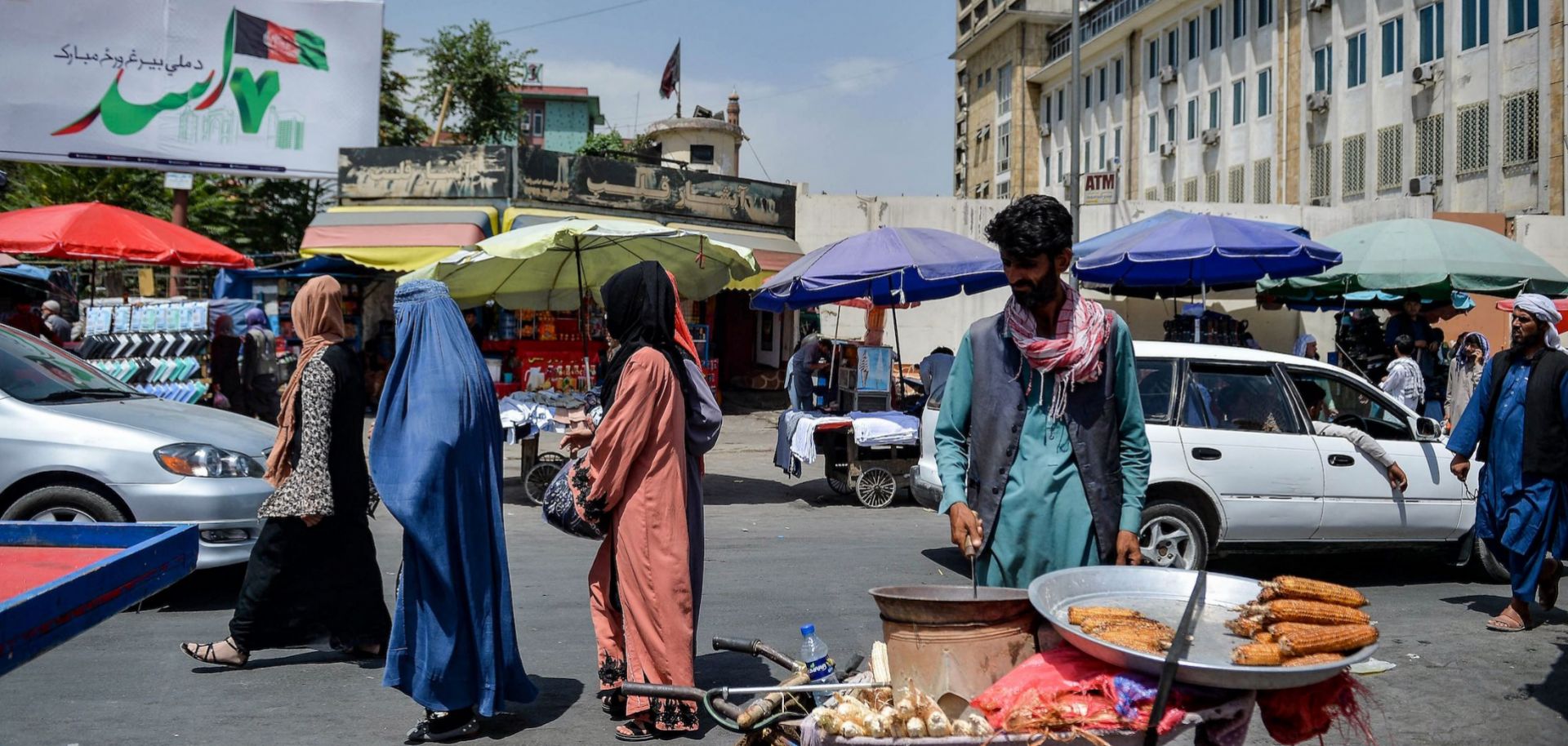
Afghan women shop at a market area in Kabul on Aug. 23, 2021, following the Taliban's takeover of the country.
The Taliban will struggle to provide core government services, maintain infrastructure and generate public investment to support growth in Afghanistan’s largely aid-dependent economy, which will create room for internal dissent and unrest by leaving subsistence agriculture and illegal activities as the main sources of revenue in the war-torn country. The Taliban takeover will exacerbate Afghanistan’s pre-existing economic challenges , while the combined effects of COVID-19 and a severe drought will create new ones. According to a February 2021 report released by the U.S. government’s Afghan Study Group, the poverty rate in Afghanistan is now estimated to be as high as 72%, up from 55% in 2017 — driven largely by the ongoing COVID-19 crisis. In 2020, the U.N. Development Program ranked Afghanistan 170 out of 189 countries and territories in terms of human development and also estimated that more than one million Afghans were internally displaced.
