
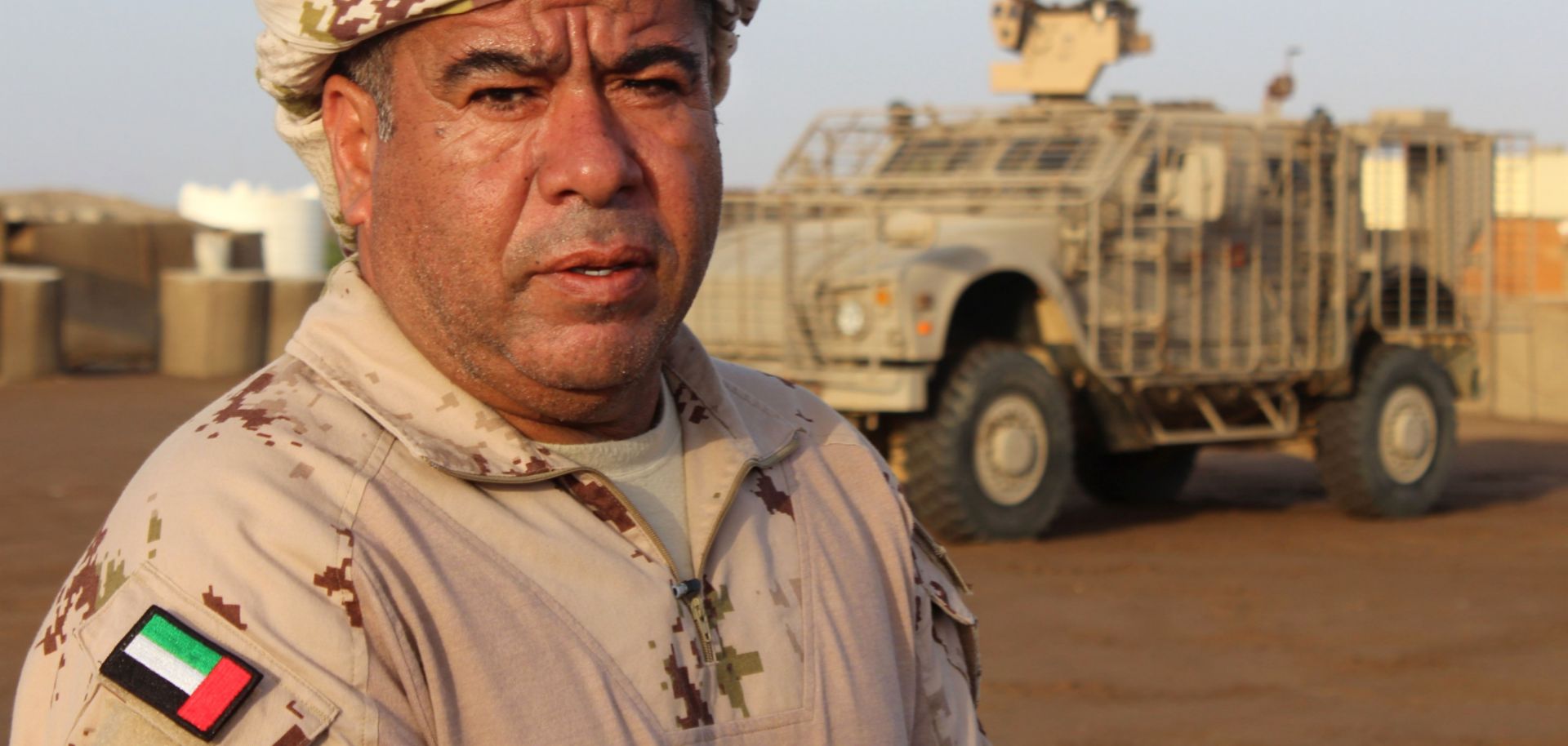
Col. Saeed Salmeen, the Emirati commander of the Saudi-backed coalition on Yemen's west coast frontline, is pictured at a military base in Khokha, 100 kilometers south of the flashpoint Red Sea port city of al-Hudaydah, on Jan. 21, 2019. As the Middle East heats up, the United Arab Emirates is taking a step back to achieve its goals from behind the scenes.
The goals haven't changed, but the methods of achieving them have, at least as far as the United Arab Emirates is concerned regarding foreign policy. In recent weeks, Abu Dhabi has raised eyebrows by conducting a partial pullout from its war against Iran-backed Houthi rebels in Yemen, while at the same time pursuing low-level maritime talks with Tehran to manage its relations with its great regional nemesis. For some time, Abu Dhabi has been at the forefront of the anti-Iran campaign, lobbying for stronger sanctions to not only permanently end the prospect of an Iranian nuclear bomb but also roll back the Islamic republic's ballistic missile program and influence throughout the Middle East, which the United Arab Emirates views as a threat.
