
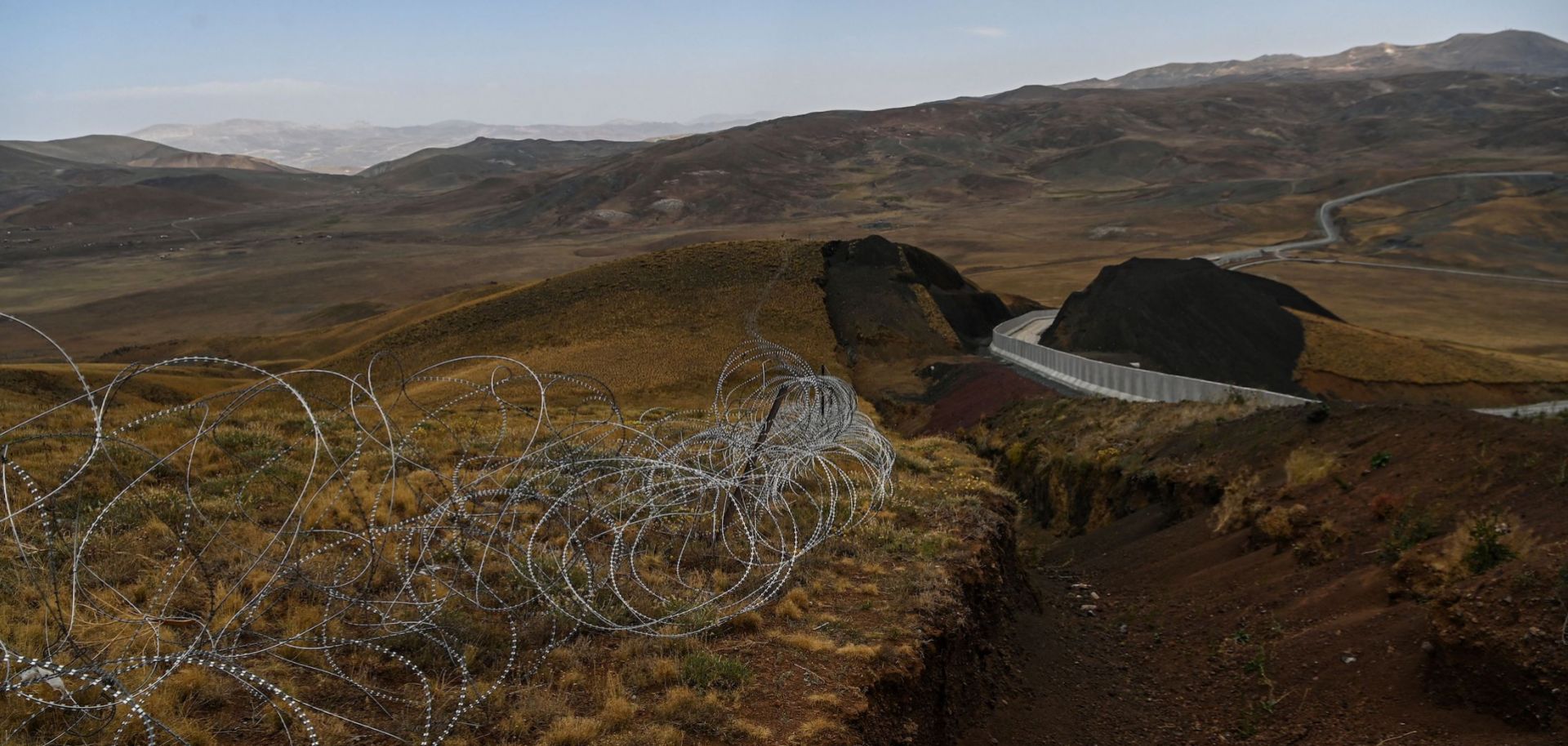
A picture taken on Aug. 16, 2021, shows the landscape of Iran behind a section of the newly completed wall on Turkey’s eastern border in Caldiran.
Amid the coming wave of Afghan migrants , the Turkish government will be forced to choose between exacerbating anti-refugee unrest at home or creating humanitarian crises elsewhere — either of which would threaten the ruling Justice and Development Party (AKP)’s hold on power. Since encountered waves of refugees from Syria and Afghanistan in 2014-15, the AKP has focused on hosting refugees in exchange for EU aid, while also playing up the party’s pan-Islamist ideological credentials by hosting fellow Muslims from war-torn countries. But nativism is on the rise in Turkey , as evidenced by anti-Syrian riots that broke out in Ankara on Aug. 11. And as a result, the AKP is now finding its refugee strategy outdated, and a growing threat to the party’s prospects in the scheduled 2023 national elections . Turkey already hosts some 4 million refugees. Most are Syrian, but roughly 120,000 are Afghans.
