
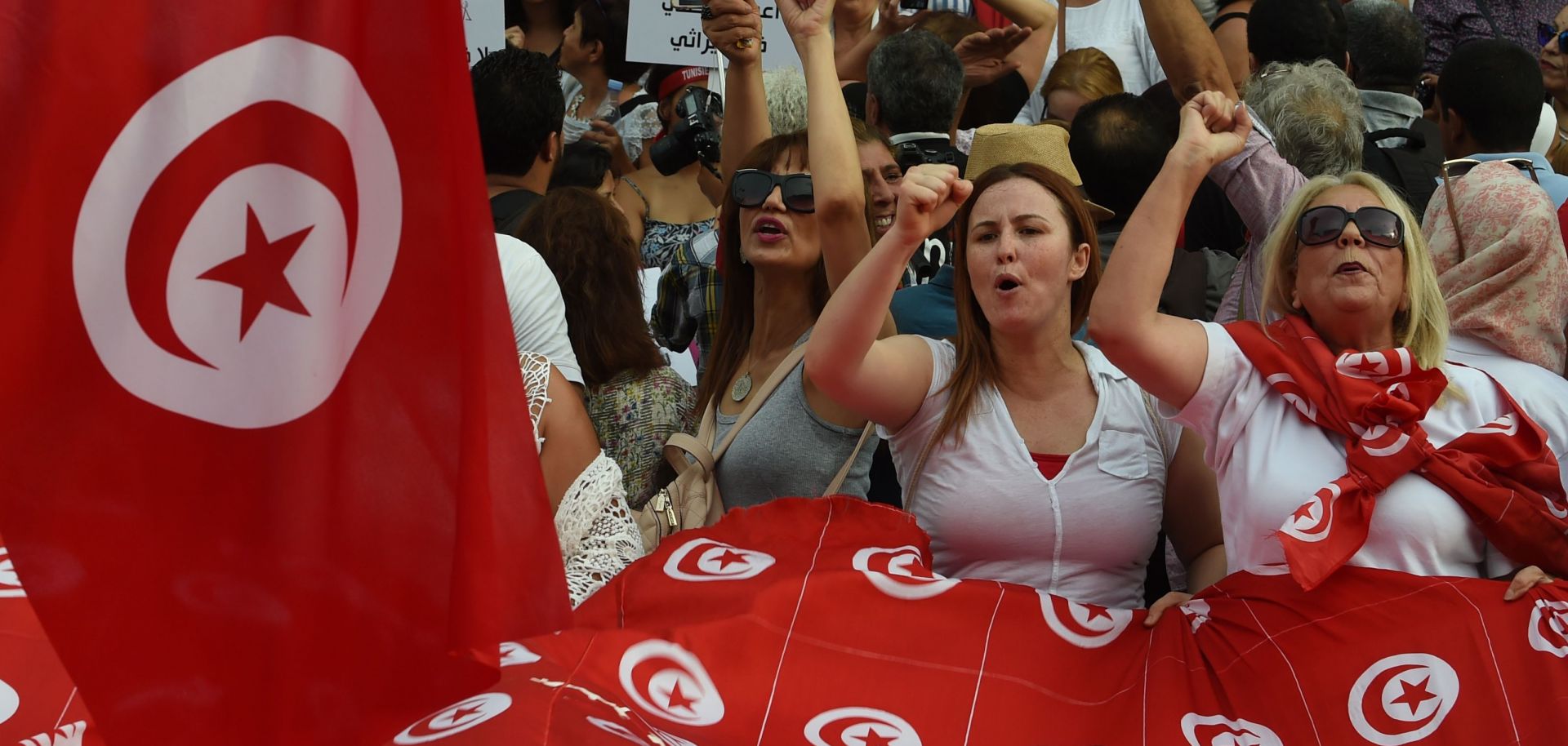
Tunisian women chant slogans and wave their national flag during a demonstration on Aug. 13, 2018, to mark Tunisia's Women's Day and to demand equal inheritance rights for men and women.
For the last four years Tunisian politics have been in near constant disarray, teetering on the brink of a crisis. But an uneasy alliance between President Beji Caid Essebsi, of the secular Nidaa Tounes party, and Rachid Ghannouchi, leader of the Islamist Ennahda party, has kept the fragile government functional. Until now. On Sept. 24, Caid Essebsi confirmed rumors that the four-year alliance between the two men, often called Tunisia's Two Sheikhs, was over. The split between the two political power brokers comes not long before Tunisia's parliament reconvenes in October after a two-month recess, and the consequences of the fracture will make it near impossible for the country to implement many necessary economic reforms. Tunisia's Troubles After Ben Ali The Tunisian government's ideological turmoil began after longtime dictator Zine El Abidine Ben Ali fell in 2011 .
