
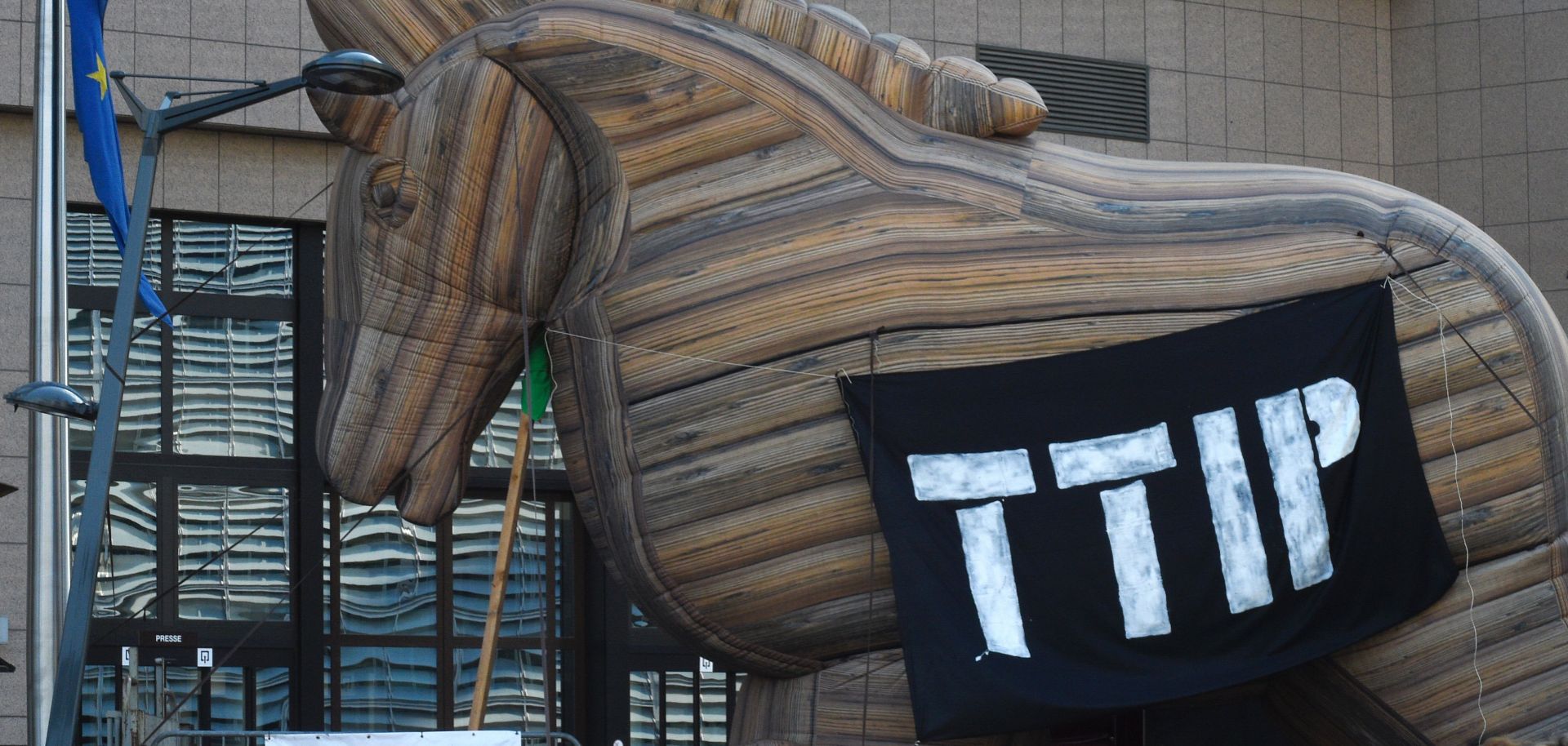
Protesters use an inflatable Trojan horse outside European Union headquarters on Sept. 20, 2016, to express their disagreement with the planned Transatlantic Trade and Investment Partnership. Trade talks between the European Union and the United States would stall the next month.
Although U.S. President Donald Trump and European Commission President Jean-Claude Juncker agreed to a trade truce and talks on July 25, it took less than 36 hours for significant divergences to emerge on where negotiations between the United States and the European Union may go from here. The differences do not bode well for the truce's longevity as talks are likely to eventually include stickier issues that have prevented a trans-Atlantic trade deal for years. The U.S. Puts Agriculture on the Table U.S. officials already have put greater access to EU agricultural markets on the table as an eventual demand despite Trump and Juncker only agreeing to reduce trade barriers on non-auto industrial goods. On July 26, U.S. Trade Representative Robert Lighthizer explicitly said it was the United States' "view that we are negotiating about agriculture.
