
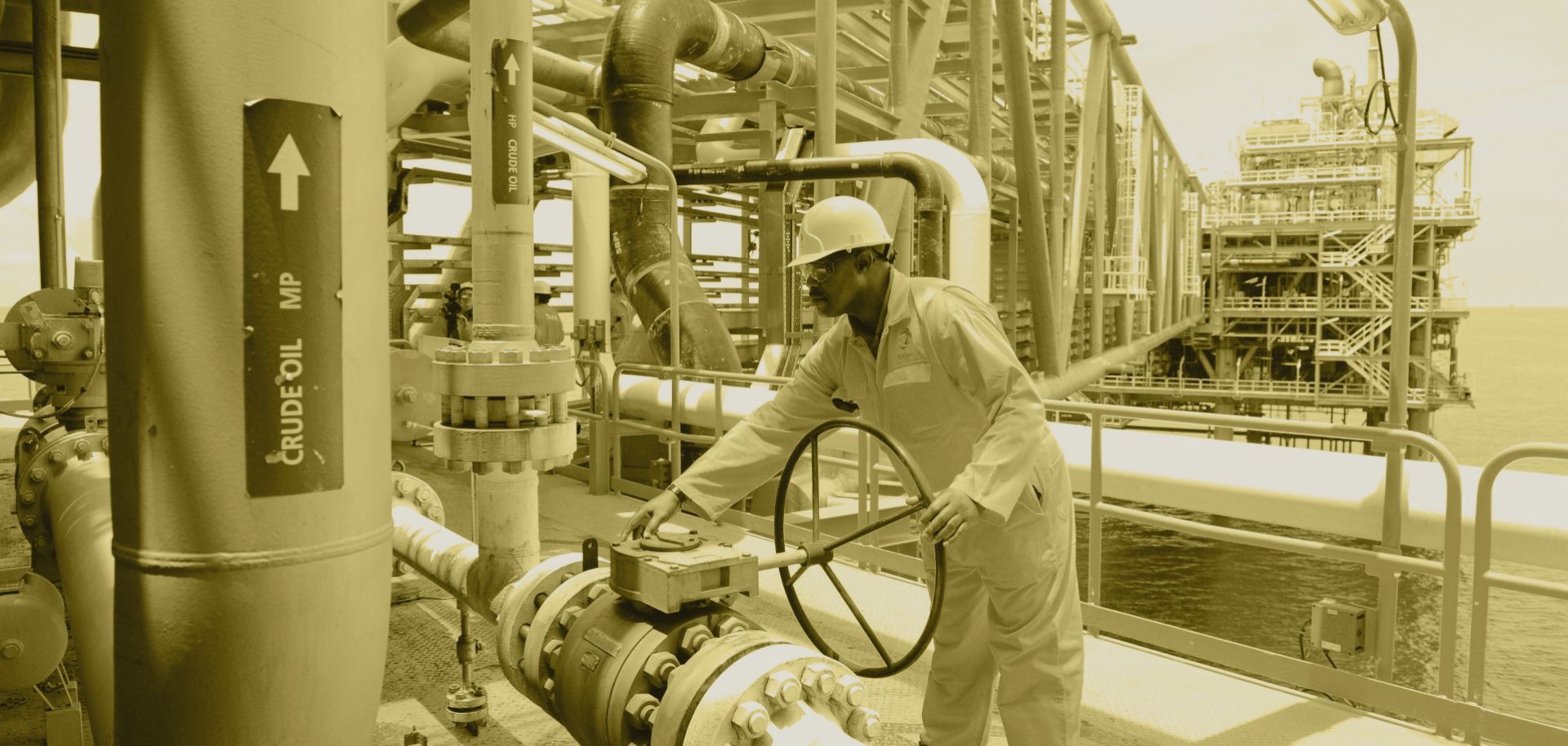
A worker inspects a Total oil drilling platform near Port Harcourt in the Niger Delta. Nigeria has historically taken a defensive approach to global trade.
Economic Background Nigeria has historically taken a defensive approach to global trade. In fact, the International Monetary Fund once declared that the country possessed one of the most restrictive trading regimes in the world. Nigeria's stance largely stems from its abundance of oil and natural gas reserves and its corresponding struggle to diversify its economy. In the years following an uptick in global energy prices in the 1970s, Nigeria's economy became increasingly dependent on crude oil exports . As the country directed resources and attention toward boosting its cash cow, its manufacturing and agricultural capacities declined. Meanwhile, the nation began to drift toward military rule. Nigeria's leaders promoted a rigid model of economic protectionism to develop nascent industries at home, but often opaque implementation provided significant opportunities for corruption. The lurch toward oil dependency and military rule soon produced a vicious cycle.
