
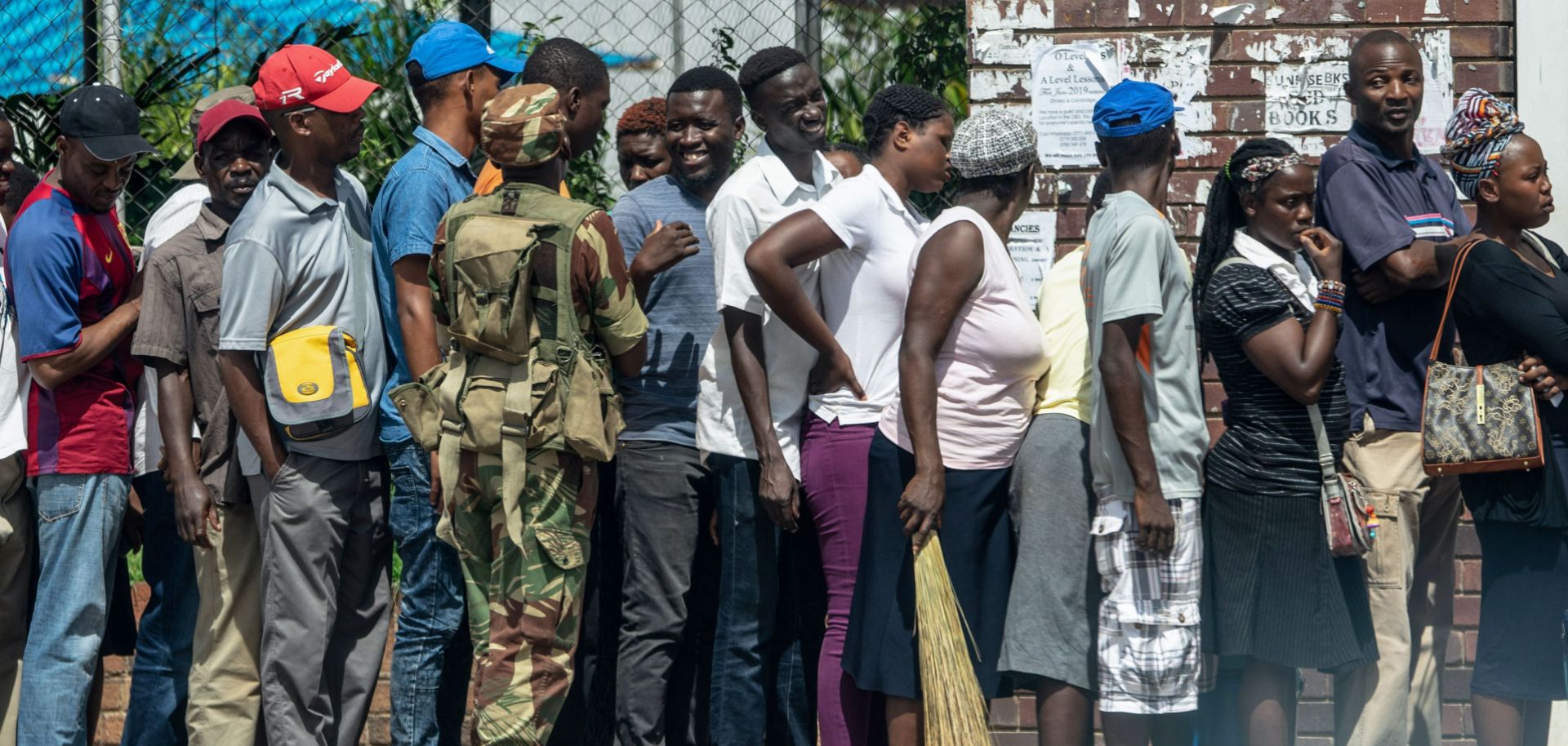
A Zimbabwean soldier watches shoppers lining up in Bulawayo on Jan. 17, 2019. Harare is running out of options to rectify the country's economic woes.
President Emmerson Mnangagwa has been in Zimbabwe's hot seat for only a little over a year, but his government is feeling considerable heat. The legacy of a persistently weak economy under Mnangagwa's predecessor, Robert Mugabe , has left the country with few currency reserves. And last week, conditions became so dire that strikers and protesters took to the streets in Zimbabwe's two biggest cities to demand change. The protests have subsided for now, but the country's underlying economic woes have not — and that spells trouble for the future of Mnangagwa's government. The Quest for a Currency If there is one thing Zimbabwe is known for, it is its flawed economy. Before its 1980 independence, the country was one of Southern Africa's major agricultural producers, but for years now it has been beset by perpetual food crises and economic collapse.
