
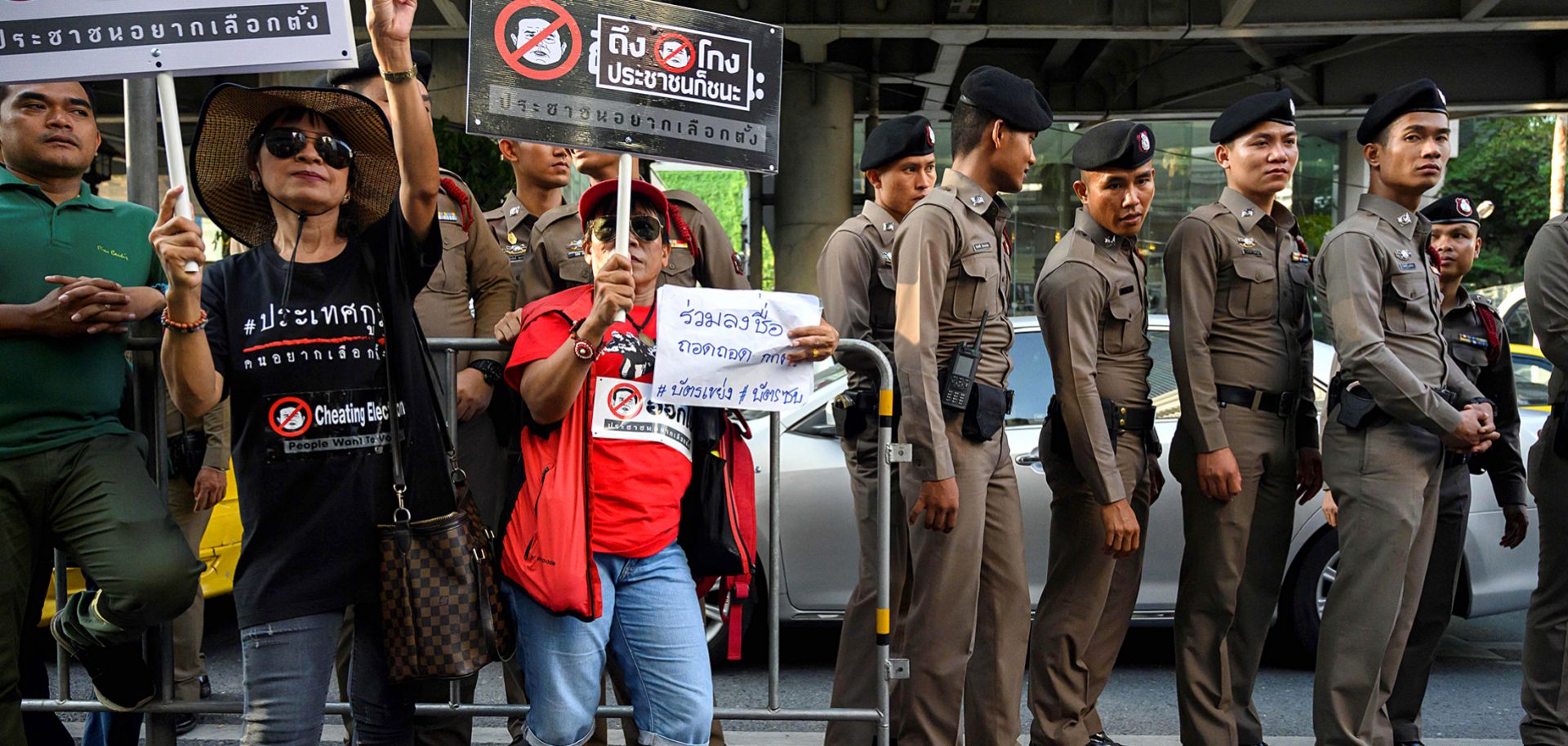
Anti-junta protesters in Bangkok dispute results of Thailand's first general election since a 2014 coup on March 31, 2019. Election results illustrated the divide in Thai politics between those supporting military leadership and those opposed to military control of the government.
The dust from Thailand's landmark election has largely settled , and the country's military junta, on the verge of handing the reins to popularly elected leaders, has emerged in an even stronger position than early returns suggested. The country's National Assembly will convene May 22, five years to the day when Gen. Prayuth Chan-ocha ordered the military to seize power and arrest the members of the civilian Cabinet . Since then, a military junta, with Prayuth serving as prime minister, and its allies in the monarchy have worked diligently not only to effect a royal transition but also to promulgate a constitution that limits civilian rule. With the rewrite, the military leaders are guarding against the potential return to power of forces loyal to the popular exiled politician Thaksin Shinawatra and his family , fearing a return to political chaos and its ripple effects on Thai stability.
