
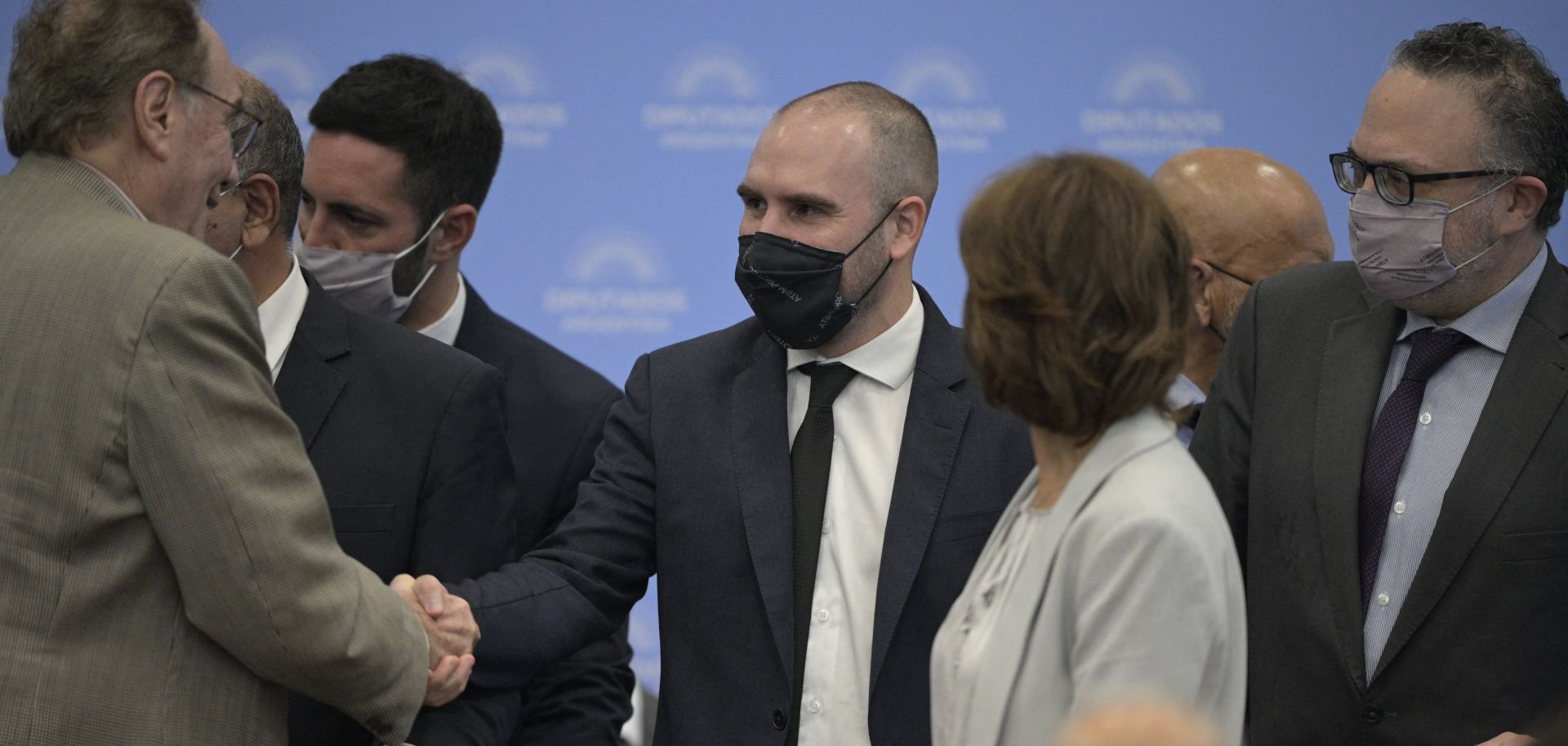
Argentina's finance minister Martin Guzman (center) shakes hands with a member of the country’s Congress in Buenos Aires before briefing legislators on the government’s new deal with the International Monetary Fund on March 7, 2022.
The backloading of payments and fiscal consolidation measures in Argentina's latest agreement with the International Monetary Fund (IMF) will mitigate the immediate risk of political backlash, but it will come at the cost of Buenos Aires likely needing to seek additional negotiations in the future. Argentina and the IMF reached a staff-level agreement on March 3 to restructure the country's $45 billion of debt with the institution. The deal includes a grace period of 4.5 years, implying that the repayment of the debts will span from 2026 until 2034. According to the IMF, the staff-level agreement “aims to provide Argentina with balance of payments and budget support to address the country's most pressing economic challenges," including Argentina's persistently high inflation, high fiscal deficit, low central bank reserves, and little domestic savings due to slow growth.
