
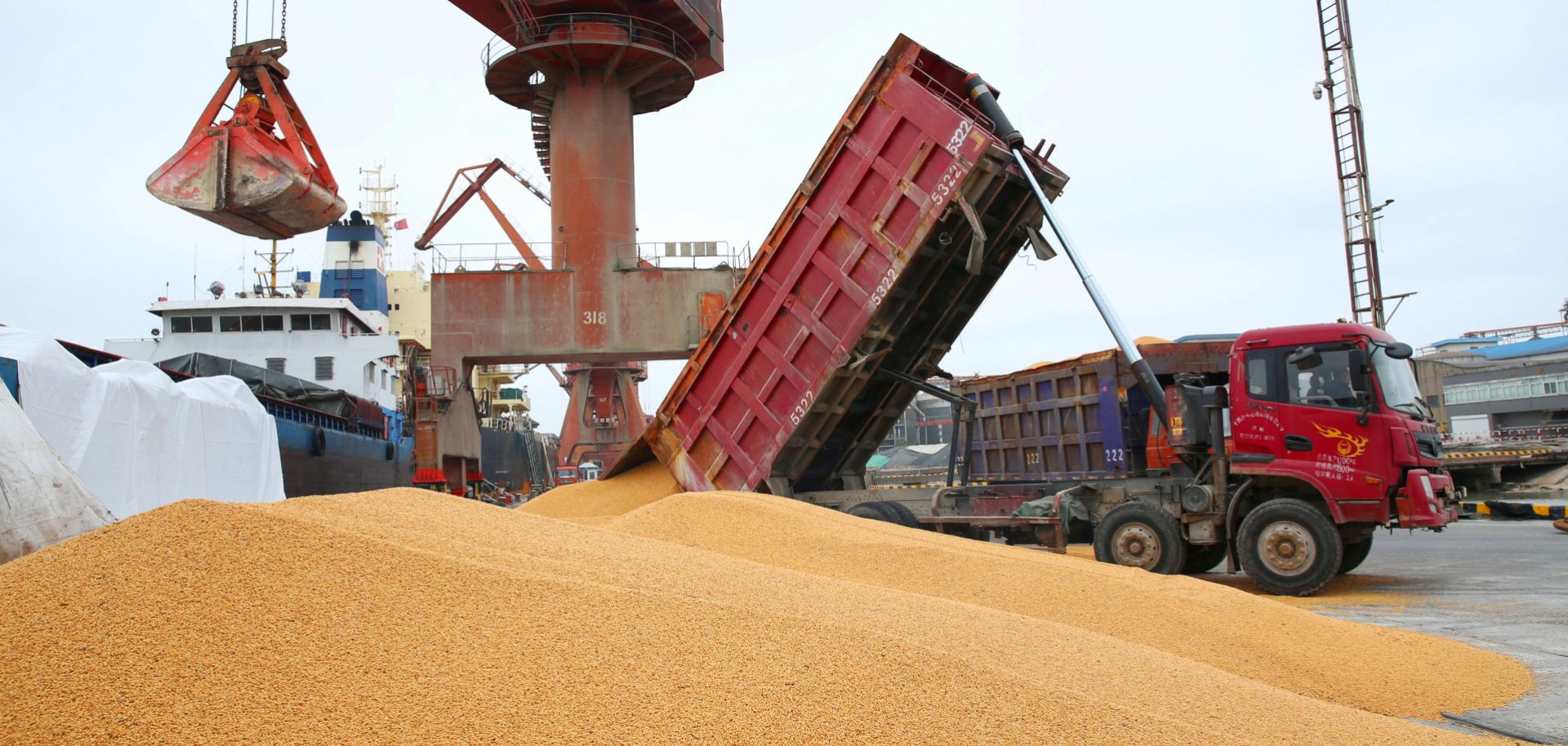
Workers load imported soybeans onto a truck at a port in Nantong in China's eastern Jiangsu province. Chinese soybean stocks are at a 10-year high, which could help China absorb the loss of U.S. imports brought on by tariffs.
U.S. farmers could soon start to feel the sting of the White House's trade battles, especially as the fallout from its skirmishes with China begins to hit. Tariffs imposed by Beijing in retaliation for those slapped on Chinese goods by the United States include a 25 percent levy on soybeans, a key import. The world's second-largest economy is also its largest soybean importer, but China appears well positioned to weather the higher prices that tariffs have brought. In the end, higher prices for U.S. soybeans could accelerate changes already occurring in the Chinese market, eroding U.S. market share and spurring China to further increase domestic production of the crop. China currently buys more than 60 percent of total global soybean exports, with half of that demand filled by Brazil. The United States, meanwhile, holds about a 40 percent share of the Chinese market.
