
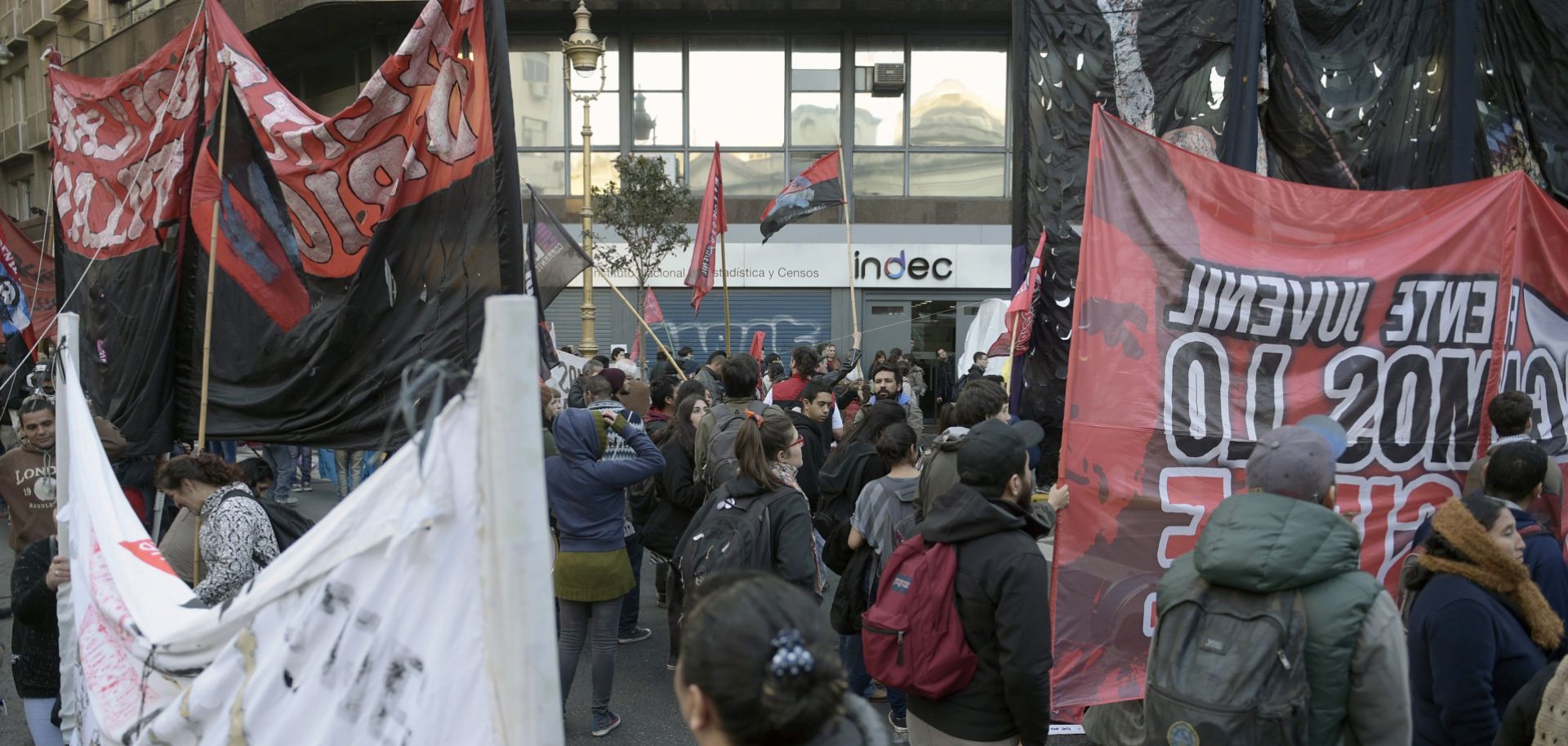
Activists in Buenos Aires, Argentina, protest at a government news conference on the release of inflation figures on June 15, 2016. It was the first official release of those numbers since the inauguration of President Mauricio Macri in December 2015. Argentina had halted the release for six months, and Macri said the numbers are the first honest estimate in years.
In Argentina, the political pendulum swings between economic reform and state intervention. Since taking office in December 2015, President Mauricio Macri has enacted numerous economic improvements and trade liberalizations to ease inflation and improve growth. However, those changes may not be enough, and his time is running short. The next presidential election will be in November 2019, and the reduced but still high inflation, along with a trade deficit, could pinch voters and lead to a populist backlash, bringing the return of greater government restrictions and regulations. Lessons in Reform, Populism and Voter Pain When Macri was elected in 2015, he emphasized the need to go slowly in liberalizing Argentina's economy . Previous reform attempts had been met with extensive opposition and a populist resistance , so the government had to find a way to balance economic reform against the amount of pain those changes caused voters.
