
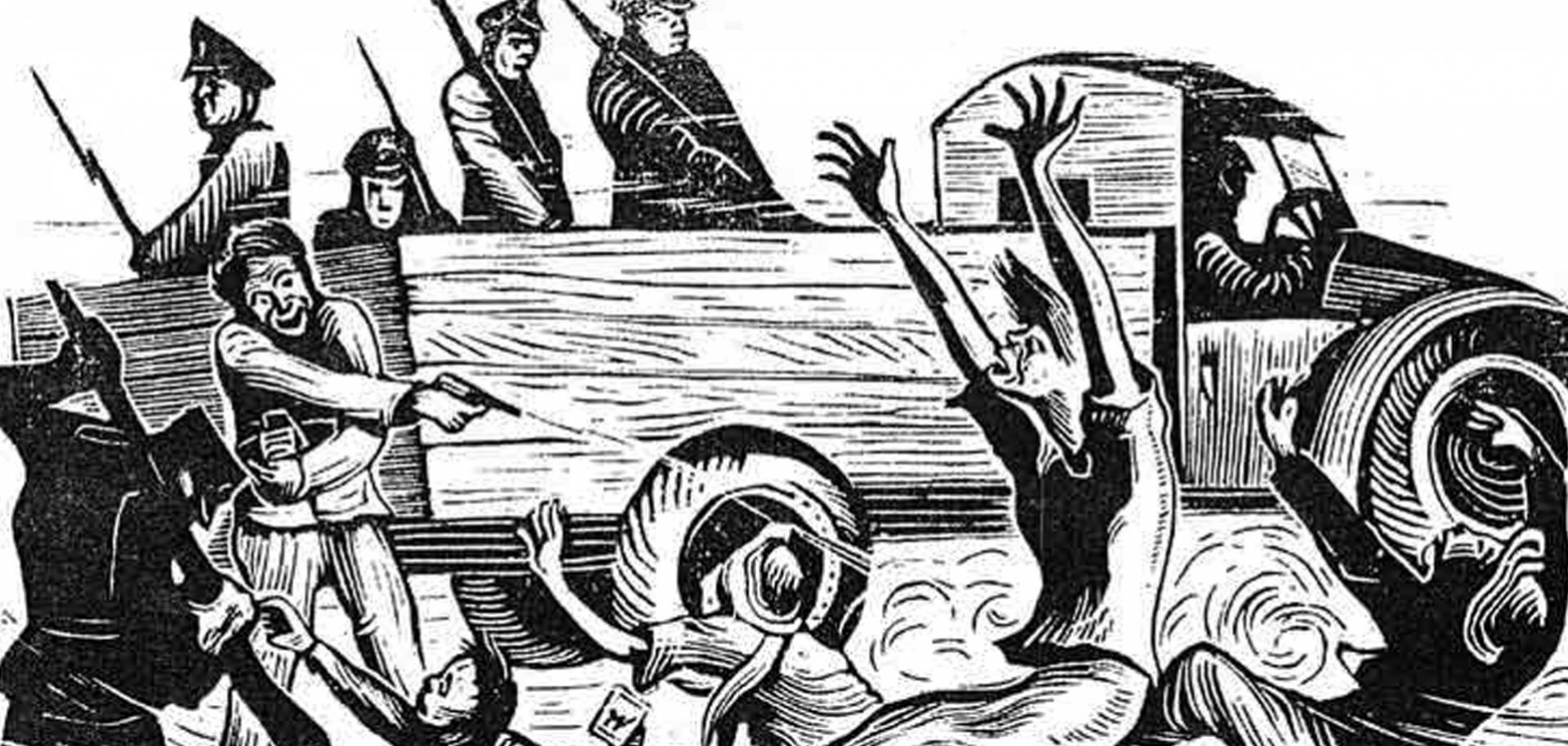
"Dogs go, pigs come," read the graffiti-smeared walls throughout Taipei in February 1947. It was less than a year and a half since the Allies had driven the so-called "dogs" out, defeating the Japanese Empire and liberating Taiwan from 50 years of foreign rule. Taiwan now belonged to Generalissimo Chiang Kai-shek's Nationalist government, the Kuomintang. Soon after the Japanese surrender, however, Nationalist attention turned toward a different struggle, this time against Mao Zedong's communists on the Chinese mainland. Fixated on the desire to seize power, the Nationalists afforded Taiwan scarce attention, and the resulting misrule and widespread discontent led to a massive uprising in February 1947. This came to be known as the "228 Incident," the aftershocks of which still inform both the Taiwanese sense of identity and its relationship with the mainland. (Wikimedia) Future Chief Executive Chen Yi (right) and Japanese Gen.
