
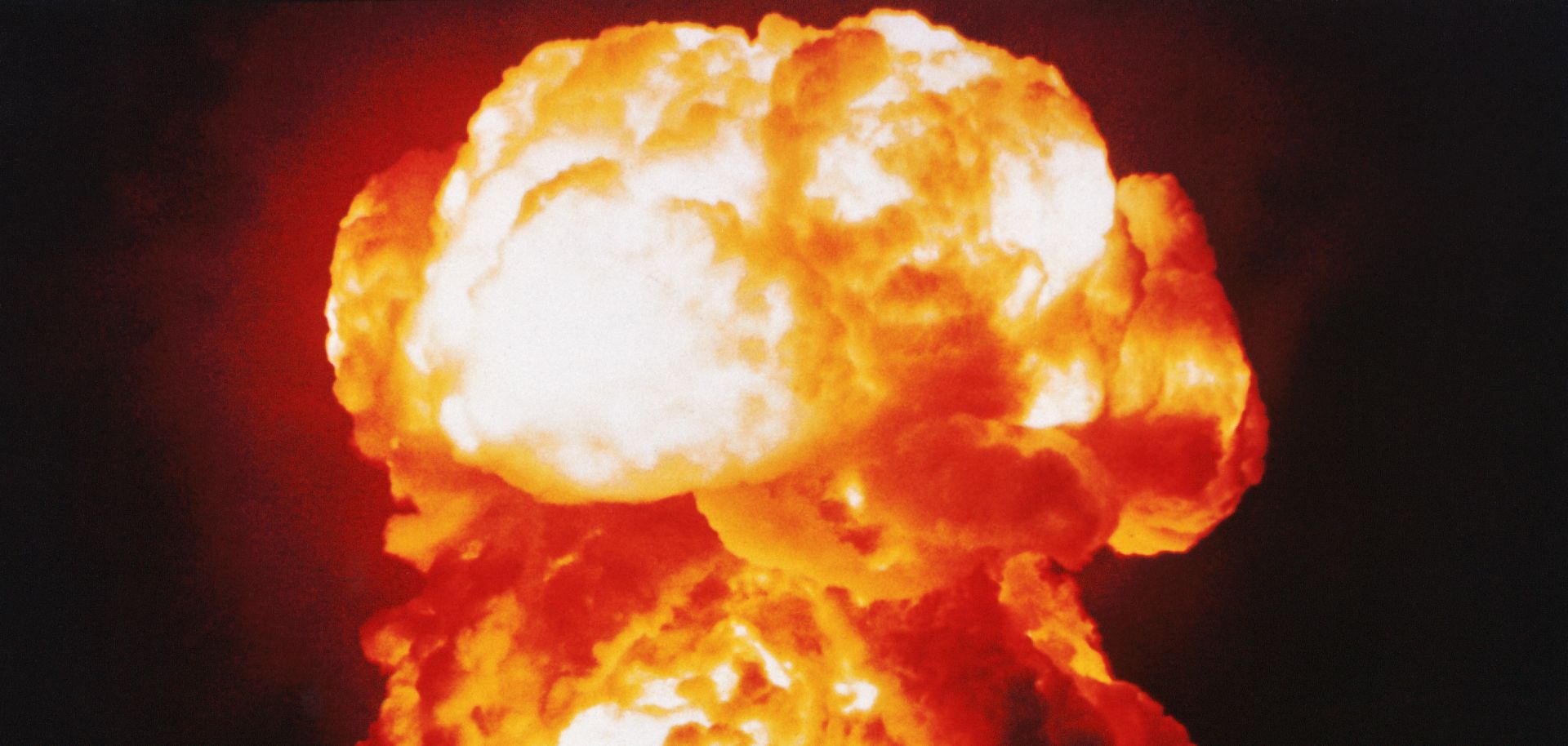
The United States detonates an atomic bomb nicknamed "Smokey" as part of Operation PLUMBBOB in the Nevada desert in 1957. As the U.S. leaves the INF Treaty, missile proliferation will only increase.
Editor's Note : On Aug. 2, the United States officially leaves the Intermediate-Range Nuclear Forces (INF) Treaty, 32 years after U.S. President Ronald Reagan and Soviet leader Mikhail Gorbachev signed the agreement to ban nuclear and conventional ground-launched ballistic and cruise missiles with a range of 500-5,500 kilometers (310-3,410 miles). As the end of the INF Treaty threatens to accelerate and intensify an ongoing arms race, we look back on some of our key assessments charting the fall of that agreement, as well as the status of other key arms control deals . The Decline and Fall of the INF Russia Threatens to Withdraw From Arms Treaties March 14, 2014 : On the matter of the INF, it is important to remember that the agreement limits the deployment of all land-based intermediate-range missiles, whether deployed with a conventional or nuclear warhead.
