
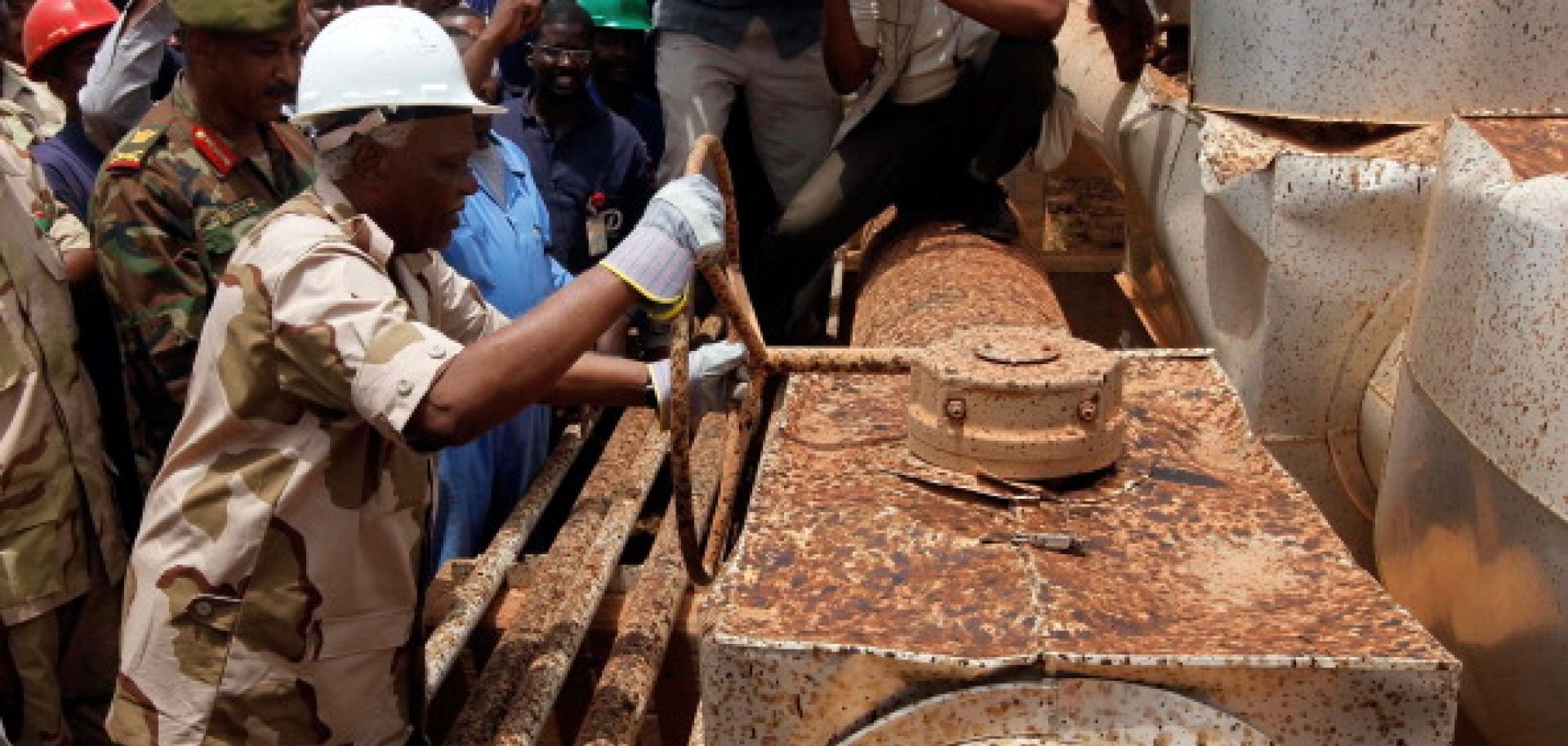
Prior to South Sudanese independence, Sudan split oil revenue equally with the semi-autonomous government in Juba. The terms of the current deal effectively extend this 50/50 ratio through a combination of grants offered by Juba and pipeline fees charged by Khartoum. Sudan-South Sudan Border and Oil Fields South Sudanese officials have said that crude production could begin as early as December, though the pipelines will need to be flushed before oil can begin flowing again. South Sudan's crude production will begin at about 150,000 barrels per day and will gradually increase to about 325,000 barrels per day, which was South Sudan's average peak production prior to the cutoff. This will provide essential revenue for the South Sudanese government, which relies on oil for 98 percent of its budget .
