
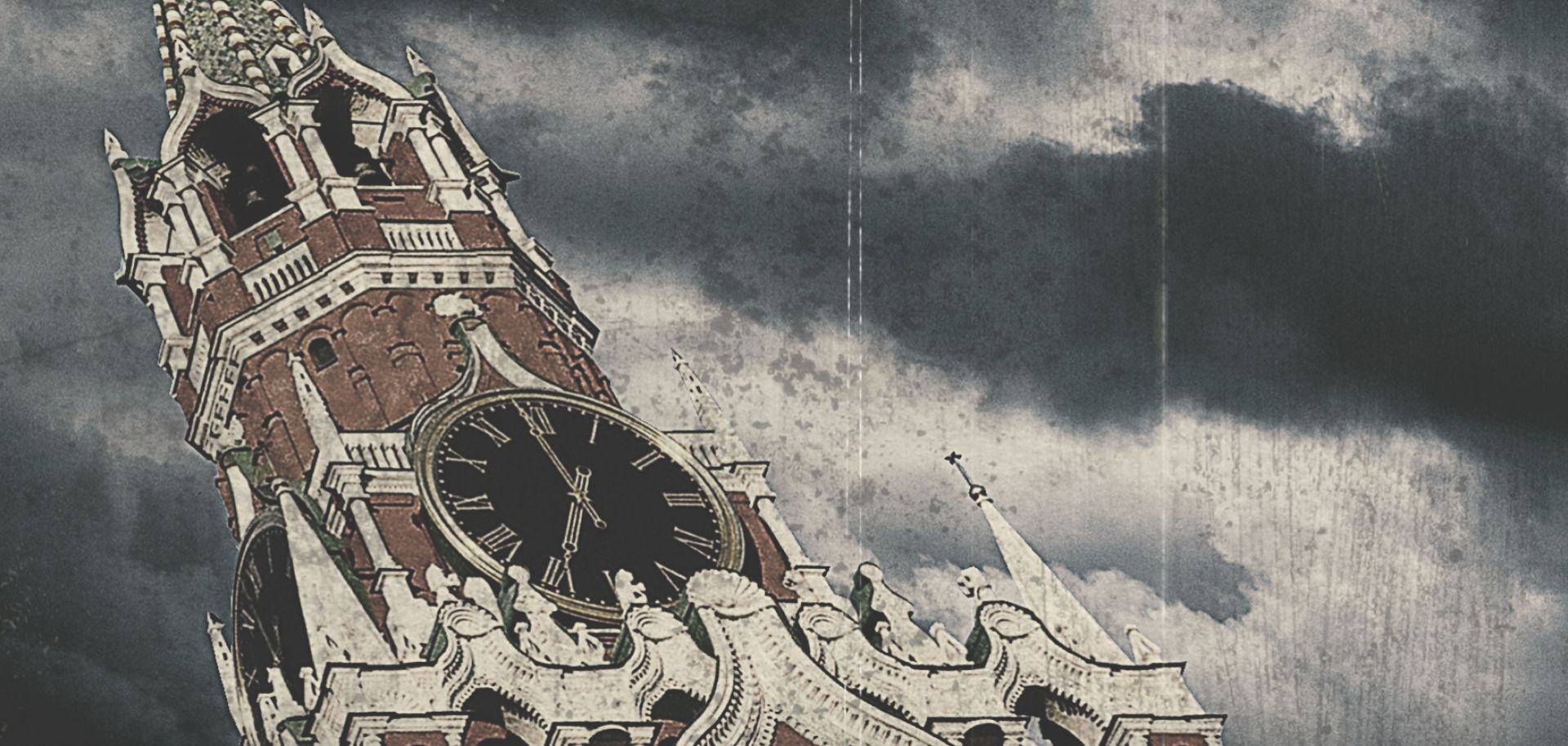
The art of Kremlinology involves watching hundreds of seemingly unconnected events and pieces move while attempting to draw common threads into a narrative. These relationships and the struggles between them reflected the power and stability of the leader of the Soviet Union, the power and distribution of assets of Russia's most influential institutions, and the overall strength of the state.
Winston Churchill once said, "Kremlin political intrigues are comparable to a bulldog fight under a rug. An outsider only hears the growling, and when he sees the bones fly out from beneath it is obvious who won." It is true that studying the Kremlin's internal struggles is more an art than a science. Stratfor uses systematic approaches in much of its work, though the art of Kremlinology involves watching hundreds of seemingly unconnected events and pieces move while attempting to draw common threads into a narrative. It is an imperfect art but an important one nonetheless, and it is back in demand now that the Kremlin is facing multiple crises. Soviet-era Kremlinology was akin to sifting through mounds of pine needles before stepping back to see the whole forest.
