
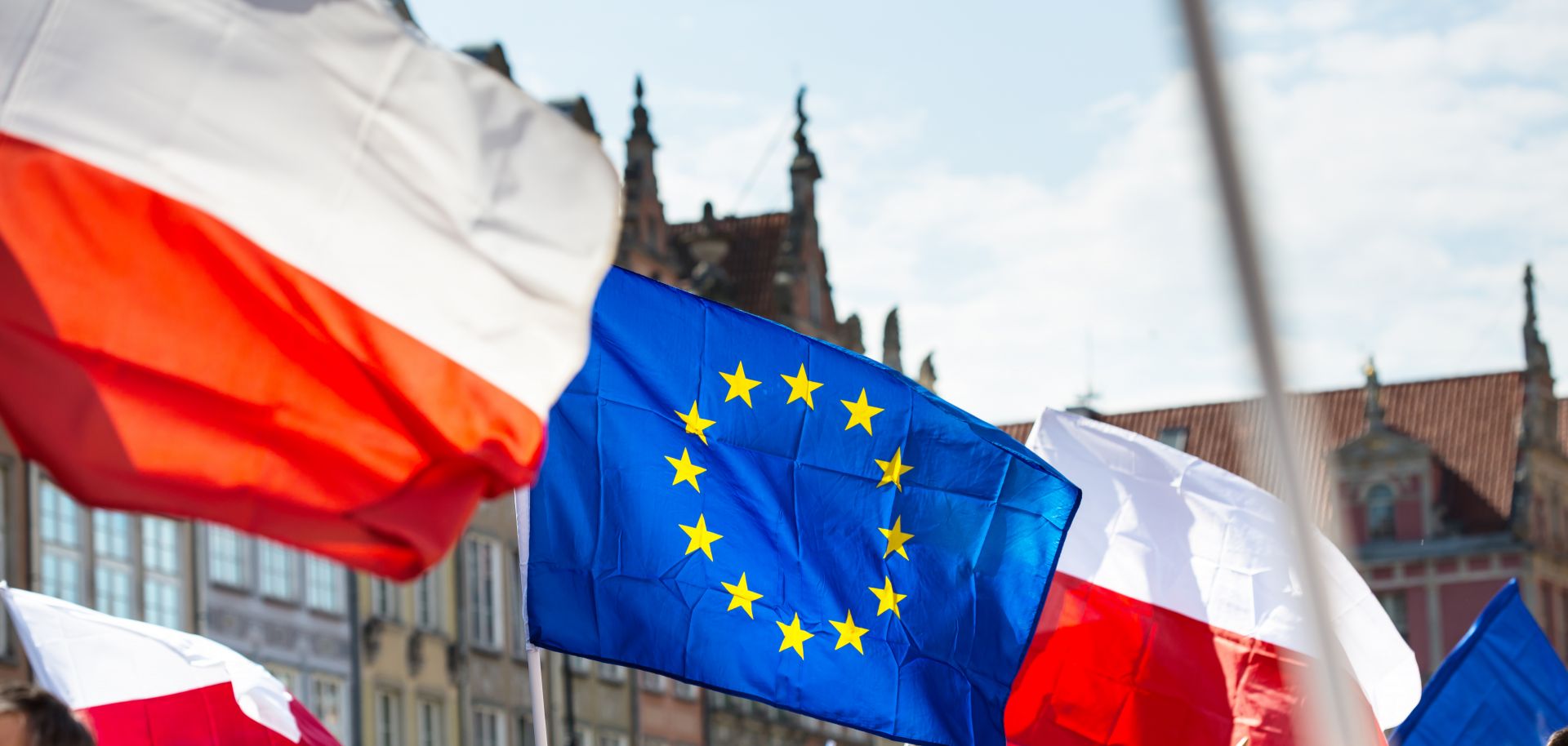
Demonstrators carry Polish and European Union flags during a 2016 rally in Gdansk, Poland. The demonstration was organized by the Committee for the Defense of Democracy to protect the country's constitution.
These are turbulent times for U.S.-EU relations. In recent weeks, the White House and the European Union have clashed over various issues, including the Iran nuclear deal, defense and trade, and have produced friction that could disrupt the political, economic and security institutions that the United States and Europe created after World War II. The developments give most European countries cause for concern, but the issues represent a particularly significant challenge for Poland, because its main security ally — the United States — is at odds with its main economic partner — the European Union. The disputes threaten Poland's interests, but this period of difficulty also presents Warsaw with a variety of options and opportunities. Poland's geopolitical relevance cannot be overstated. The largest country on the European Union's eastern flank has one of the fastest-growing economies in the bloc and is an important part of Germany's supply chain.
