
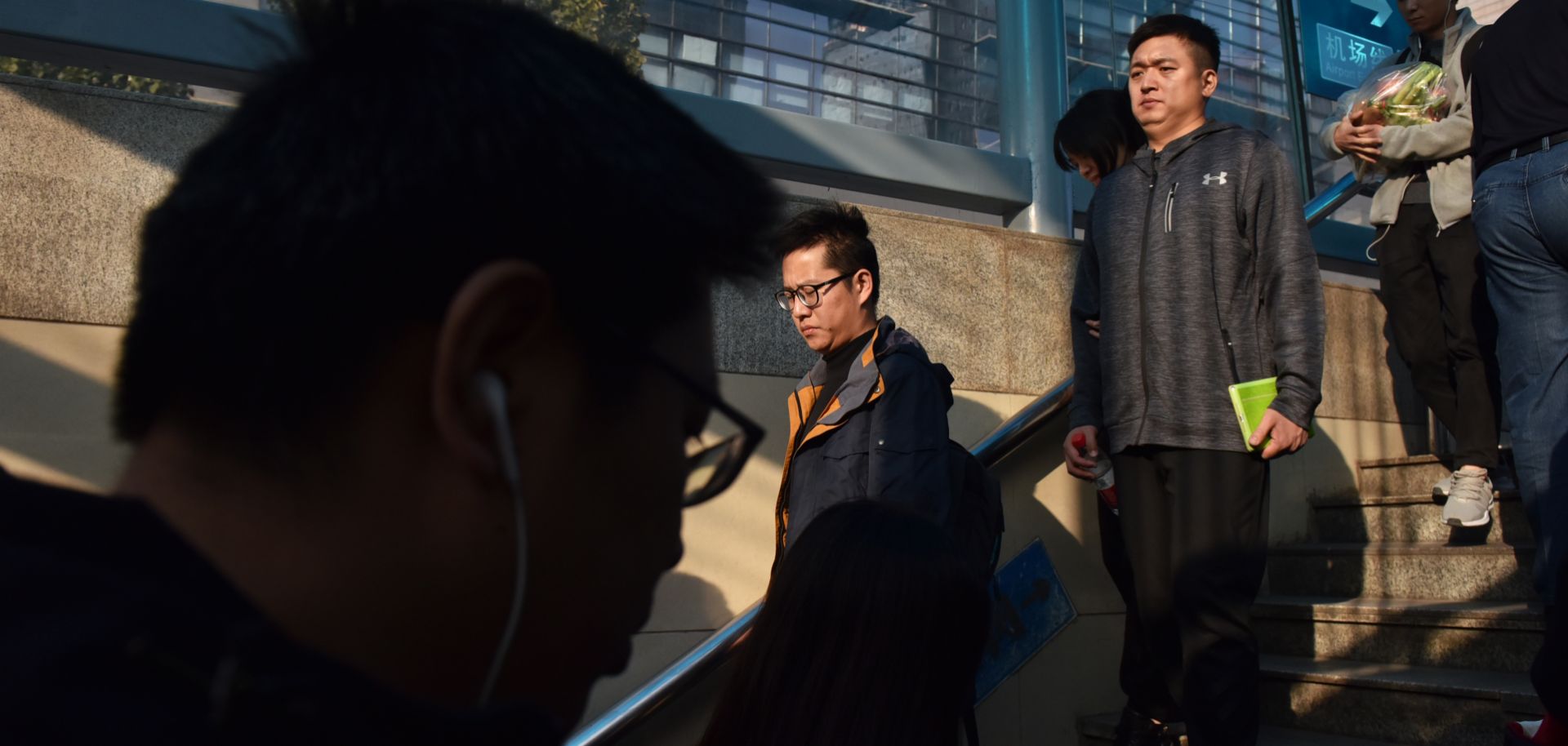
People walk into a subway station in Beijing on Oct. 19, 2018. China's economy grew at its slowest pace in nine years in the third quarter, as a campaign to tackle mounting debt and trade friction with the United States took their toll. The world's second-largest economy expanded 6.5 percent in July-September, National Bureau of Statistics figures showed, marking its worst performance since the height of the global financial crisis.
China is again looking toward its state-owned enterprises (SOE) to help it navigate its economic course. In the decade since the 2008 global financial crisis, Beijing has increasingly relied on these businesses to drive its economy. As it faced sweeping unemployment and scrambled to prop up growth after that meltdown, it saw no better option than to pump up its state-owned giants with infrastructure, transportation and real estate projects. The stimulus ended in the early 2010s, but Beijing has continued to turn to SOEs to lead the country's economic transition, raising fears of favoritism among its privately owned businesses. Beijing has sought to strengthen the SOEs with moves to consolidate industries, reduce output capacity and shrink the amount of debt in the economy.
