
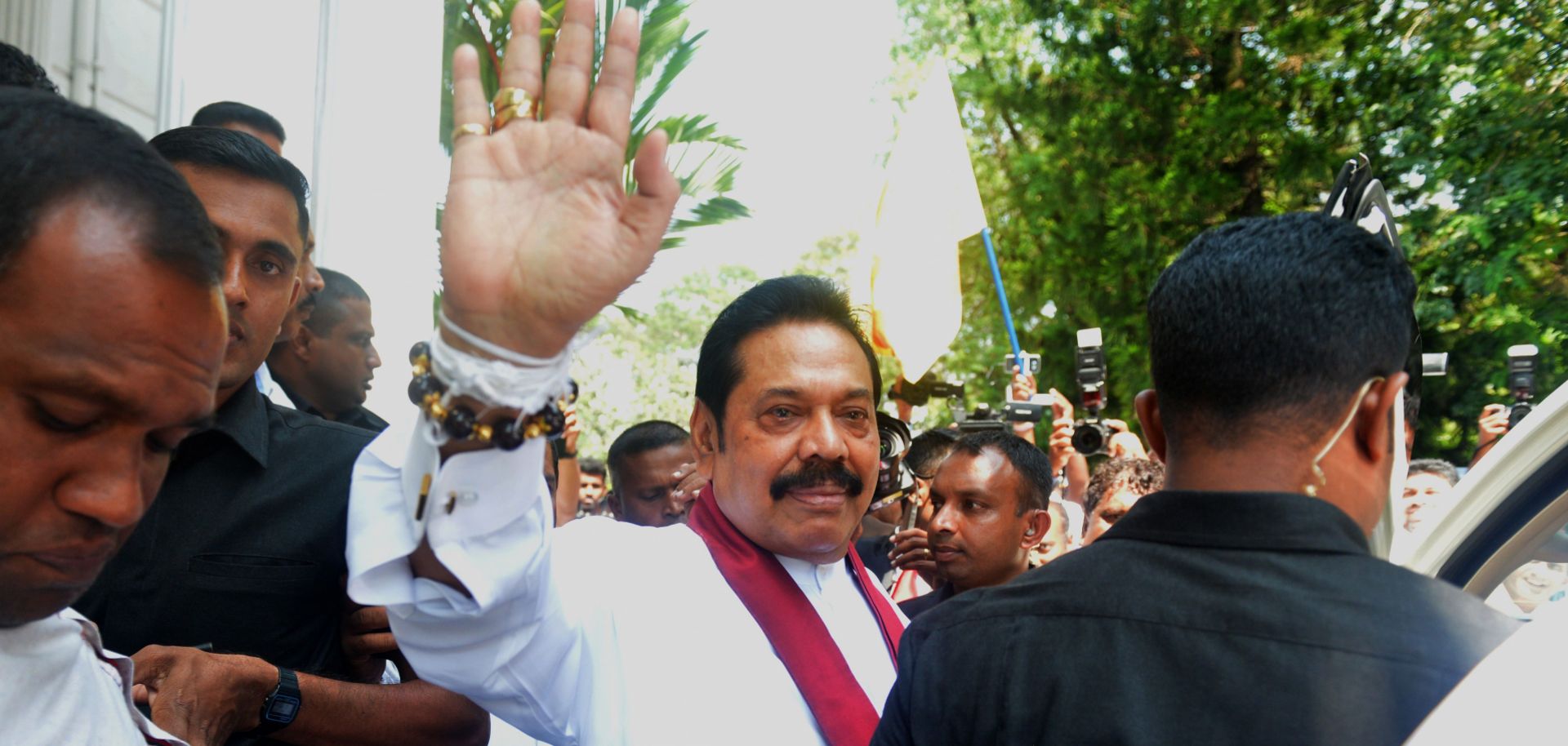
Sri Lanka's newly appointed prime minister, Mahinda Rajapaksa, waves to supporters after a ceremony to assume duties in Colombo on Oct. 29. Sri Lanka's political upheaval is likely to have domestic and international ramifications.
A dramatic shakeup in the highest ranks of Sri Lanka's leadership has thrown the South Asian country into turmoil as a former strongman returns to power. On Oct. 26, President Maithripala Sirisena dismissed Prime Minister Ranil Wickremesinghe and installed Mahinda Rajapaksa, a former rival and president, in his place. And to forestall some of the political fallout from the decision, Sirisena suspended parliament until Nov. 16 as part of a purported move to amass the support of at least 113 lawmakers to survive a likely vote of confidence. Wickremesinghe, who refused to vacate the prime minister's residence, has called for an immediate parliamentary vote to prove his majority. Sirisena, meanwhile, addressed the nation on Oct. 28, justifying Wickremesinghe's dismissal by portraying him as selfish, impatient and corrupt.
