
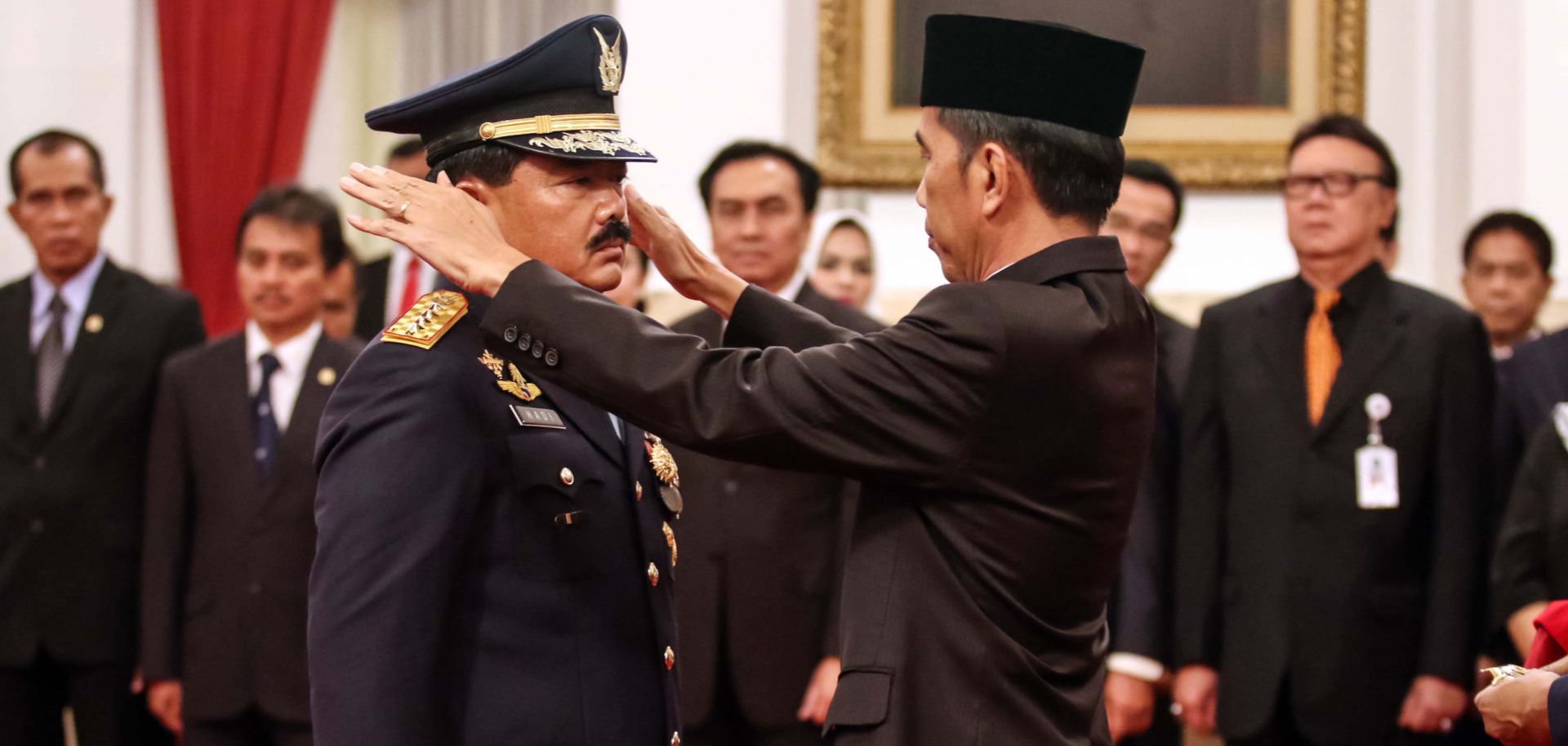
Indonesian President Joko Widodo (right) installs Air Chief Marshal Hadi Tjahjanto as head of the armed forces at the presidential palace in Jakarta on Dec. 8, 2017. Tjahjanto has since reshuffled several key positions to put his own stalwarts in place and signaled that the military backs the president.
Throughout the 20th century, internal conflict ripped apart Southeast Asia again and again. Thanks in part to growing economic prosperity and the end of the Cold War, however, stability has largely replaced the chaos of yesteryear. But the biggest reason for this relative success story is the strength of certain monolithic institutions in each country that have managed crises and prevented any return to disorder. Without question, there have been disruptions to the calm , periods of unrest and notable outliers (such as Myanmar), but the parties, monarchies and militaries that have directed many countries in Southeast Asia have largely retained internal cohesion . The massive economic and demographic shifts that make the region a bright spot in global growth have tested these institutions time and again — and forced them to improvise and adapt.
