
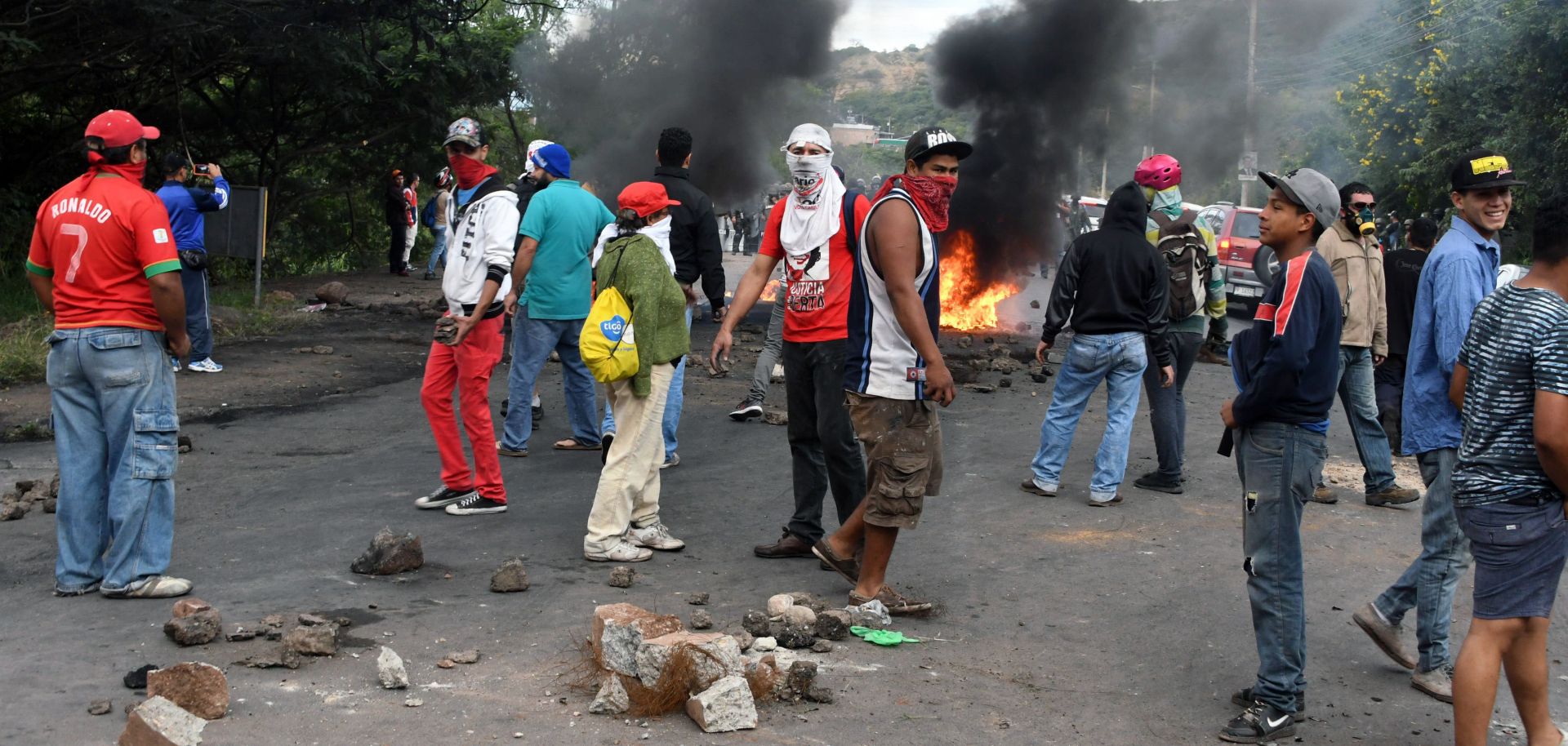
Supporters of presidential candidate Salvador Nasralla set up barricades to protest the re-election of President Juan Orlando Hernandez, in Tegucigalpa on Dec. 22, 2017. The election was marred by widespread claims of voter fraud.
For about three decades, peaceful transitions of political power have been the norm in Latin America, a marked turn from the pattern of military overthrows that peppered the region's history for much of the 20th century. At the height of the Cold War, populist governments, which often had seized power by force, inspired reactionary backlash from conservative political forces — often with the backing of the United States, which was focused on countering the spread of communism. But since the 1980s, countries in Central and South America discarded military rule in favor of regular, democratic elections. The shift toward democracy for the most part reduced the short-term political instability brought on by unplanned changes of government. Stronger democratic institutions generally allowed for smoother legal transitions of power — even in contested cases such as Brazil's 2016 presidential impeachment .
