
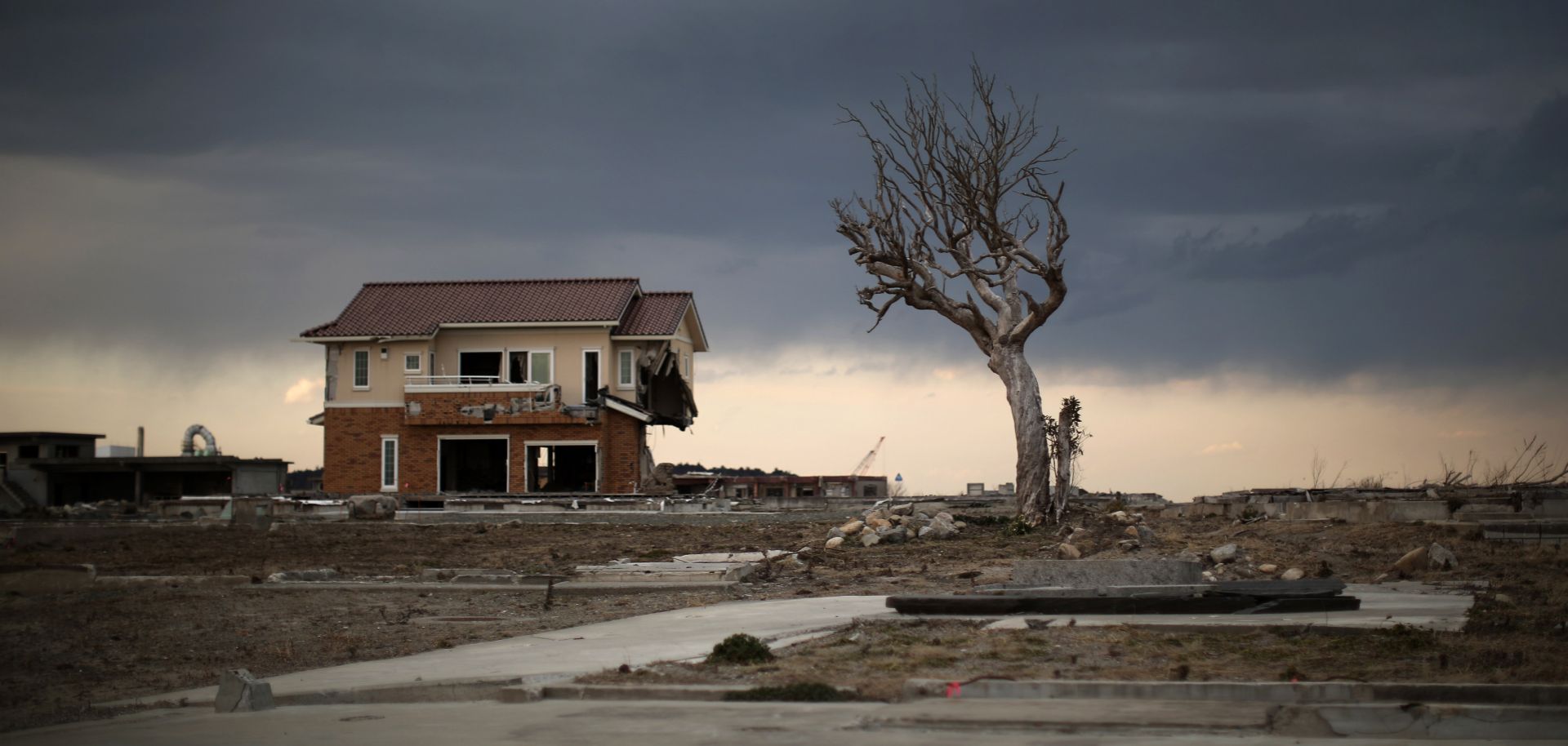
A lone house sits on the scarred landscape, inside the exclusion zone, close to the devastated Fukushima Dai-ichi nuclear plant in Japan. More than six years after the disaster, Japan is apparently on its way to restoring nuclear energy as one of its major sources of electric power. How will this development and other factors such as the rise of renewable energy affect Japan's longtime desire for energy independence?
More than six years after the disaster at the Fukushima Dai-ichi nuclear plant , Japan is apparently on its way to restoring nuclear energy as one of its biggest sources of electric power. Five nuclear reactors in the country have already been restarted, and a June court ruling cleared the way for two more to open. But 43 of Japan's 54 original reactors are still offline. Japanese Prime Minister Shinzo Abe, for his part, has promoted a policy of restarts, but he is politically weaker now than at any time since his 2012 return to power. Therefore, it's worth assessing just how far Japan's nuclear revival can go, and how it and other factors, such as the rise of renewable energy, may affect Japan's longtime desire for energy independence.
