
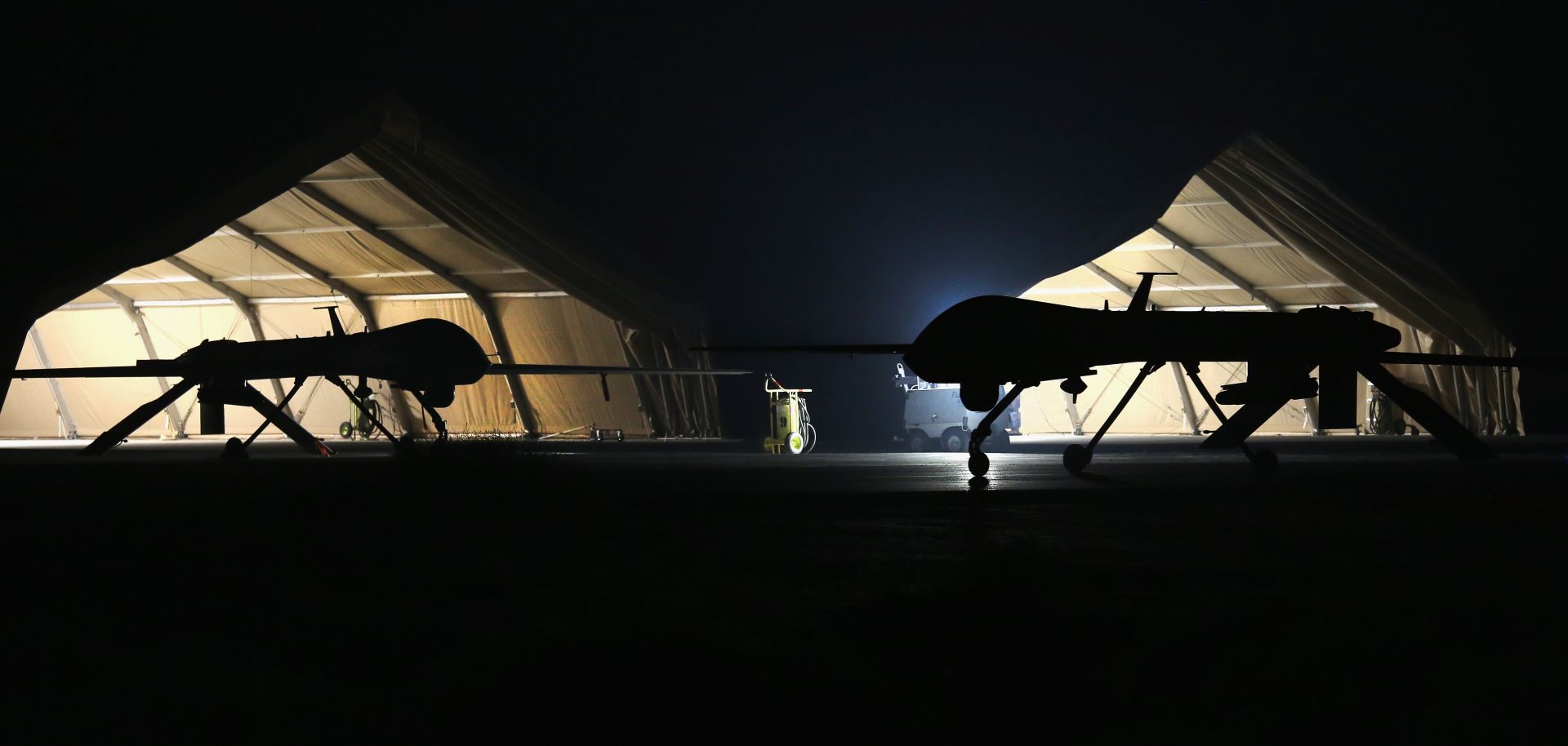
A U.S. Air Force MQ-1B Predator unmanned aerial vehicle returns from a mission to an air base in the Persian Gulf region on Jan. 7, 2016. Rapid technological advances across multiple fields have vastly expanded military sensor capabilities in recent years.
When imagining the future of warfare, we often envision newly developed weapons systems and anticipate their impact on the actual conduct of warfare. Not all warfare evolutions, however, can be encapsulated by individual systems or platforms. The most radical changes in the conduct of war often result from particularly extensive technological revolutions that apply across multiple weapons systems, altering the very nature of the constraints and imperatives that drive combat decision-making. One such revolution currently underway is the proliferation of sensors. Warfare utilizes sensors in countless ways — from optical sensors (aka cameras) to electronic intelligence sensors, up to full-fledged radar systems — and they are not new to the battlefield by any means. However, rapid technological advances in multiple fields have vastly expanded military sensor capability. Defense industries are developing new kinds of sensors at an accelerated rate — smaller, stronger and more accurate than previous generations.
