
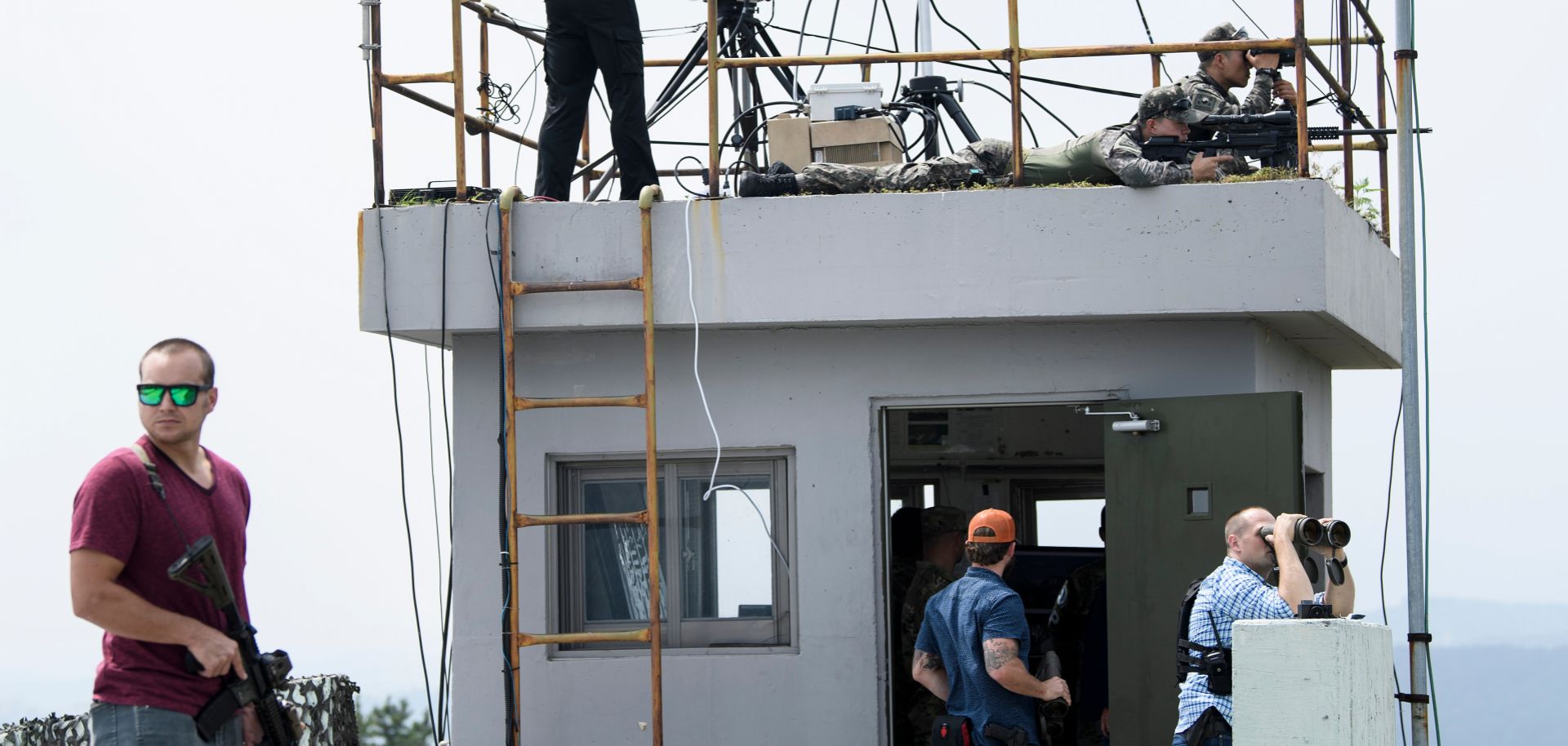
Almost any criminal act, from a purse-snatching to a terrorist bombing, involves some degree of pre-operational surveillance. In fact, one common denominator of all the different potential threats — whether from lone wolves , militant groups, common criminals or the mentally disturbed — is that those planning an operation all monitor their target in advance. However, while pickpockets or purse-snatchers case their victims for perhaps only a few seconds or minutes, a militant organization might conduct detailed surveillance of a target for several weeks or even months. Regardless of the length of time surveillance is performed, however, the criminal or militant conducting it is exposed, and therefore vulnerable to detection. Because of this, countersurveillance (CS) — the process of detecting and mitigating hostile surveillance — is an important, though often overlooked, element of counterterrorism and security operations.
