
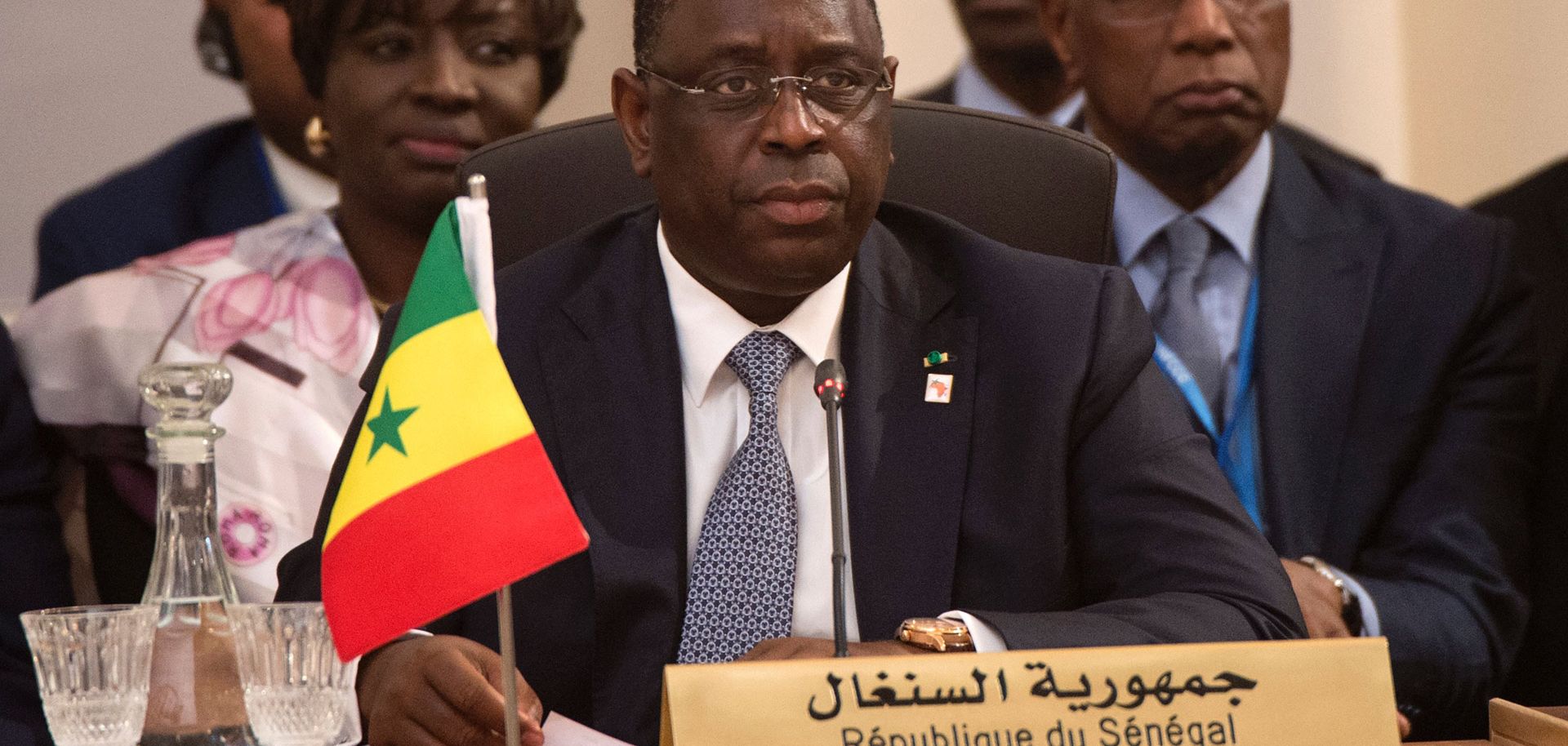
Senegal has long been an entry point into Africa. Situated at the far west end of the continent on the Atlantic coast, the country has drawn foreign powers — from Arab traders to European empires — to its shores for centuries. More recently, Senegal has maintained a quiet influence in West Africa and in the Francophone world, despite its relative lack of natural resources, economic development and population size. The secret to its enduring importance lies in its geography and relative political stability. Natural Advantages For centuries, Senegal's location and wealth of inland waterways have attracted the attention and influence of external actors. As part of the western Trans-Saharan trade route, the country's namesake Senegal River forged ties to the Arab world and facilitated the spread of Islam, which remains Senegal's dominant religion a millennium later. In 1659, France established a colony in what is now the city of St.
