
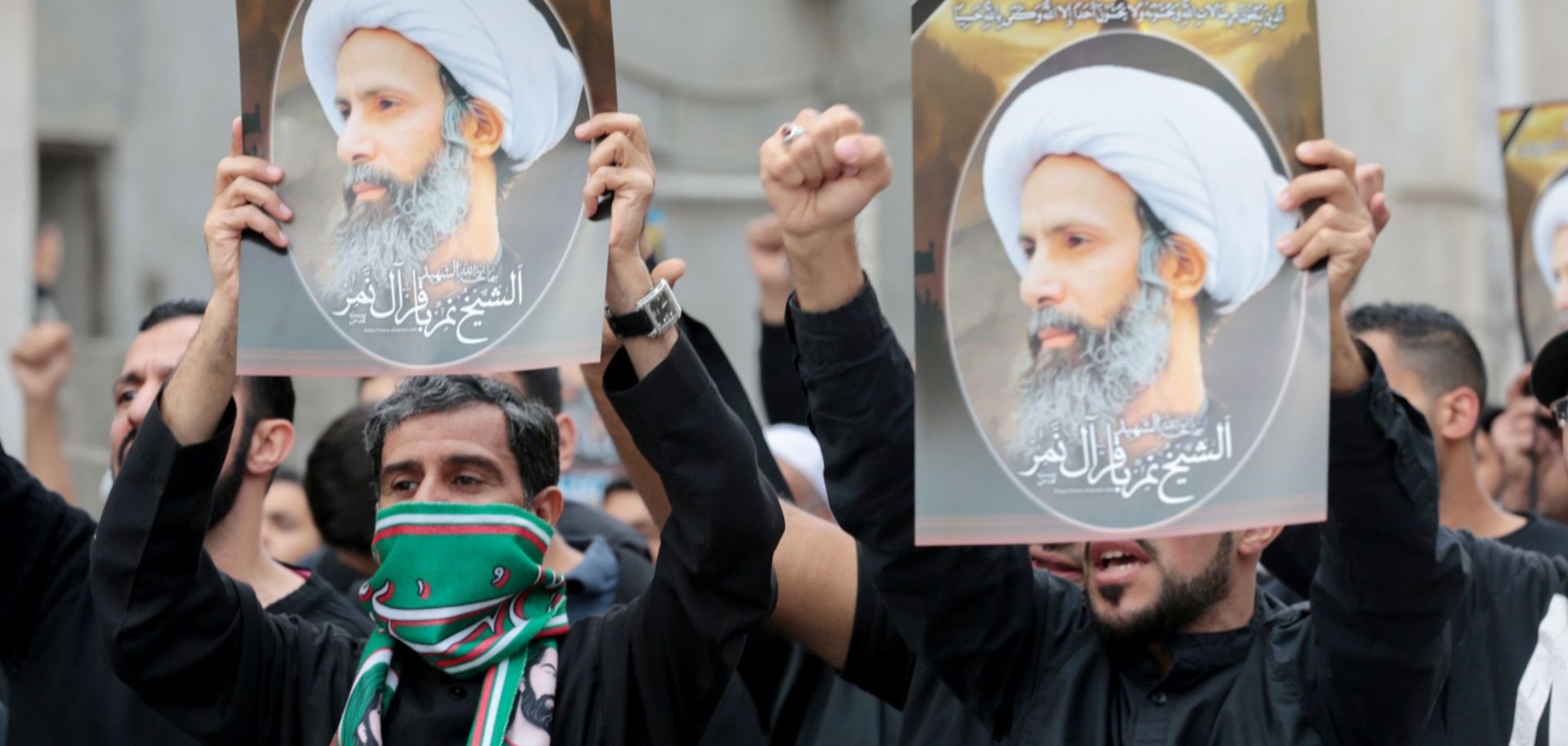
Saudi Arabia's recent, seemingly radical behavior has been attributed to a younger generation of royals. But the kingdom's behavior comes from an age-old imperative to guard against Iran and a developing need to restructure the economy.
In the past two weeks, Saudi Arabia sparked a wave of outrage with the execution of Shiite cleric Nimr al-Nimr and sent investors into a frenzy over the possible sale of shares in the world's largest oil company, the Saudi Arabian Oil Co. Many observers attribute the country's behavior to the dominant royal personalities of the day. Western media have described Deputy Crown Prince and Defense Minister Mohammed bin Salman, the 30-year-old favored son of King Salman, as arrogant, naive and impulsive, and they have credited him with steering the Saudi kingdom into somewhat unpredictable territory. The young prince recently revealed himself further with a lengthy interview he granted The Economist — a stark departure from the Saudi royal tradition of delivering terse public statements to tightly controlled state-owned media. He spoke relatively freely about his desire to liberalize the economy and defended his country's policies toward Iran.
