
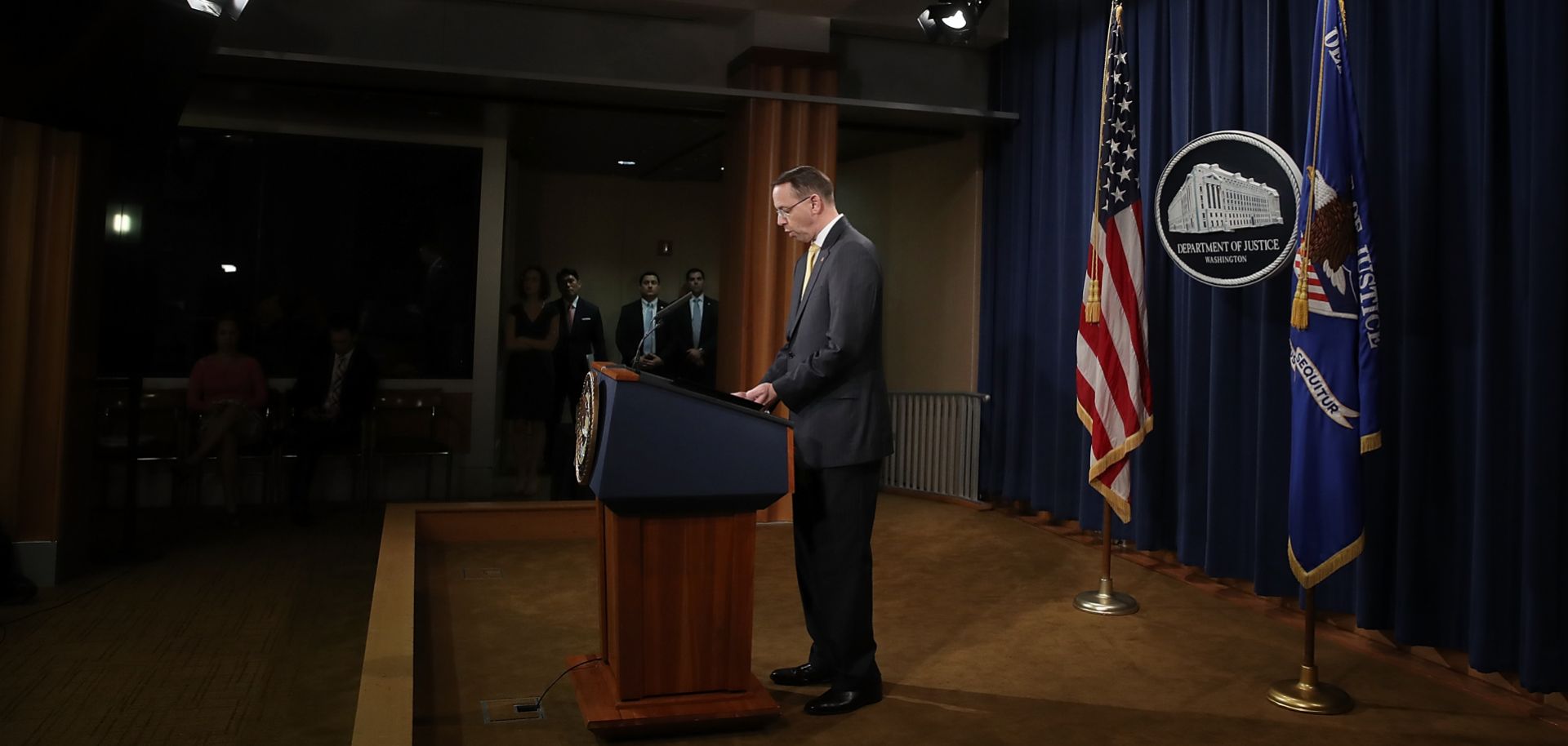
U.S. Deputy Attorney General Rod Rosenstein announces the indictments of 13 Russians and three Russian entities accused of meddling in the 2016 presidential election during a Feb. 16 news conference in Washington.
Editor's Note: This report was produced and originally published Feb. 20 by Threat Lens , Stratfor's unique protective intelligence product. Designed with corporate security leaders in mind, Threat Lens enables industry professionals to anticipate, identify, measure and mitigate emerging threats to people and assets around the world. A Feb. 16 indictment by Special Counsel Robert Mueller of 13 Russian individuals and three entities accused of meddling in the 2016 U.S. presidential election details Moscow's effort to manipulate public opinion during the campaign through social media information warfare. While such trolling is nothing new, the scale and organization of the Russian operation stands out, providing a blueprint for others who wish to optimize their ability to manipulate opinion via online platforms. An Elaborate Operation As outlined in the 37-page indictment, the Russian effort raised trolling — or posting inflammatory or irrelevant material on an electronic forum to provoke responses — to...
