
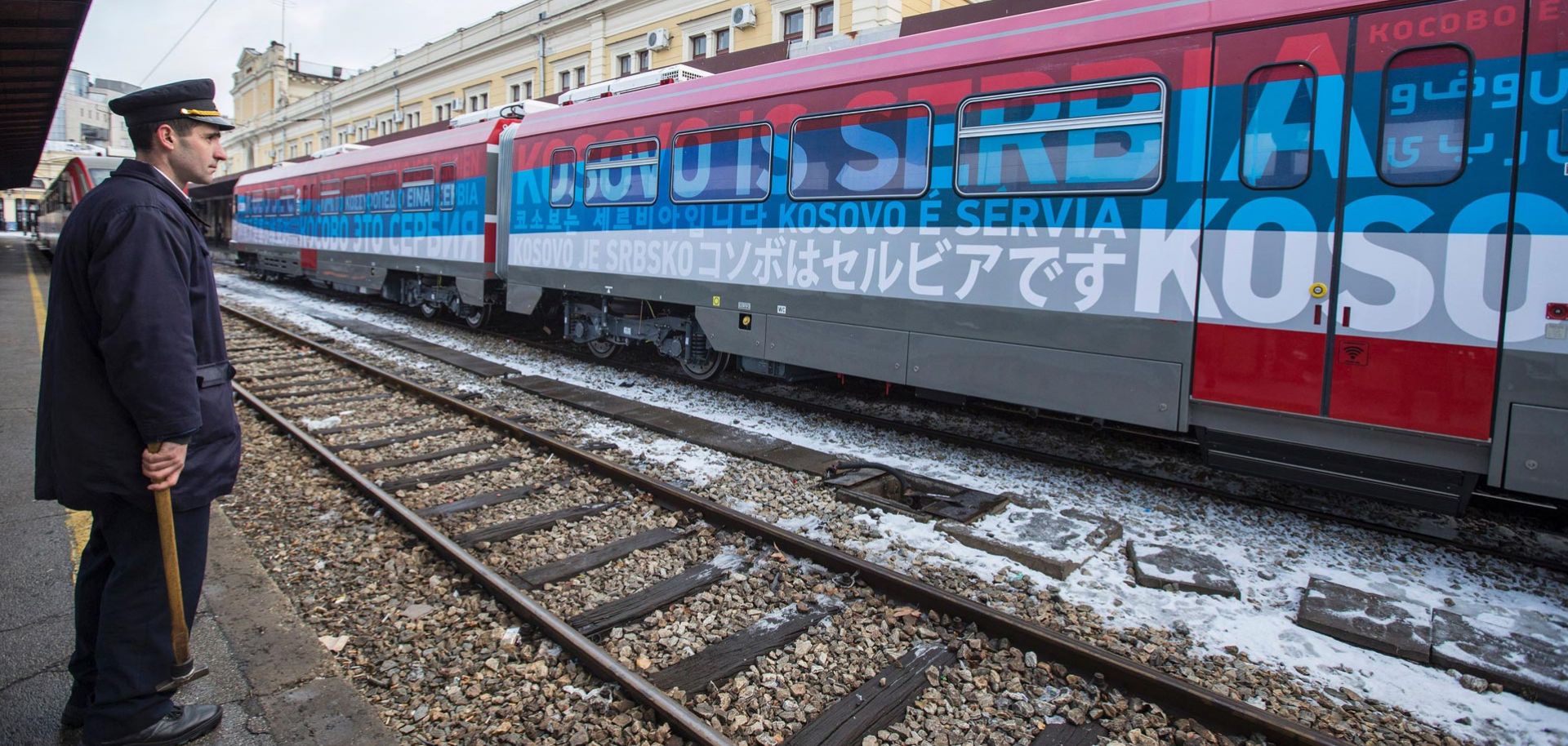
In January, conflict almost erupted in the Balkans after the Kosovar government dispatched special police forces to stop a Serbian train headed into Kosovo's majority-Serb northern territory, emblazoned with the slogan "Kosovo is Serbia" in 21 languages.
The Balkan Peninsula has long stood at the edge of empires. The region, with its jumble of ethnicities, religions and political movements, has been a playing field for competing world powers throughout its history. Russia began to vie with the Austro-Hungarian and Ottoman empires for influence over the area in the 19th century. During the Cold War, Yugoslavia became a battleground between the Soviet Union and the West, despite its officially nonaligned status following World War II. While the West tried to woo the country with economic aid, the Soviets played to its ruling Communist Party, and the two sides continued in deadlock through the 1980s. Once the country dissolved in 1991, however, the tides turned. The collapse of the Soviet Union left Moscow in no position to see Yugoslavia's constituent states through their transition to sovereignty, leaving that task to the European Union.