
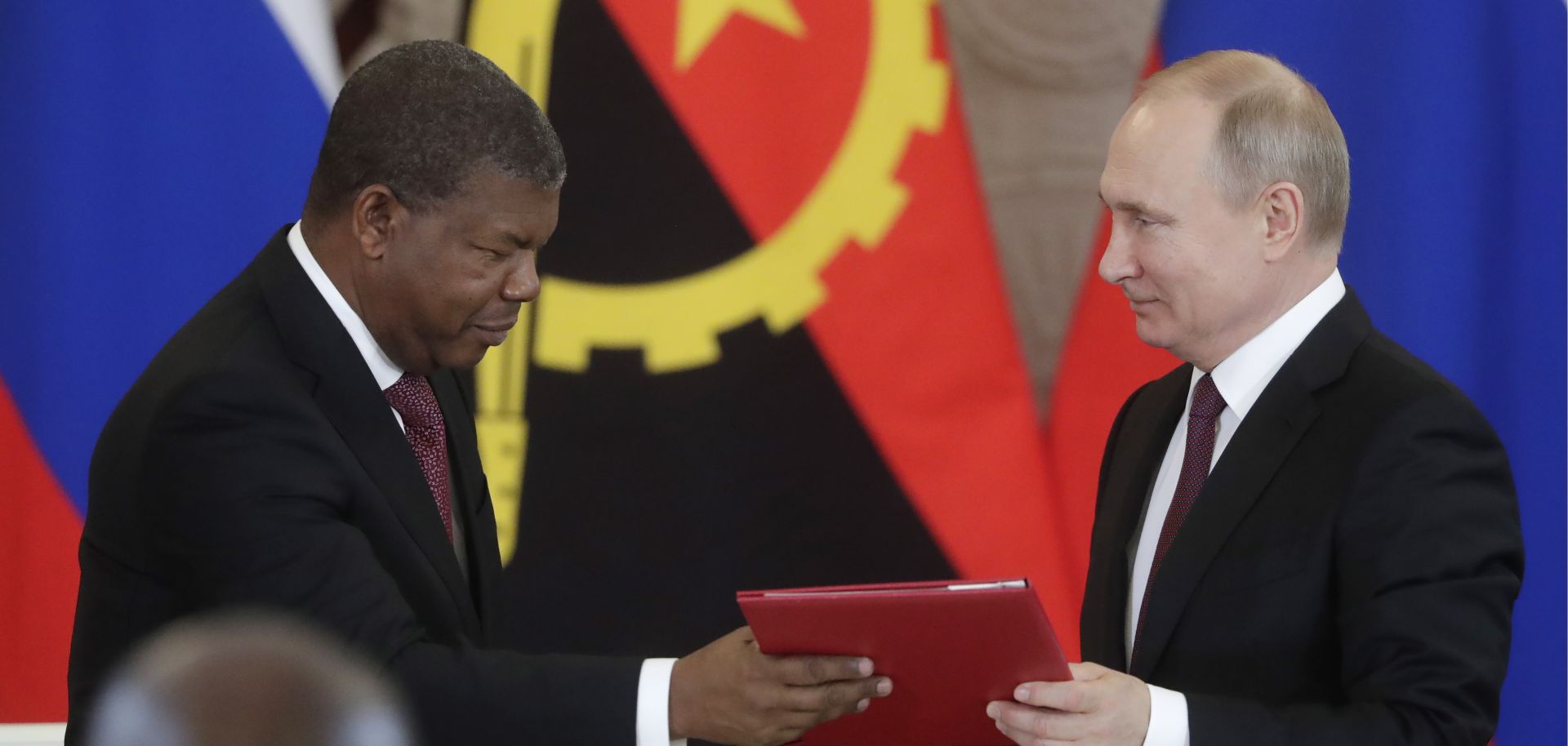
Angolan President Joao Lourenco, left, and Russian President Vladimir Putin exchange documents during a signing ceremony in Moscow on April 4. As Russia pushes to play a greater role on the global stage, the Kremlin has developed a robust strategy for influencing African leaders and strengthening ties across the continent.
Editor's Note: This assessment is part of a series of analyses supporting Stratfor's upcoming 2019 Third-Quarter Forecast. These assessments are designed to provide more context and in-depth analysis of key developments over the next quarter. Since Russian private military contractors began appearing in the Central African Republic in 2018, Russia's strategic ambitions in Africa have grown with every interaction between Moscow and any actors on the continent. For a long time after the end of the Cold War, Africa was relatively unimportant to Russia's foreign policy. But as Russia began moving into a new international role over the past five years, Africa has returned to prominence in Moscow's foreign policy because of its value to Russia's goals in the global great power competition. And though Russia has fewer resources than its competitors for fostering ties with African nations, it also offers more flexibility and fewer strings attached.
