
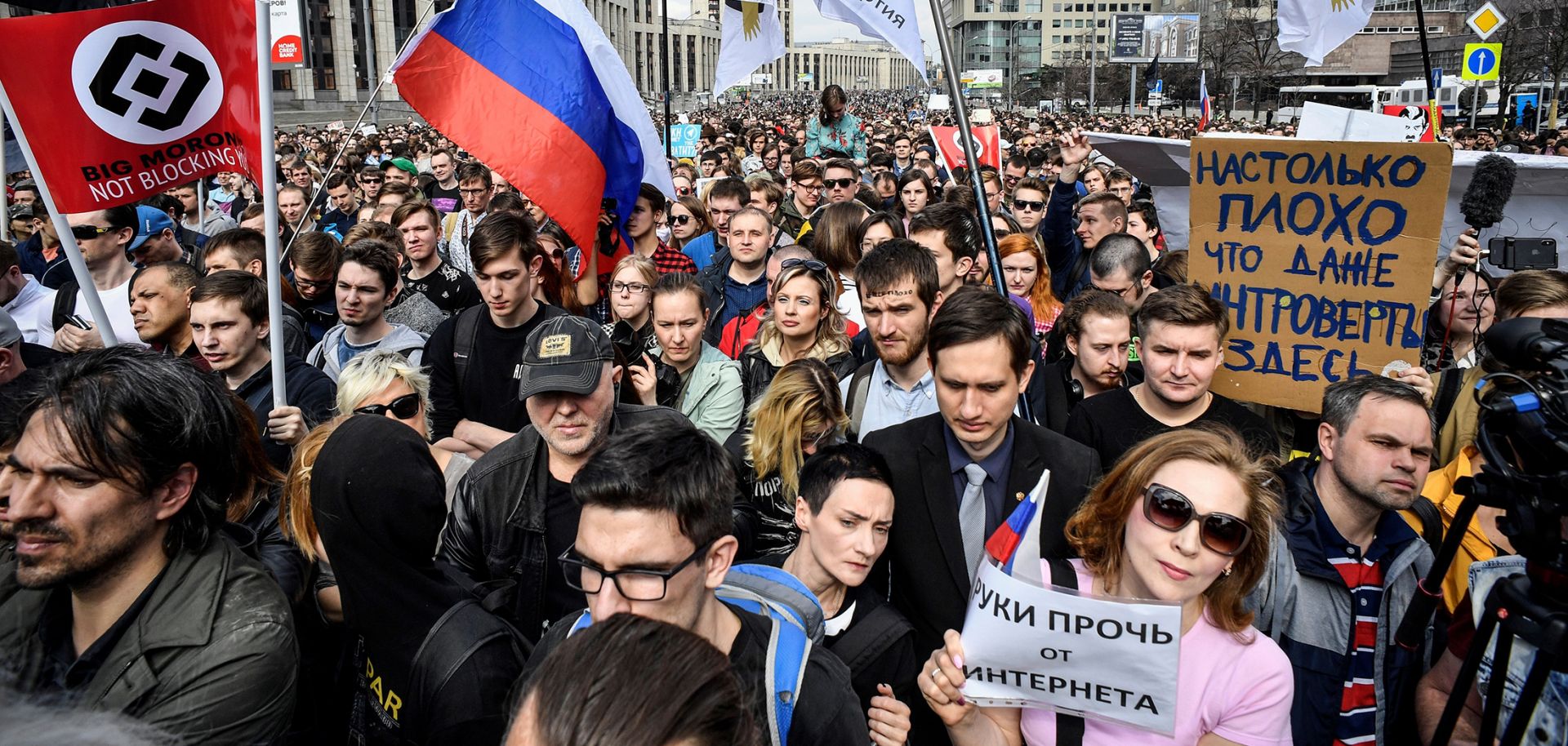
People attend an opposition rally in central Moscow on April 30, 2018, to demand internet freedom in Russia. - Authorities tried to block access to the popular messaging app Telegram in the latest onslaught against dissent under Vladimir Putin. At least 8,000 people including top opposition leader Alexei Navalny turned up in the centre of the Russian capital, (Photo by Alexander NEMENOV / AFP) (Photo credit should read
Since its inception, the free-for-all nature of the global internet has defied the most robust forms of state control, but perhaps not for much longer. By April 1, the Russian government is expected to conduct a countrywide test of its ability to disconnect its internet infrastructure from the rest of the world's, following the Duma's passage of a draft law last month mandating changes to the country's internet infrastructure, Runet. While a test that actually disconnects the Russian web from the rest of the global internet may or may not eventually take place, one thing is certain: Russia is making significant changes to create infrastructure and a legal framework for what it terms a "sovereign internet.
