
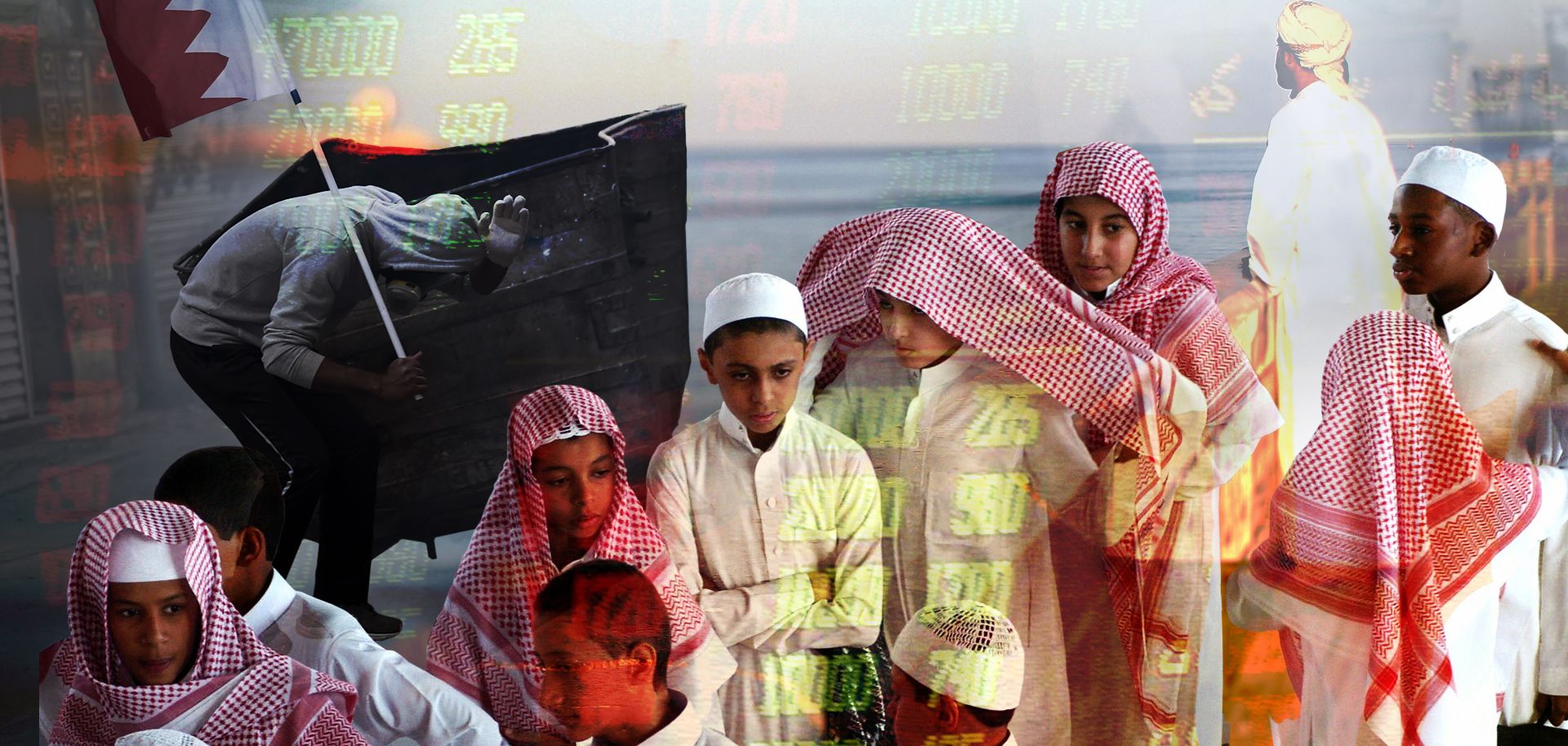
Members of the Gulf Cooperation Council (GCC) are trying to change with the times. Declining oil revenues have put some of these energy-dependent countries on the brink of economic crisis. Saudi Arabia's revenue fell by more than half over the past three years, from $302 billion in 2013 to just $147 billion in 2016, and its foreign reserves have tumbled by roughly $200 billion since mid-2014. Even Kuwait, perhaps the most financially stable GCC member, will post a budget deficit this fiscal year — its first in well over a decade. At the same time, all of the bloc's member states are dealing with mounting demographic pressures and generational shifts in leadership. To cope with their newfound circumstances and weather the prolonged period of low oil revenues that is likely ahead, GCC states are pursuing unprecedented structural reform initiatives.
