
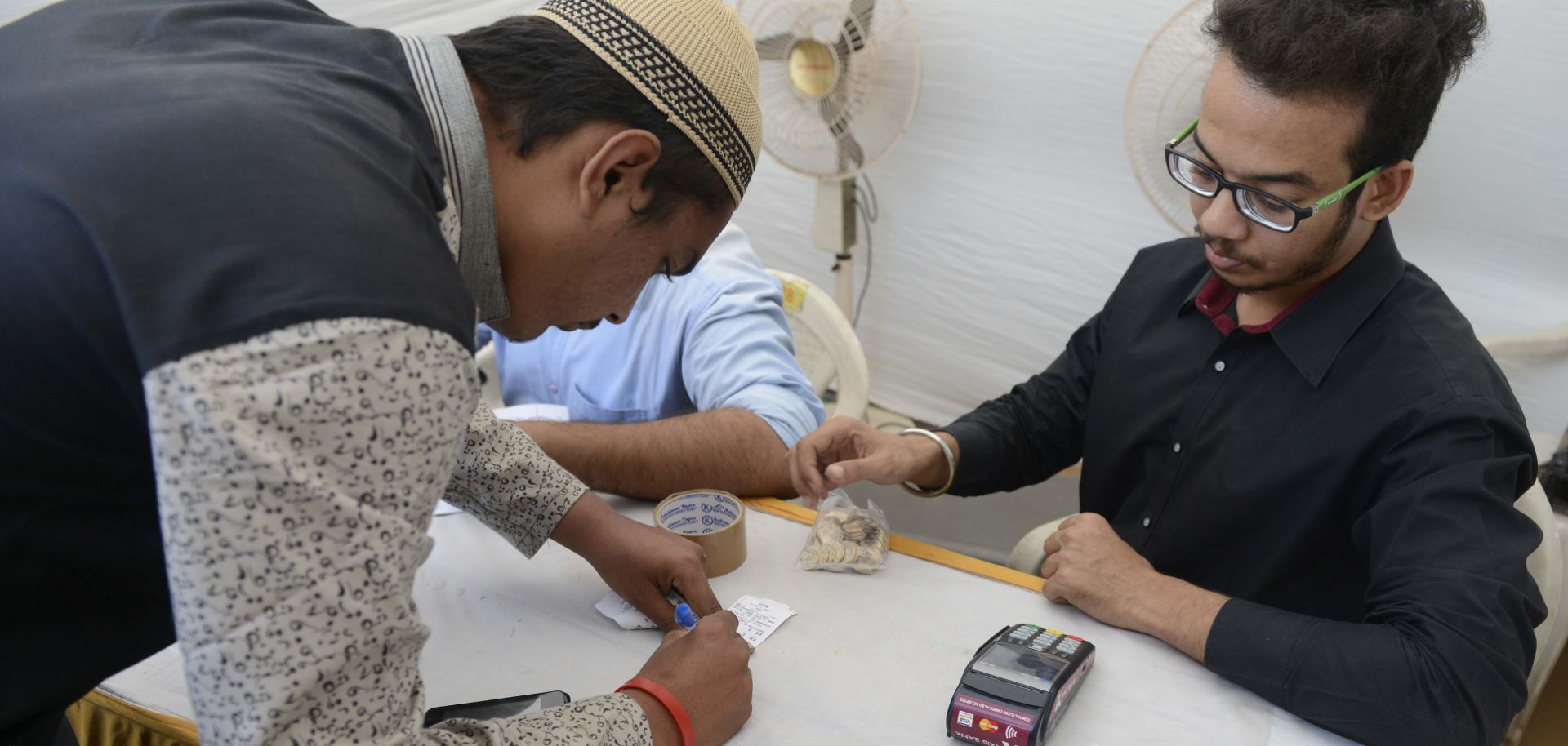
In November 2016, Prime Minister Narendra Modi declared that banknotes in the most widely circulated denominations could no longer be spent and that the notes had to be turned in by the end of the year before they became worthless.
In late 2016, India's government put in motion a bold experiment in demonetization. In a surprise address to the nation, Prime Minister Narendra Modi declared on Nov. 8 that banknotes in the most widely circulated denominations could no longer be spent and that those possessing the notes had until the end of the year to return them to banks before they became worthless. The move was both politically and economically risky, but the government deemed those risks worth taking, given its goal of downsizing the country's large, cash-heavy informal economy and its campaign against so-called "black money," either counterfeit or illicitly obtained notes that India asserted were aiding the funding of terrorists. Ten months later, the effects of the demonetization campaign, which involved suddenly withdrawing 86 percent of the physical cash in circulation, are starting to come into focus.
