
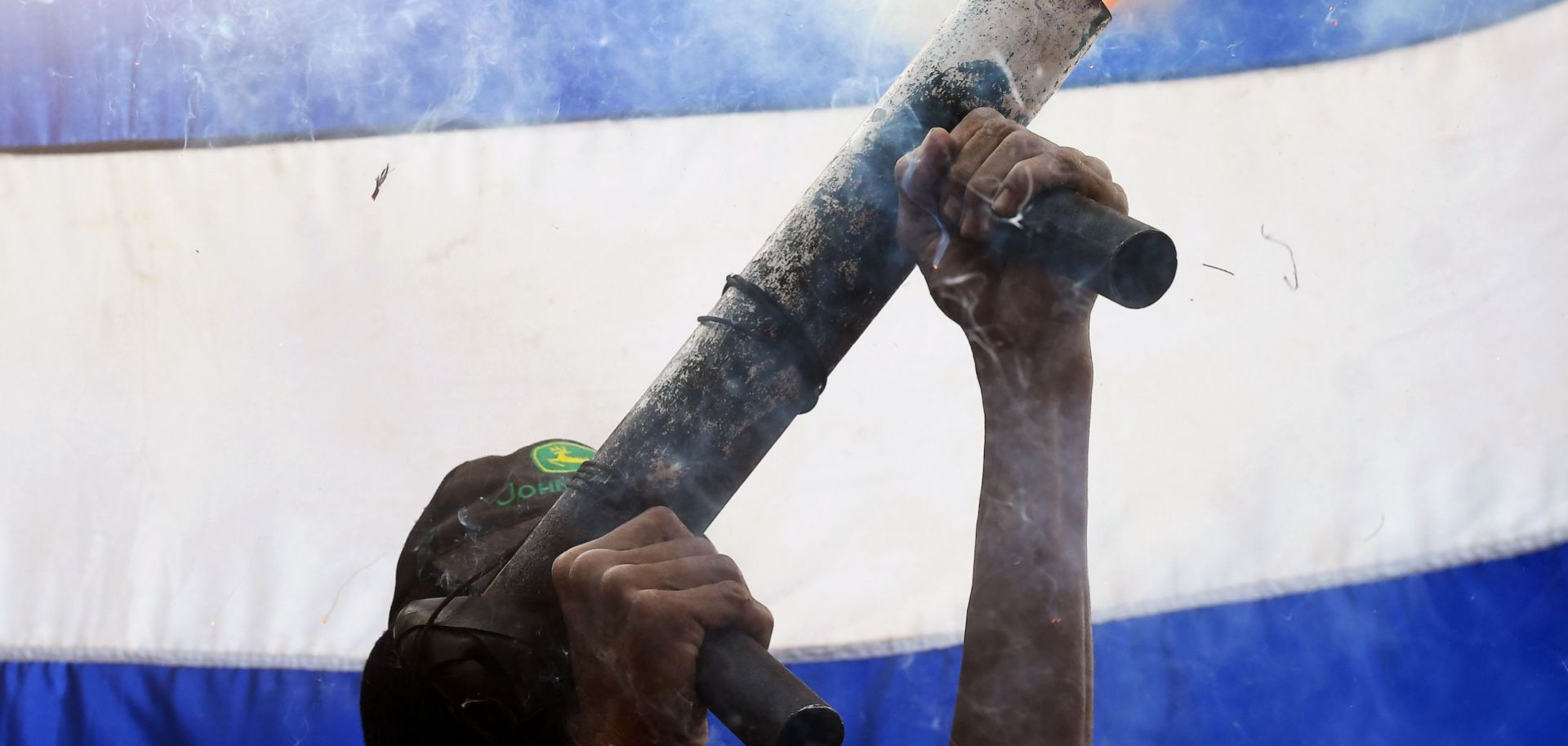
A protester in Masaya, Nicaragua, fires a homemade mortar into the air on June 18, 2018. Members of the uprising, which began in April, have seized territory across the country, including parts of the capital, Managua.
In Nicaragua, there's probably no going back to the way things were. A two-month uprising has severely damaged President Daniel Ortega's standing with the private sector and with the country's voters. Almost 200 people have died since protests first broke out across the country in mid-April in response to a social security tax hike designed to prop up Nicaragua's public finances . Now Ortega is struggling against daily violent demonstrations and a fragmenting political base to preserve his presidency. He may yet subdue the current wave of protests, but the consequences will probably come back to haunt him before the 2021 presidential election. The President's Survival Strategy Ortega is steadily losing support. Much of the business community left his side in May, and the armed forces started turning on him as well, leaving only the national police and paramilitary units to try to suppress the protests.
