
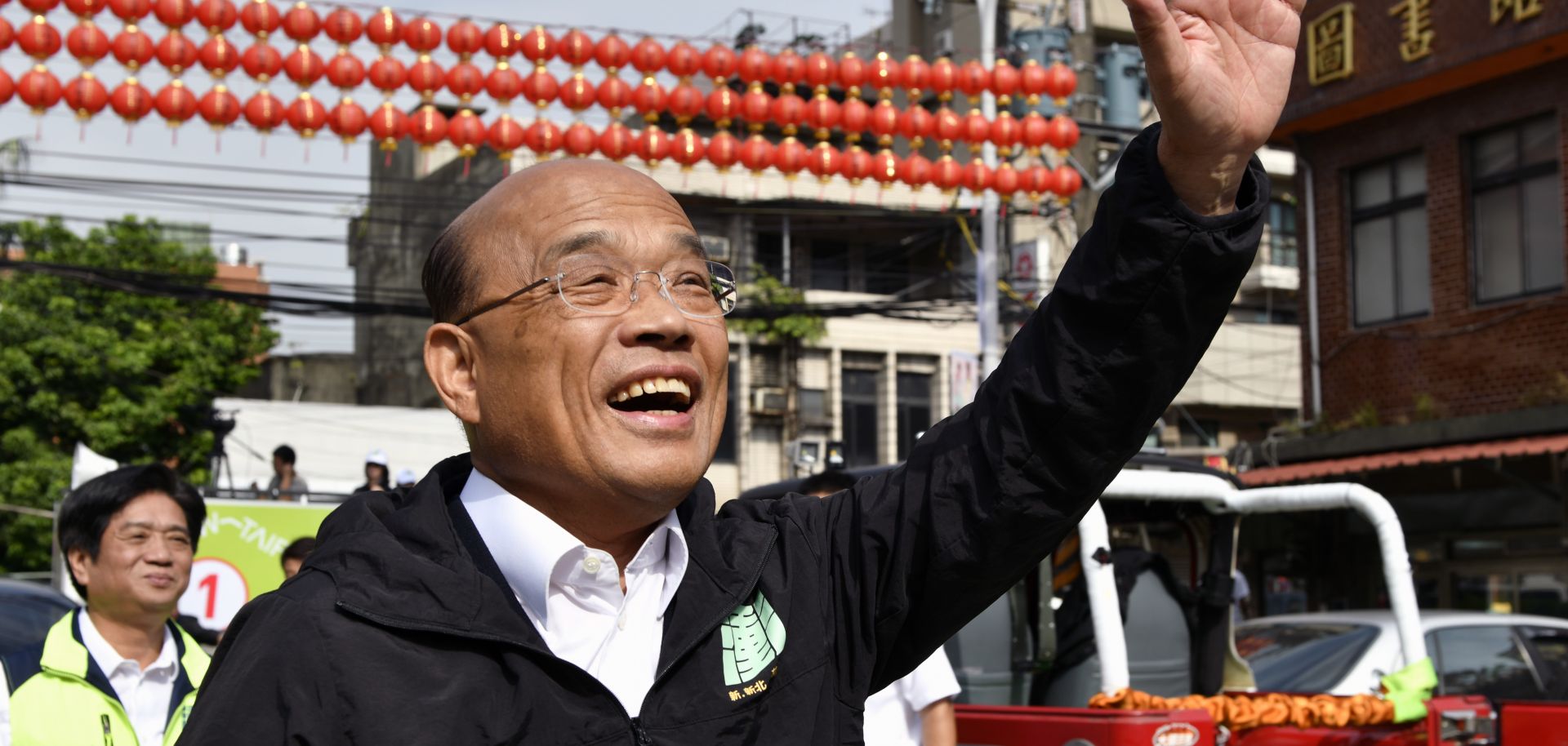
Su Tseng-chang, a former Taiwanese premier, takes over as chairman of the main opposition Democratic Progressive Party (DPP) on May 30. Following his election over the weekend, Su said the DPP would re-open its Department of China Affairs and seek to establish offices in the United States and Japan. With a contemplative eye on the 2016 presidential elections, Su is seeking to reinvigorate the DPP, and this requires falling at least partly in line with the ruling Kuomintang's (KMT) more cooperative policies toward the People's Republic of China. The challenge for the DPP, like that for the KMT or any Taiwanese leadership, is how to balance the advantages of economic interaction and smoother political relations with China with the sovereignty risks of overdependence on the mainland. The potentially lessening recognition of Taiwan's security needs during times of relative cross-Strait calm must also be considered.
