
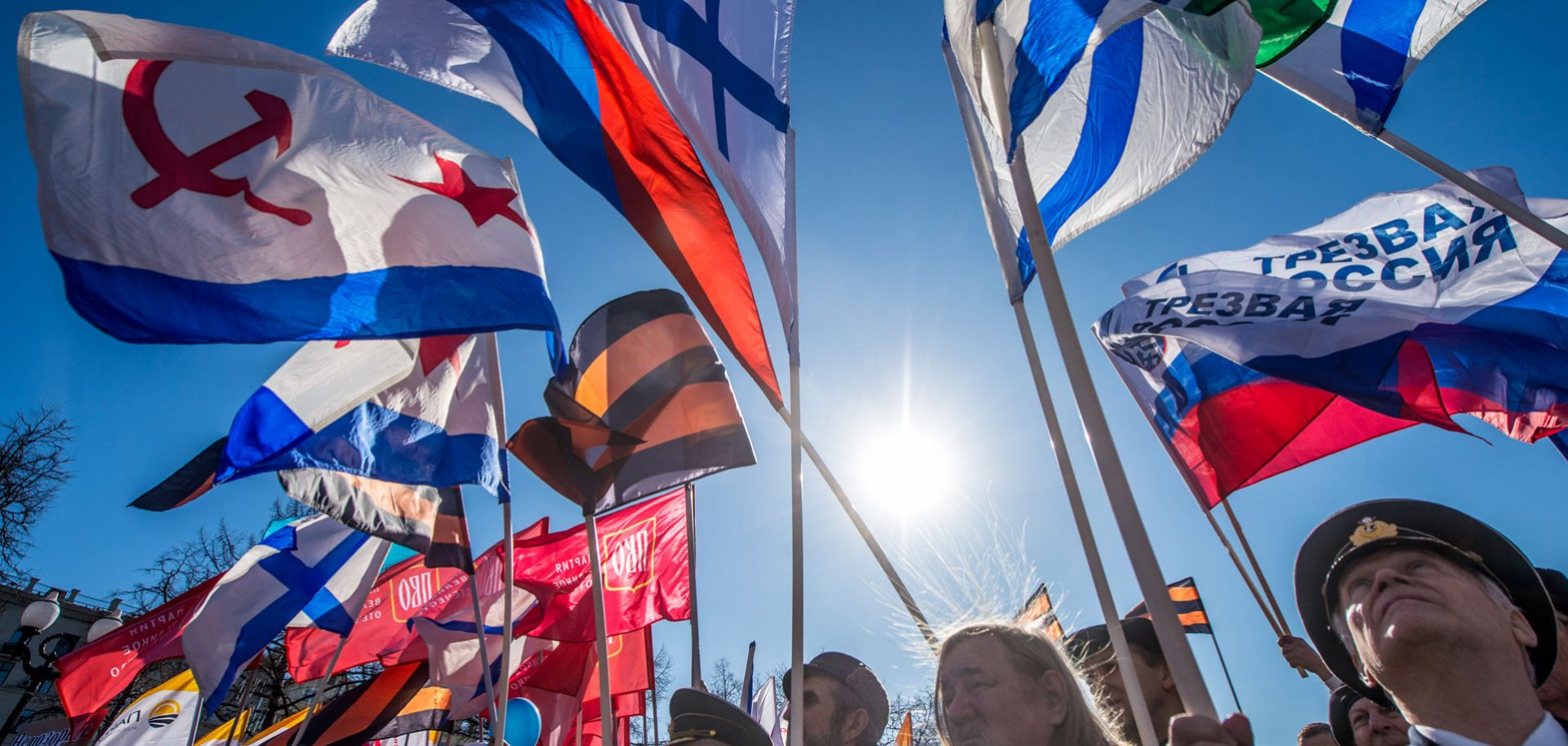
Pro-Kremlin activists hold national flags during a rally in support of ethnic Russians in Ukraine. Today's nationalism taps into their deeper identity -- their sense of moral virtue, their survival instinct and their belief in Russia as a global power.
When the first Russian pilots returned to Voronezh air base as part of the recently announced military drawdown from Syria, they were greeted with a hero's welcome. Russian women in folk costumes offered loaves of bread with salt. Robed Orthodox priests gave the pilots icons to kiss. Crowds carrying balloons, flowers and Russian flags hoisted the pilots onto their shoulders and tossed them into the air. It was a picture of patriotism, broadcast live across the nation. But that picture has changed throughout the years. The sentiment the Kremlin used to shape its interventions in Syria and Ukraine evolved from a kind of nationalism that was often used in the early years of President Vladimir Putin's government. Rabid and inspired, it was based mostly on civic patriotism and duty.
