
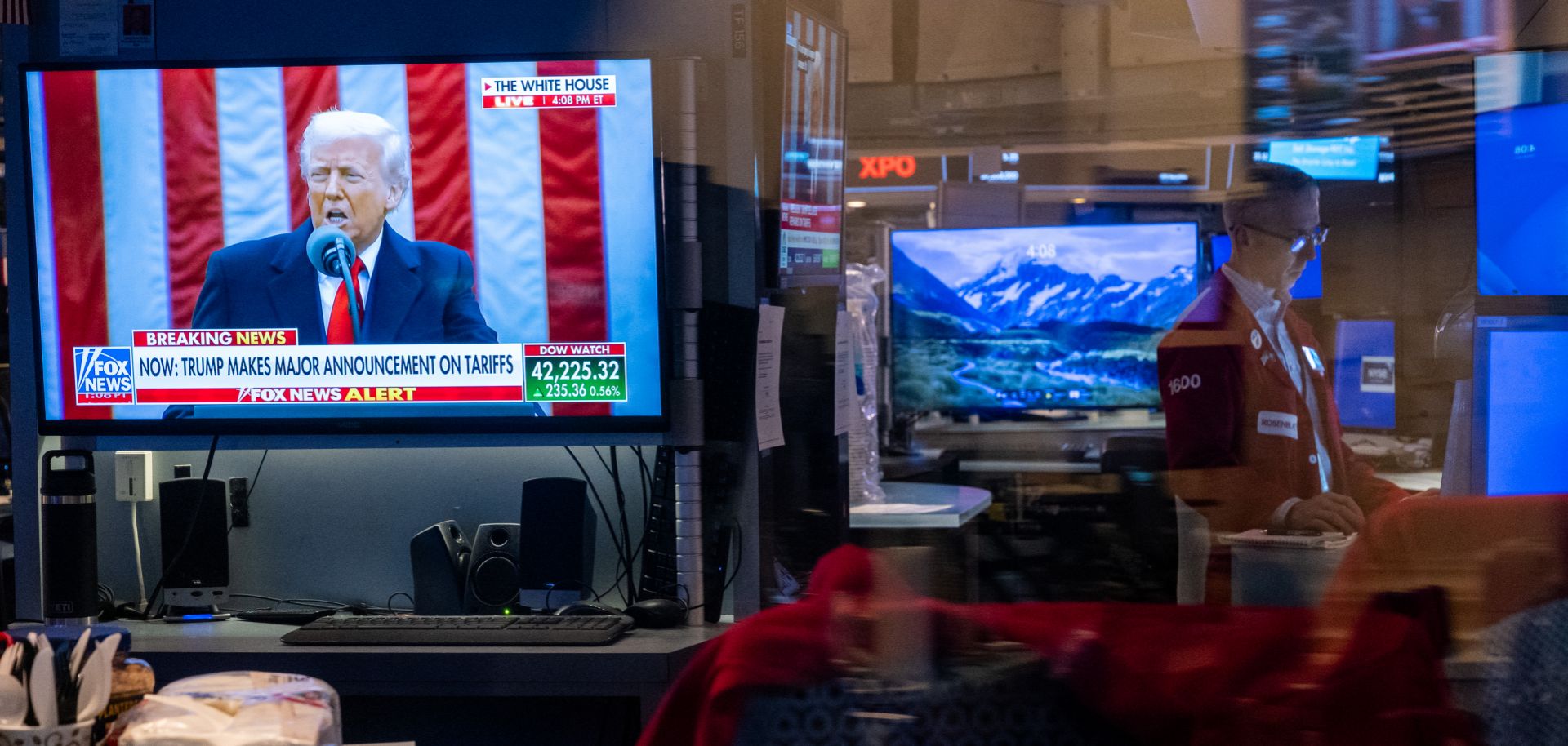
U.S. President Donald Trump's wide-ranging tariffs announced on April 2 constitute one of the biggest changes in U.S. economic policy in recent history. They also represent what is effectively the single largest tax increase on Americans since 1968, and are sending U.S. average effective tariff rates to levels not seen since before World War I. As I argued in a column published last month , the Trump administration's tariff strategy appears to be aimed at boosting U.S. manufacturing — and specifically jobs in the sector, which has fallen from a peak of employing about 19.5 million Americans in 1979 to 12.7 million in February 2025. The White House also seems to believe this strategy will improve wages from the bottom up, with less educated Americans finding higher-paying jobs in the manufacturing sector.
