
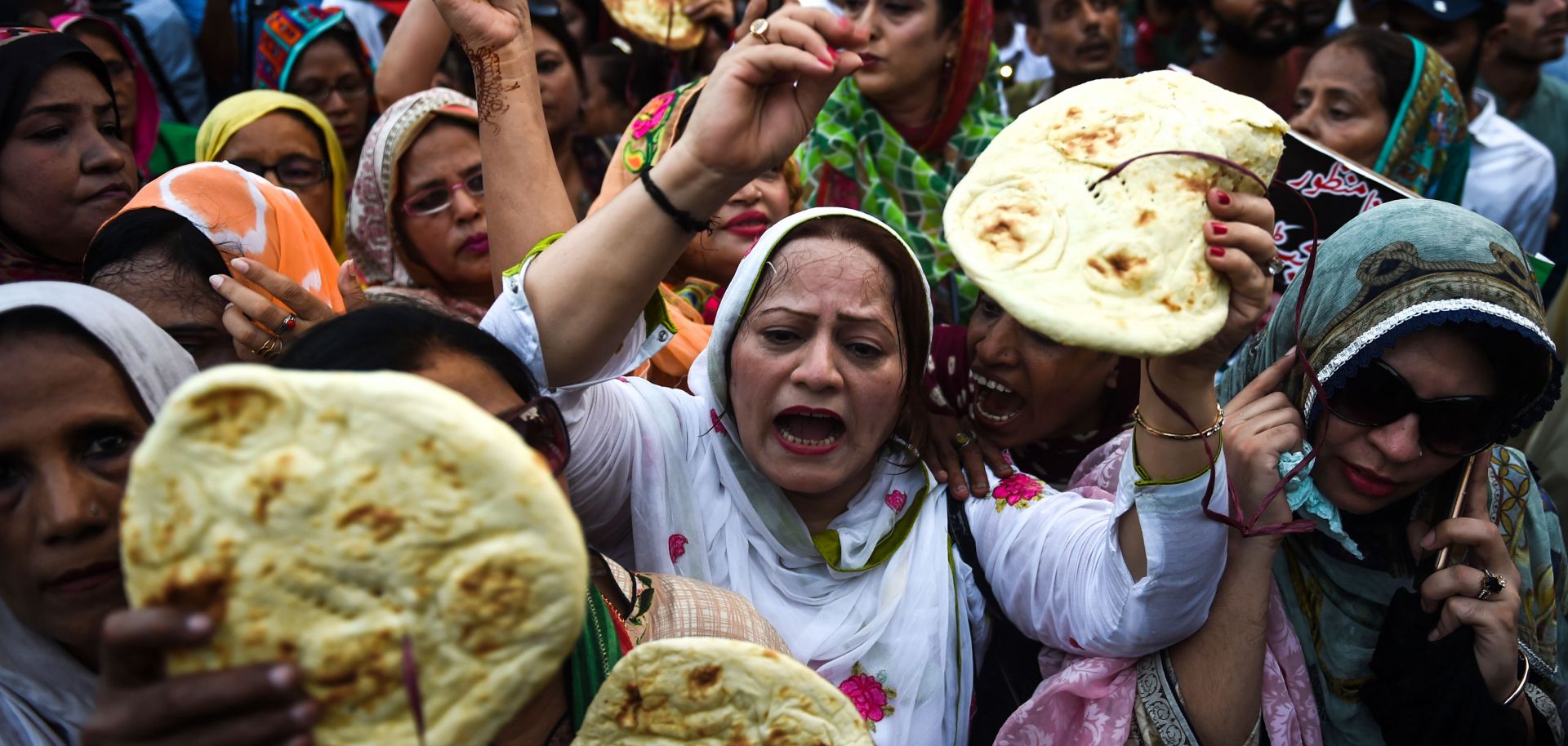
Activists from the Pakistan People's Party hold bread aloft in a protest against Prime Minister Imran Khan's government budget on June 23, 2019, in the southern city of Karachi.
Pakistan's $300 billion economy is approaching the doldrums after a period of strong growth. In the 2018-19 fiscal year that ended in June, economic expansion is forecast to have cooled to 3.3 percent, down from a 13-year high of 5.5 percent set the previous fiscal year. For Prime Minister Imran Khan, managing the economy has proved a major challenge since his Pakistan Tehreek-e-Insaaf took the helm in a coalition government in August 2018 . To rein in the country's unsustainable trade and fiscal deficits, the government has hiked interest rates, allowing the Pakistani rupee to weaken, and cut public spending — measures that initiated a slowdown by dampening growth in the consumption-driven economy. The slowdown will make for volatile politics in Pakistan in the short term as the opposition tries to exploit the economic pain. Two Widening Deficits Pakistan's economic malaise stems from its dependence on imports.
