
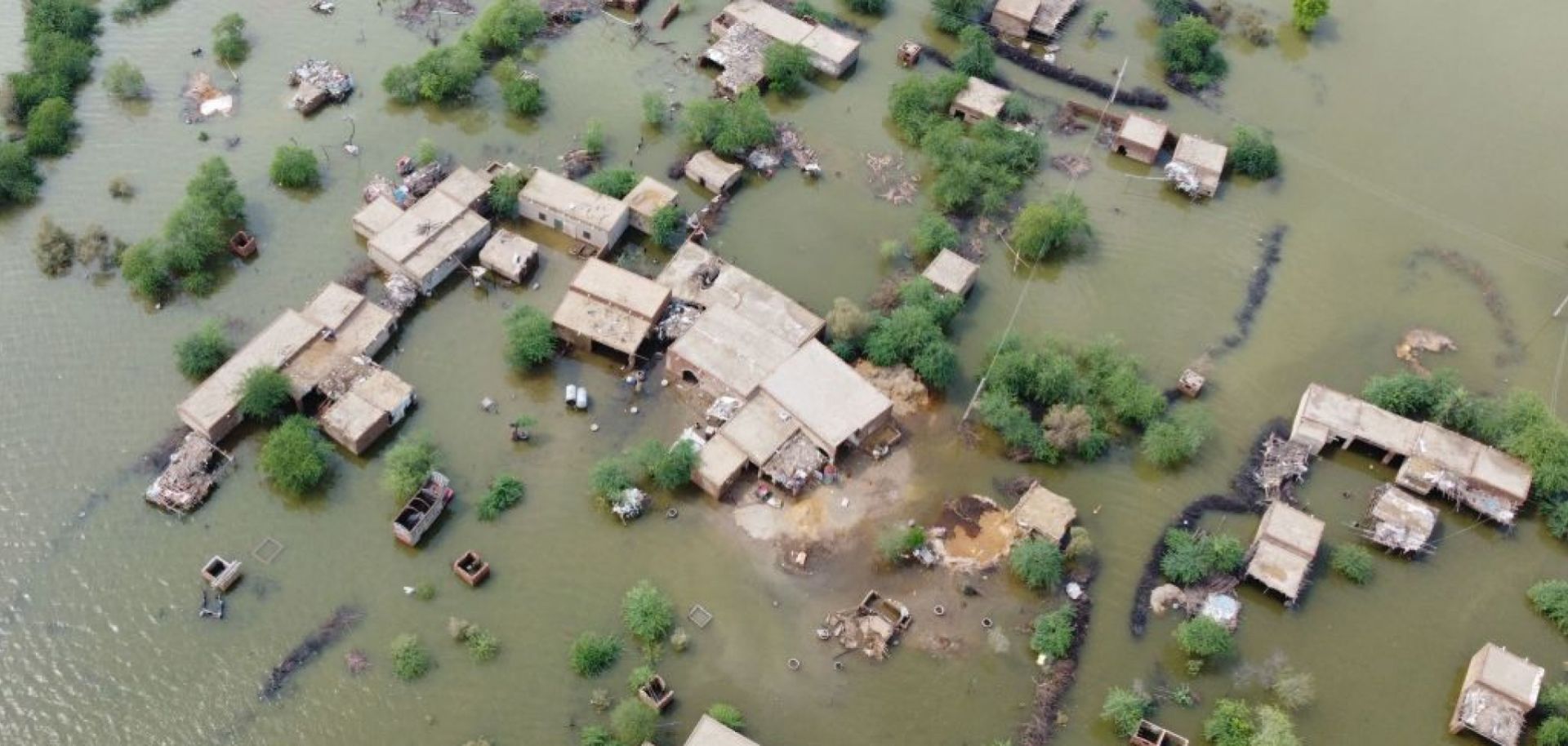
A flooded residential area on Aug. 30, 2022, in Dera Allah Yar town after heavy monsoon rains in Jaffarabad district, Balochistan.
Unprecedented flooding and associated economic losses will worsen Pakistan's economic and political challenges, and potentially raise the risk of militant activity in certain areas. Pakistan is facing an unprecedented flooding disaster, with most of its provinces experiencing significantly higher than average monsoon rainfall in 2022. Inadequate physical infrastructure and poor disaster preparedness have exacerbated the crisis. Three of Pakistan's four provinces, Sindh, Balochistan and Khyber Pakhtunkhwa, have been severely impacted by the flooding. As of Aug. 29, Pakistan's National Disaster Management Authority reports that about 30 million people have been displaced, almost 950,000 houses have been destroyed and more than 1,100 people have been killed. Meanwhile, more than 3,450 kilometers (approximately 2,140 miles) of roads, nearly 150 bridges and more than 170 shops have been damaged. The province of Balochistan was completely cut off from other parts of the country when flooding closed or destroyed important roads and bridges.
