
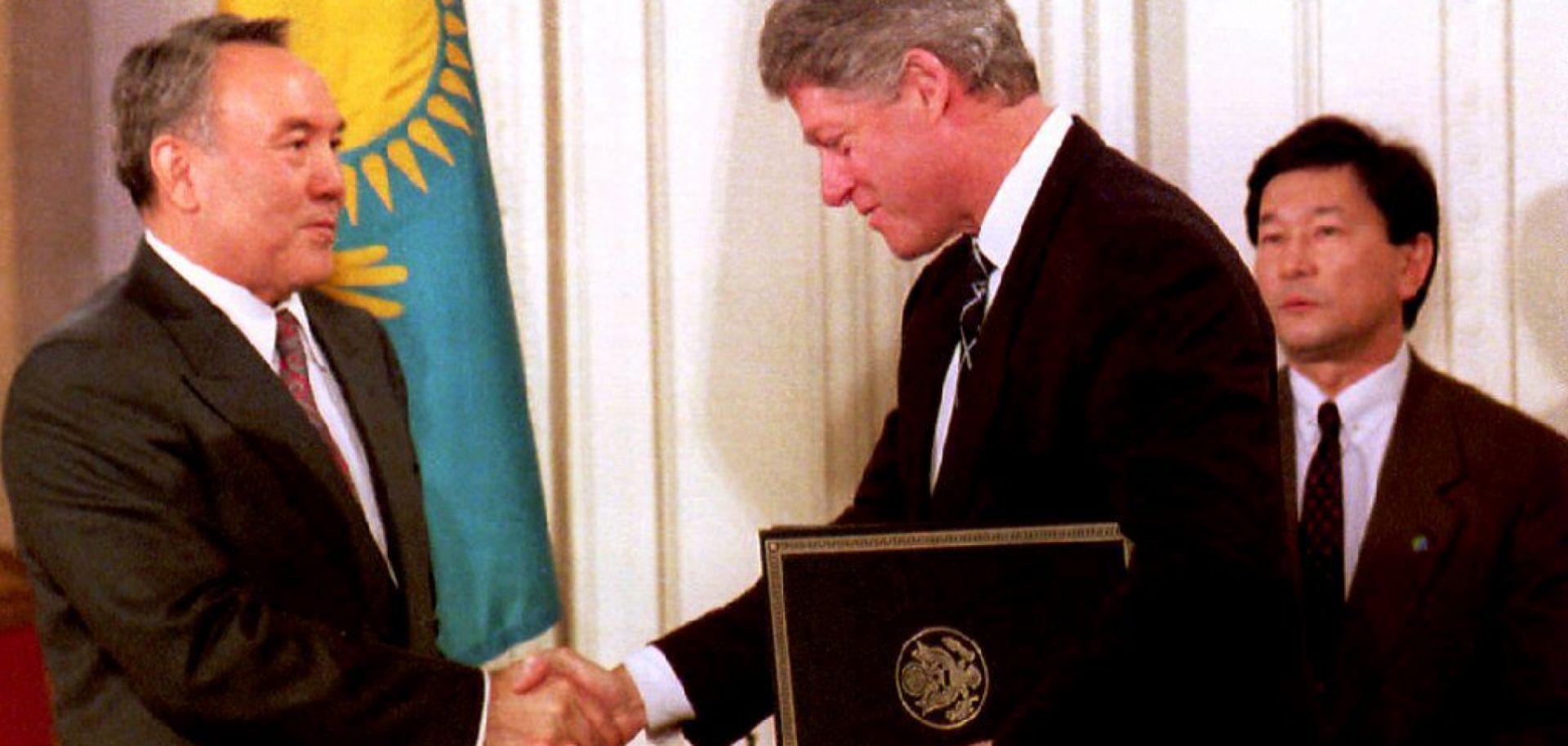
U.S. President Bill Clinton and Kazakh President Nursultan Nazarbayev shake hands at the White House on Feb. 14, 1994, after Nazarbayev presented Clinton with Kazakhstan's accession to the Nuclear Nonproliferation Treaty. Kazakhstan was one of three newly independent states that inherited hundreds of warheads from the former Soviet Union but chose to give them up.
Saudi Crown Prince Mohammed bin Salman caused a media stir in March when he warned that Saudi Arabia will develop a nuclear weapon if Iran does, raising the troubling possibility of a nuclear arms race in the Middle East. "Saudi Arabia does not want to acquire any nuclear bomb," the crown prince told the CBS news program 60 Minutes , "but without a doubt, if Iran developed a nuclear bomb, we will follow suit as soon as possible." Salman's remarks came as President Donald Trump considers whether to withdraw the United States from the Iran nuclear deal and amid tensions over North Korea's nuclear weapons testing . Nuclear proliferation has reentered the heart of the global security discourse. A Remarkable Success The Nuclear Non-Proliferation Treaty (NPT), which opened for signing 50 years ago on July 1, 1968, governs the pursuit of nuclear weapons and associated technologies.
