
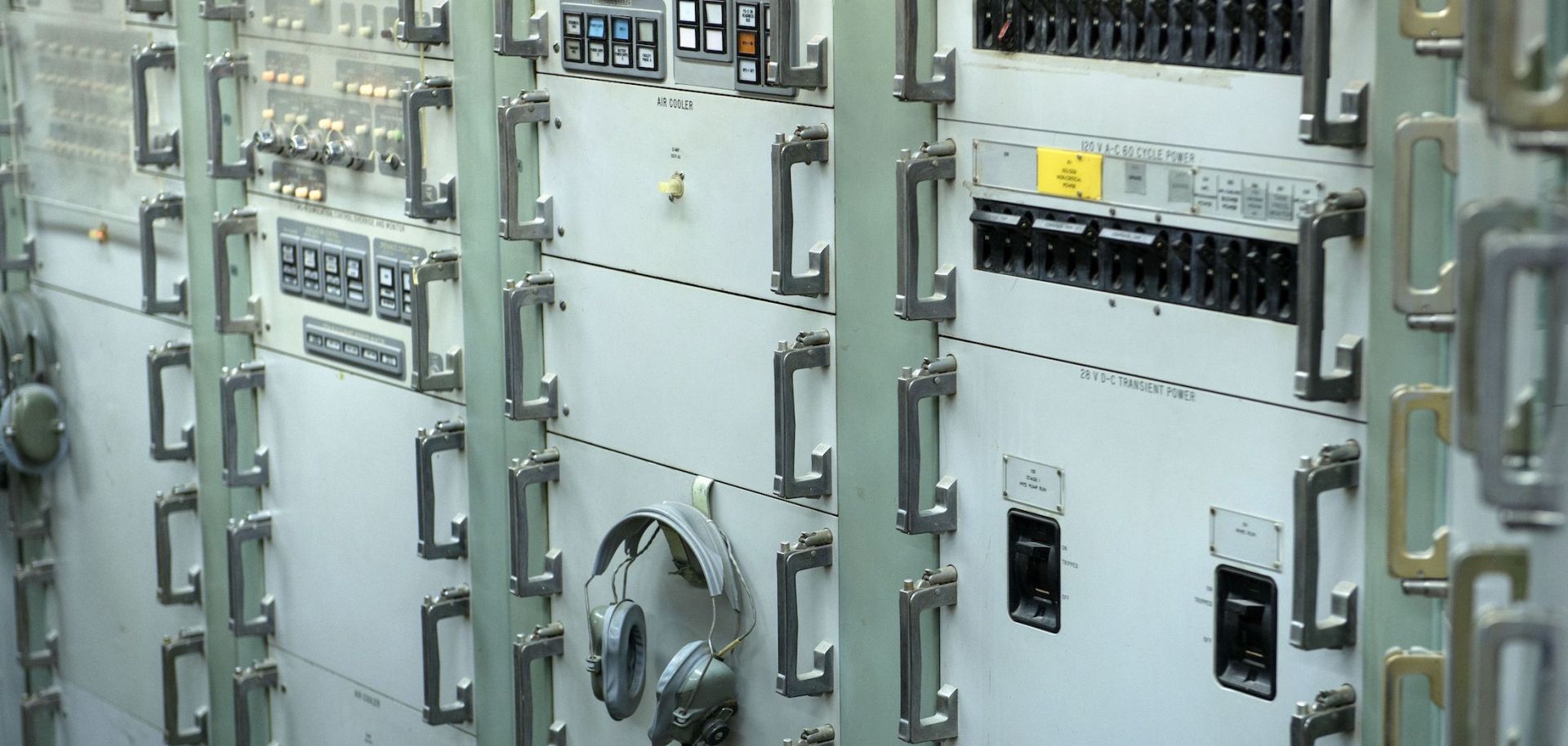
Targeting and control electronics in a Titan II ICBM silo control center at the Titan Missile Museum on May 12, 2015, in Green Valley, Arizona.
We have been asked a lot lately about the impact of Russia's latest invasion of Ukraine on global nuclear deterrence. The short answer is that the war in Ukraine highlights both the continued effectiveness and the limitations of nuclear deterrence. The more significant emerging challenge is not the longstanding nuclear balance between the United States and Russia, but the trilateral nuclear dynamic driven by China's expanding nuclear arsenal and evolving nuclear doctrine. In many ways, the war in Ukraine has reinforced the basic tenets of nuclear deterrence. During the Cold War, the risk of nuclear conflict helped stay the hands of the Soviets and Americans. Proxy wars were common, but direct confrontation between the superpowers was curtailed. In the current case, Russia has kept the kinetic war contained to Ukraine , and the United States has refrained from direct military involvement in Ukraine.
