
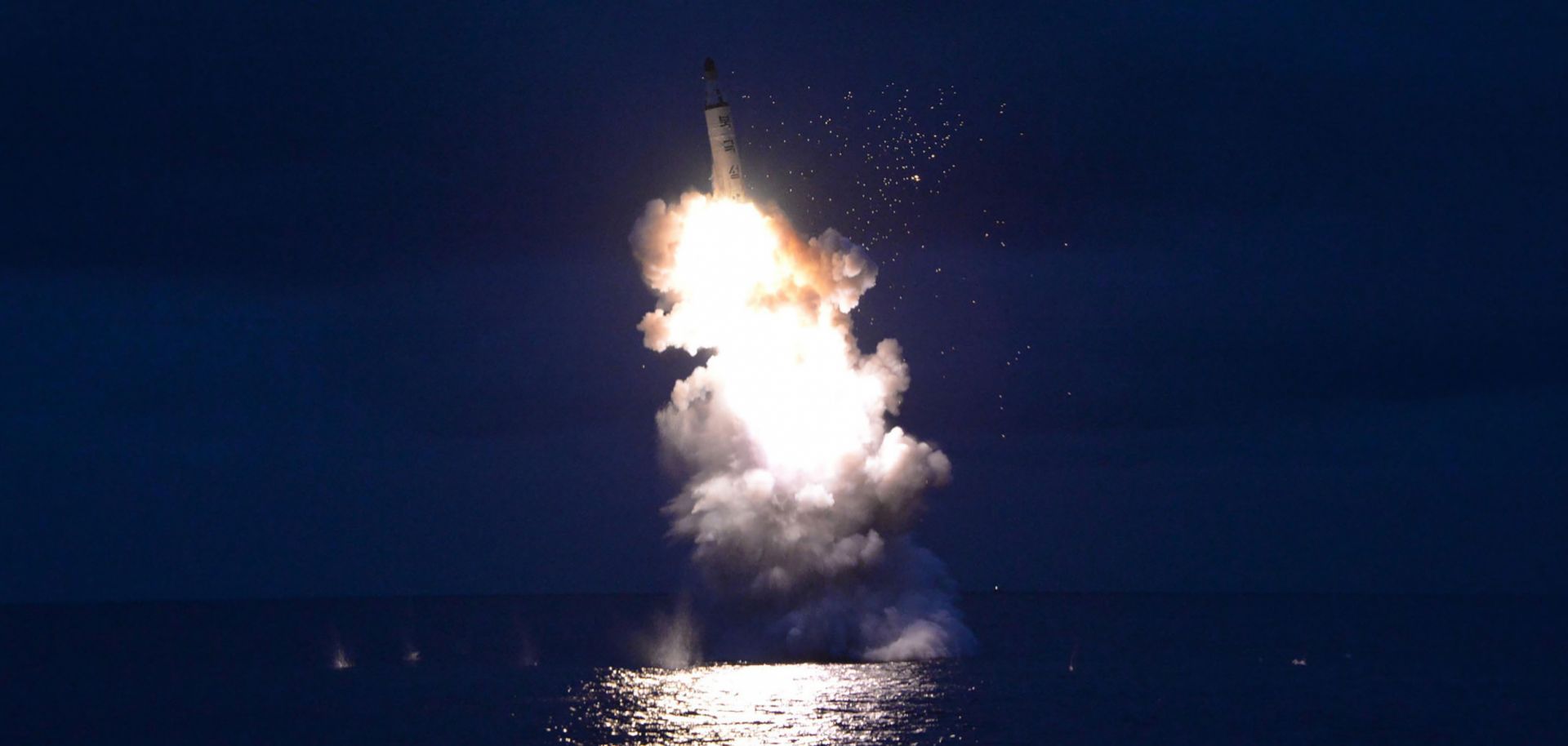
North Korea recently tested its new KN-11 submarine-launched ballistic missile, part of a program to develop weapons technology beyond ground-based systems. Submarine-launched ballistic missiles would give North Korea two distinct advantages. First, they would extend the reach of North Korea's missile systems, theoretically enabling it to strike targets outside of ground-based missile range. Second, submarine-launched missiles, because they are offshore and mobile, would give North Korea a second-strike capability, allowing it to retaliate against attacks on its land-based nuclear bases and launch pads. These benefits assume, however, that North Korean submarines have two important characteristics: sufficient size to carry ballistic missiles and an adequate level of endurance, or the amount of time a vessel can remain at sea unsupported. The smallest submarine to ever carry a submarine-launched ballistic missile is the Soviet Zulu IV-class. It displaces approximately 2,000 metric tons of water carrying its one to two nuclear ballistic missiles.
