
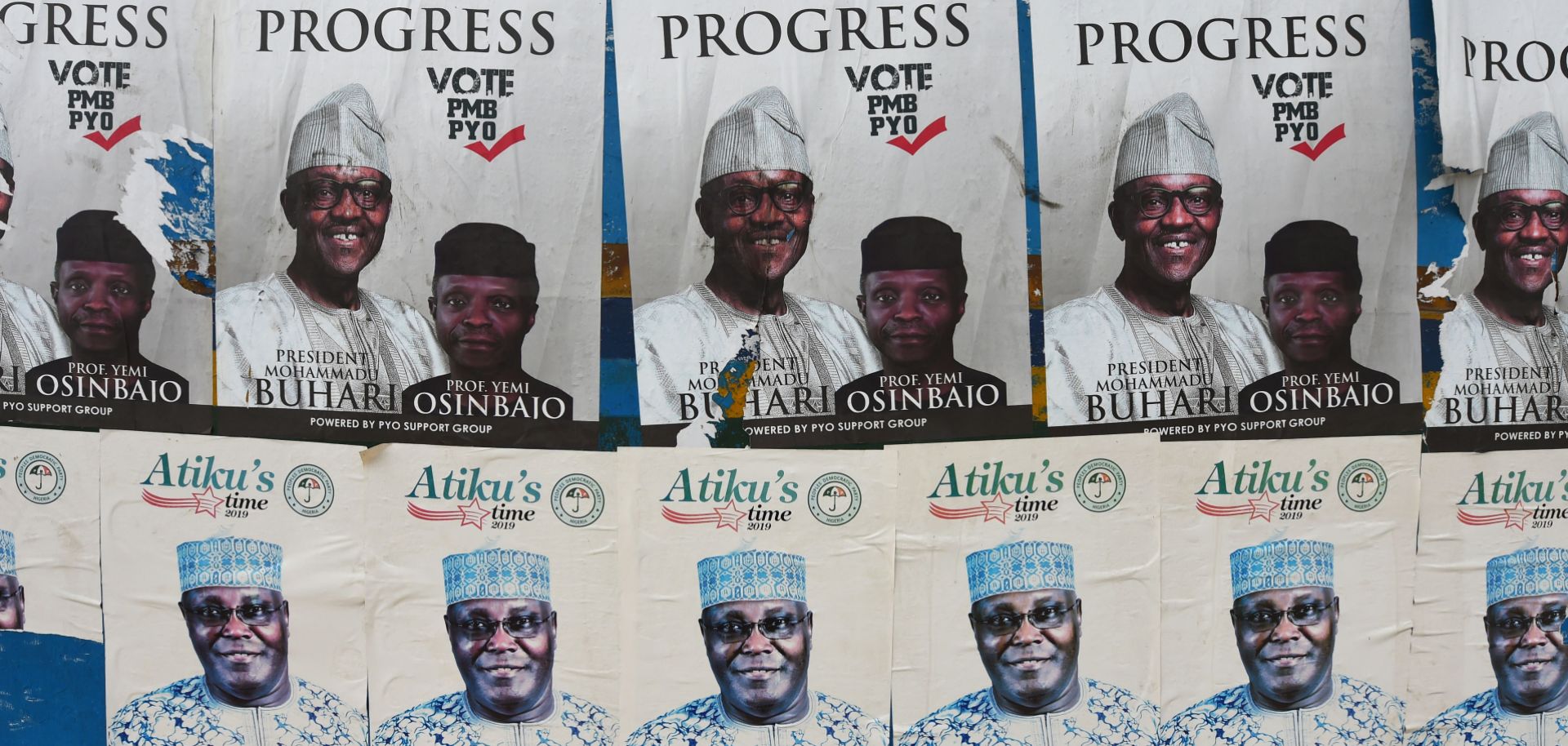
Campaign posters for Nigeria's incumbent president Muhammadu Buhari line a bus station above posters for his main challenger, Atiku Abubakar.
Nigerians are preparing to head to the polls to either re-elect incumbent President Muhammadu Buhari or replace him with Buhari's lead challenger, Atiku Abubakar. The Feb. 16 presidential election has thrown the country into a state of political flux, risking the relative stability Nigeria has achieved since returning to multiparty democracy in 1999. But in addition to having direct political implications , growing unrest across the country also creates an environment for Nigeria's many regional and sectarian security threats to fester and spread leading up to and following the election. With the Islamic State insurgency in the northeast, the resurgence of militants in the oil-rich Niger Delta in the south and sectarian clashes over land rights in the country's center, Africa’s most populous country is in for a turbulent few weeks.
