
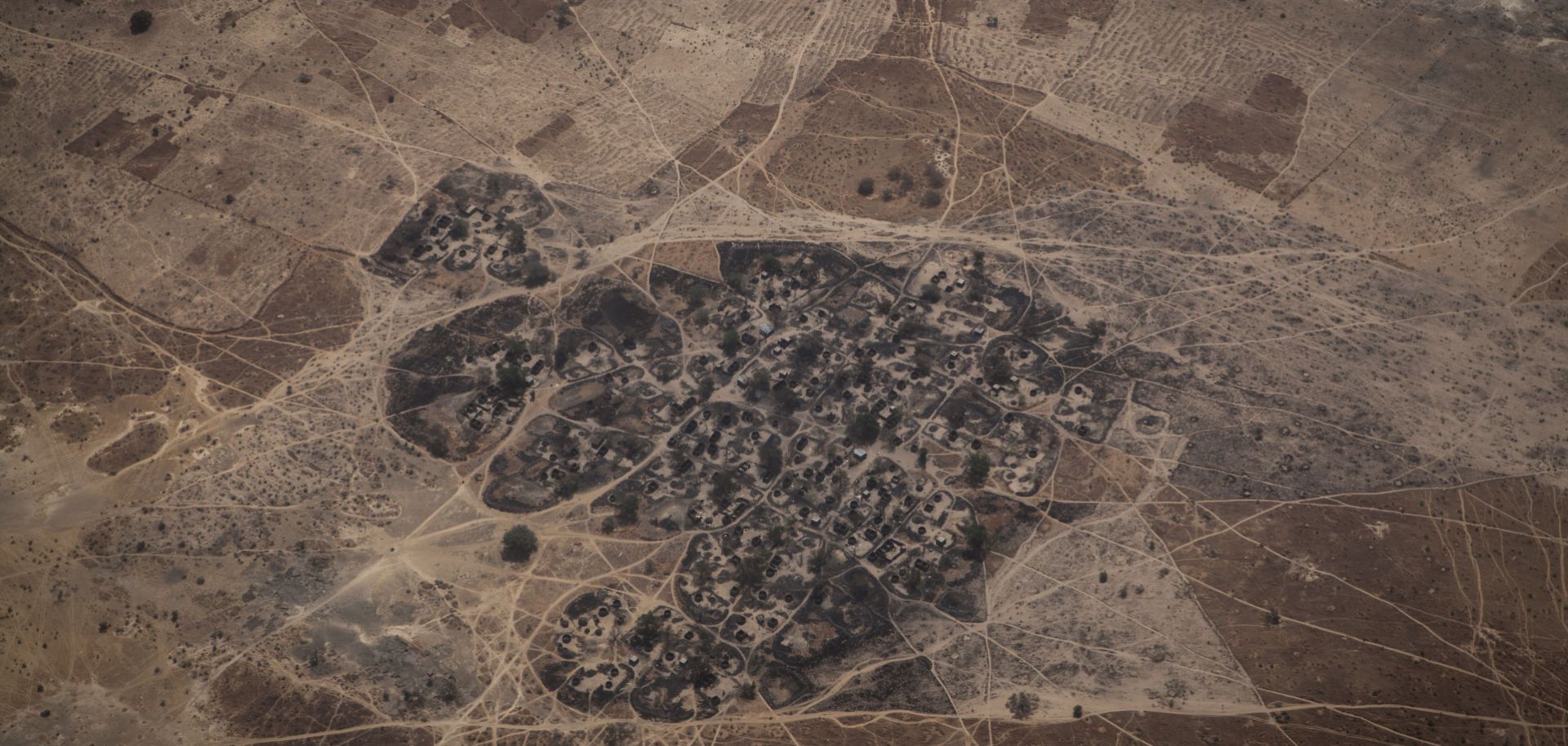
An aerial photograph from February 2017 shows a burnt village, believed to have been attacked by Boko Haram, in northeast Nigeria, between Maiduguri and Monguno district in Borno State. The Nigerian air force has constructed a makeshift runway as part of military tactics to counter the Boko Haram insurgency and to accelerate distribution of relief materials by donor agencies to internally displaced people in northeastern Nigeria, where the conflict with Boko Haram has killed at least 20,000 people and left more than 2.6 million homeless in its six-year insurgency.
Editor's Note: This assessment is part of a series of analyses supporting Stratfor's upcoming 2018 Fourth-Quarter Forecast. These assessments are designed to provide more context and in-depth analysis on key developments to watch in the coming quarter. Elections scheduled for February will come into focus as Nigeria enters the final quarter of 2018. President Muhammadu Buhari will be running again, though dozens of defections from his ruling All Progressives Congress (APC) party to the People's Democratic Party (PDP), the main opposition party, have altered the balance of power within the National Assembly and will test his re-election plans. And in Nigeria, politics and militancy go hand in hand, and the country's leadership at times has tacitly backed, exploited and used insecurity as a political weapon.
